
IN Brief:
- E.ON and the Purpose Coalition have warned that the UK risks a two-tier energy transition without wider access to smarter home energy technologies.
- New polling found 91% of households feel financial pressure from energy bills, while 59% favour long-term cost security over short-term support.
- The report calls for batteries, flexibility, smart tariffs and local energy systems to reduce bills while easing pressure on electricity networks.
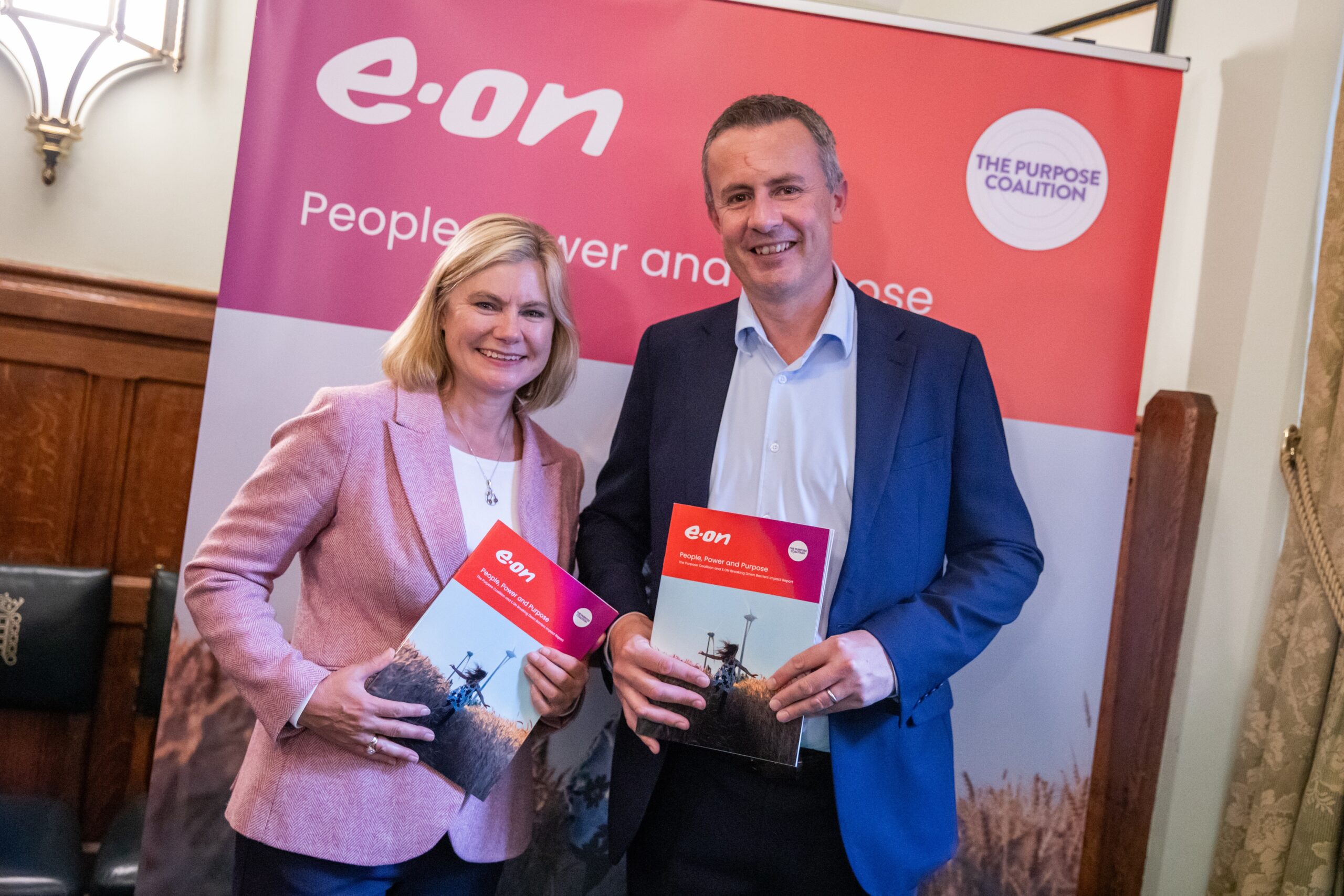
E.ON and the Purpose Coalition have warned that the UK risks creating a two-tier energy transition unless cleaner and smarter home energy technologies become more affordable and accessible.
The new report, Powering Fairer Energy: Breaking Down Barriers, argues that the success of the energy transition will increasingly be judged on whether it can permanently reduce household bills across society, rather than only benefiting households able to fund low-carbon technologies upfront.
New polling carried out for E.ON found that 91% of households feel under financial pressure from energy bills and support the expansion of long-term sustainable energy schemes. The same research found that 59% would prefer long-term cost security measures over short-term support, while 64% said high energy costs are negatively affecting their quality of life.
The findings also point to concern over unequal access to energy-saving technology. Seven in ten people said it is unfair that some households can access technologies that reduce bills while others cannot. At the same time, 73% were unaware that home batteries can reduce energy costs without being paired with solar panels, highlighting a gap between available technology and public understanding of how it can be used.
The report frames household electrification not only as a route to lower bills, but as part of a wider redesign of the energy system. Homes equipped with batteries, solar panels, smart controls, heat pumps, EV chargers and flexible tariffs can shift demand, store lower-cost electricity, reduce peak load and create a more active relationship between consumers and the grid.
That shift is already visible in E.ON’s local projects. The company has worked with councils and other bodies on schemes using batteries, solar panels and other technologies to lower household bills, including projects in Coventry, Starbeck, Crowle and Glasgow. In Glasgow, E.ON is working with Glasgow City Council and the Wise Group as part of the city’s child poverty programme, using home battery systems and targeted support to reduce energy costs for vulnerable households.
Chris Norbury, CEO of E.ON UK, said: “Households want more than temporary help with bills. They want lasting change and more control over how and when they use energy. The transition to clean power will only succeed if people feel the benefits in their everyday lives – otherwise we risk creating a two-tier energy system where those who need help the most are unable to access the technologies that lower bills for the long term.”
He added that batteries, flexibility and smart energy systems need to be made available to more households, not only those able to afford upfront investment. E.ON has said direct investment in homes can cut bills by £250 on average while reducing network pressure and supporting energy security.
The report focuses on four areas: affordability, sustainability, inclusion and system transformation. Its affordability recommendations centre on moving beyond short-term support and creating structural routes to lower costs. E.ON Next has provided £200m in targeted financial support and is also using flexibility solutions and smart tariffs that shift energy use to cheaper periods.
The sustainability section covers the integration of clean energy into homes, infrastructure and communities. That includes solar, battery storage, EV charging and smart systems, as well as E.ON Next’s Lower Bills, Built In proposition for new-build homes. The model bundles solar, battery storage and smart controls into new housing, reducing upfront barriers and providing a more predictable household energy cost.
Building-level generation, storage and control are already moving deeper into electrical design. The direction of travel was clear in our Grounded: March 2026 roundup, where the Future Homes and Buildings Standards, solar-ready buildings, EV charging and building-level energy management were all positioned as part of a more complex electrical scope for new homes and non-domestic buildings.
The inclusion element of the report connects household technology deployment with jobs, skills, community investment and apprenticeships. Wider use of batteries, smart tariffs and local energy systems will require installers, commissioning engineers, asset managers, software specialists and customer support teams. As home energy systems become more interconnected, skills around protection, metering, communications, controls and grid interface work become more important.
System transformation is the most technical part of the report’s argument. Rather than treating consumers as passive users of electricity, a smarter energy system uses homes and local assets as part of flexibility management. Domestic batteries can charge when demand is lower or renewable output is stronger, then discharge during more expensive or constrained periods. At scale, that can reduce peak demand, improve use of local network capacity and defer some reinforcement requirements.
The same demand-side shift is visible in wider network planning. UK Power Networks’ Future Fleet project is assessing managed charging, on-site storage, solar generation and flexible connections for electric HGV charging, showing how flexibility is moving from domestic pilots into larger local network design challenges.
For households, batteries and smart tariffs offer a different form of energy resilience from one-off bill support. Short-term support can reduce immediate pressure, but it does not change the underlying exposure to volatile prices, inefficient homes or peak-time consumption. Smart home energy systems are more capital-intensive, but they can create durable savings where installation, tariff design and consumer protection are handled properly.
The risk identified by E.ON and the Purpose Coalition is that the early market develops unevenly. Households with capital, suitable homes and good advice can adopt solar, storage and smart controls first, lowering bills and reducing exposure to price volatility. Lower-income households, renters and people in less suitable properties may remain dependent on conventional tariffs and support schemes, even though they may have the strongest need for long-term bill reduction.
A fairer model will depend on finance, social targeting, local authority partnerships, installer capacity and consumer trust. Home batteries do not remove the need for wider grid investment, wholesale market reform or energy efficiency upgrades, but they can become part of a more flexible local energy system when deployed beyond early adopters.
The full report is available from E.ON’s Purpose Coalition page.

