IN Brief:
- Andersen's third-quarter charger sales volumes more than doubled year on year.
- The manufacturer has added a production unit alongside its existing Stewartby facility.
- New manufacturing processes support same-day dispatch for orders placed before 11am on working days across more than 200 finish combinations.
Andersen EV has expanded its electric vehicle charger manufacturing operations in Stewartby, Bedfordshire, after its sales volumes more than doubled during the third quarter compared with the same period last year.
The British manufacturer has taken an additional unit adjacent to its existing facility and invested in new production processes, including the introduction of artificial intelligence into elements of manufacturing. The company has not published the specifications of those systems or quantified their contribution to production efficiency.
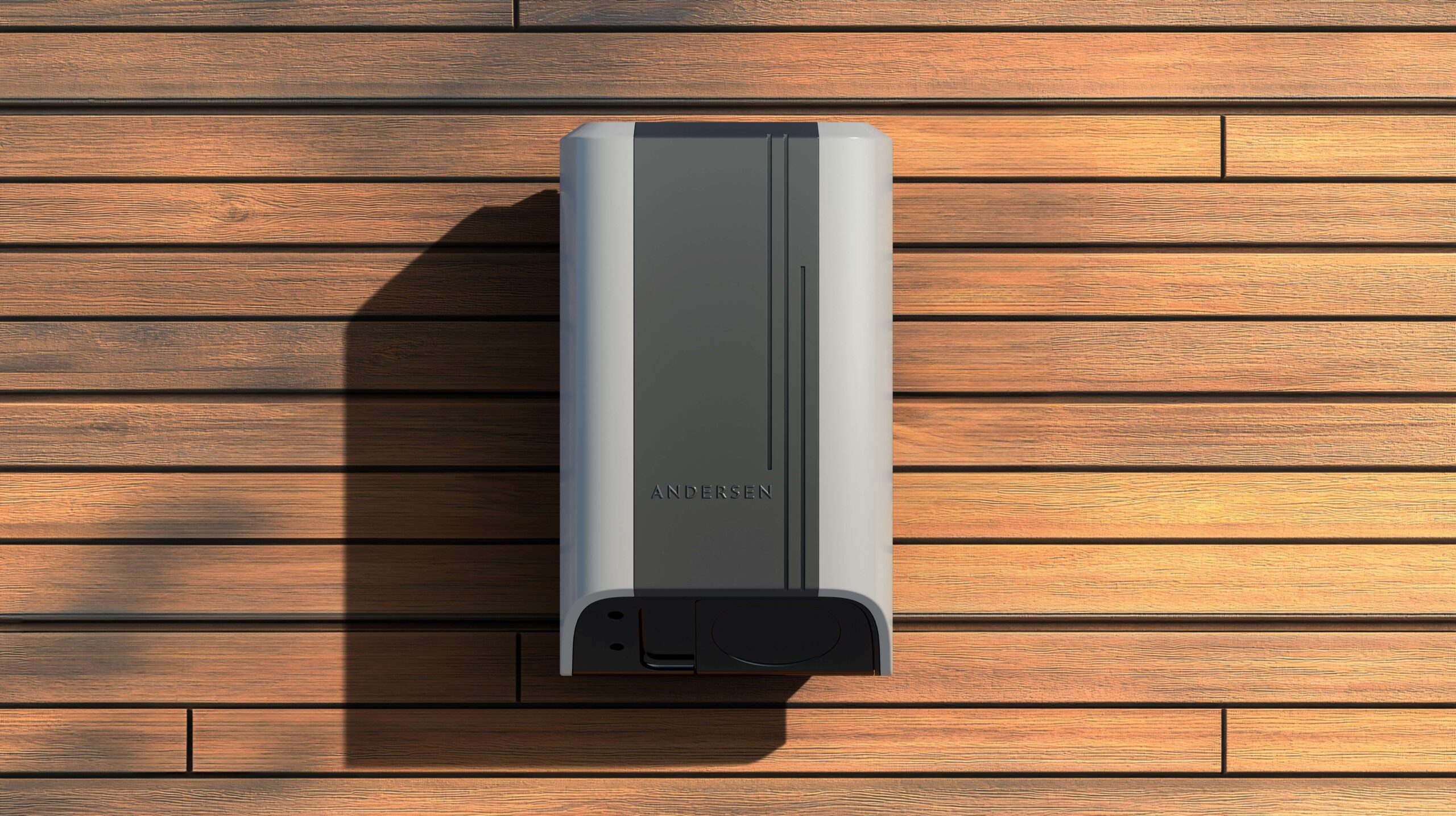
The additional manufacturing capacity will support the A2, A3, and Quartz residential charger ranges. Andersen can now dispatch equipment ordered before 11am on a working day on the same day, including units from its portfolio of more than 200 colour and finish combinations.
Supporting that number of configurations within a short fulfilment window requires the manufacturer to coordinate stocks of common electrical assemblies and customer-specific components. Metal and wooden fascia options, for example, introduce variations in finished equipment without necessarily changing its underlying electrical design.
Manufacturing processes can defer the selection and fitting of configurable components until individual orders have been received. Such an approach reduces the need to maintain stocks of every finished equipment variant, but depends on the timely availability of the corresponding components and assembly capacity. Andersen has not disclosed the inventory or production scheduling model underpinning its revised dispatch service.
The expansion follows an earlier increase in manufacturing capacity reported in September, when the company appointed John Stamford as managing director. At that point, Andersen reported that sales had more than doubled over the preceding nine months and that production capacity at Stewartby had tripled. The latest figures refer specifically to year-on-year third-quarter sales volumes and are not a further quantified capacity increase over the September baseline.
The company is expanding production in a growing British electric vehicle market. The Society of Motor Manufacturers and Traders recorded 99,201 new battery electric car registrations in September, representing 28.3% of the month’s new car market. Battery electric vehicles accounted for 32% of October registrations, compared with 26.6% across the year to date.
Vehicle registrations provide an indication of the market for charging equipment, although they do not translate directly into an equivalent number of residential charger installations. Some new vehicle owners already have suitable equipment, while others rely on workplace or public charging because they cannot install a dedicated chargepoint at home.
Government support for home charging has been extended through several grant schemes. Since April 2026, eligible renters, flat owners, and residential landlords have been able to access funding of up to £500 per chargepoint under applicable schemes. A separate consultation launched in October is examining arrangements for tenants and leaseholders seeking permission to install charging equipment.
As the residential market expands, electrical installation businesses must coordinate equipment ordering with property surveys, customer approvals, electrical supply requirements, and access arrangements. Faster dispatch can reduce the time between confirming an equipment specification and receiving the corresponding charger, particularly where customers require a configuration that installers do not routinely hold in stock.
The supply capacity available at an individual property continues to influence installation design. Vehicle charging adds a sustained electrical load, and the installer must establish whether the existing incoming supply and distribution equipment can accommodate it alongside other appliances. Load management may enable charging power to be adjusted when concurrent consumption approaches the permitted supply limit.
Properties with photovoltaic generation, battery storage, or heat pumps can present additional requirements for managing electrical demand. The compatibility of those systems depends on the selected equipment, communications, and electrical architecture rather than solely on the charger’s power rating.
Andersen has established relationships with automotive companies including Porsche, Jaguar Land Rover, Renault, Alpine, and Geely. A recently established relationship with John Lewis & Partners also enables customers to order chargers through the retailer’s website. The different sales channels create additional requirements for coordinating equipment specification, dispatch, and installation arrangements.
As the manufacturer increases the volume of configurable equipment it can supply, its quality assurance processes must continue to verify electrical assemblies independently of the selected cosmetic finish. Assembly records and equipment identification also remain important for warranty management and subsequent servicing.
The additional Stewartby unit provides physical space for increased manufacturing activity, while the revised dispatch service establishes a measurable change in order fulfilment. Andersen has not disclosed the value of the investment, its revised annual production capacity, or the additional employment associated with the expansion.