IN Brief:
- Italy's latest procurement covers 16 GWh through 15-year storage contracts, following the award of 10 GWh in 2025.
- The weighted average award price was €11,382 per MWh of storage capacity annually, against a €27,000 reserve premium.
- BW ESS and A2A have confirmed awards covering four projects with approximately 400 MW of power and 2,608 MWh of energy capacity.
Italian transmission system operator Terna has allocated 16 GWh of battery storage capacity through its second MACSE auction, securing the entire volume sought for 2029 delivery at a weighted average annual award price of €11,382 per MWh of contracted capacity.
The procurement, concluded on 24 November, awards 15-year contracts to storage projects across southern Italy and its islands. The average premium is 12% lower than the €12,959 per MWh-year recorded in the first auction in September 2025 and less than half the latest round’s maximum permitted bid of €27,000.
Southern Italy and Calabria received the largest regional allocation, with 9.6 GWh awarded at an average annual premium of €11,575 per MWh. Sicily secured 3 GWh at €11,467, while central-southern Italy received 2.8 GWh at €10,716. Approximately 0.5 GWh was allocated in Sardinia at €10,925. The regional volumes are rounded.
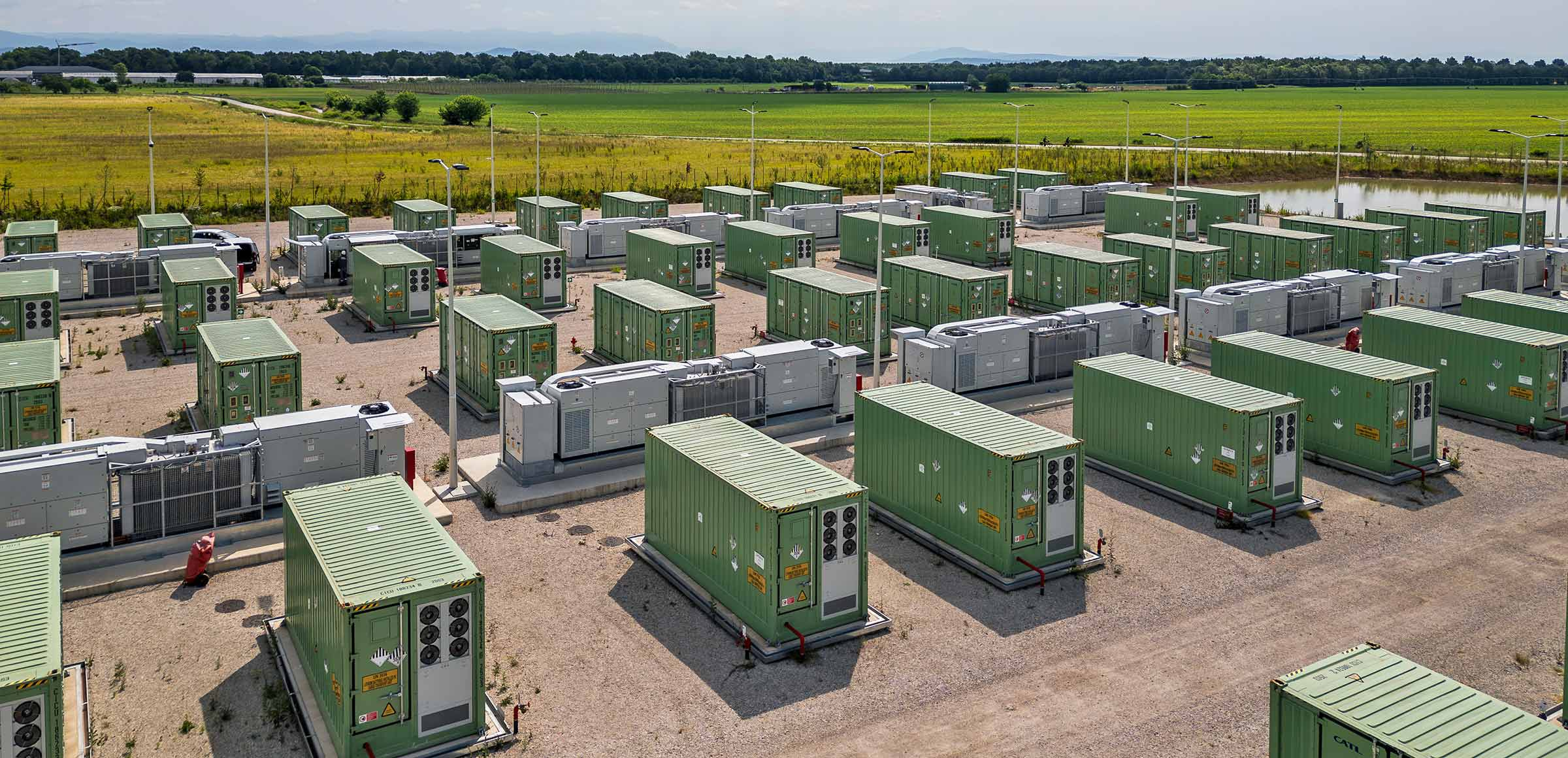
BW ESS and Italian utility A2A confirmed on 25 November that their joint venture had secured contracts for four developments with approximately 400 MW of power and 2,608 MWh of storage capacity. The awards include two projects in Sicily and two in mainland southern Italy. Field’s Melfi project secured 1,138 MWh, while independent power producer ContourGlobal confirmed a further award covering 623 MWh.
The published project results also identify three Enel Produzione projects accounting for 7,336 MWh of awarded capacity. Other successful project companies may have different ultimate ownership arrangements, so the figure should not be taken as Enel’s entire share of the procurement. The largest individually identified Enel project obtained a 3,399 MWh award in southern Italy and Calabria.
Italy’s centralised storage procurement mechanism, known as MACSE, is designed to establish capacity that can absorb electricity from the grid and return it during different market periods. The contracted premium is a payment for storage availability rather than the wholesale price of each megawatt-hour of electricity passing through a battery. Under the pay-as-bid auction, successful projects receive their individual bid prices; the published weighted average does not represent a uniform payment to every developer.
The geographical allocation reflects the location of Italy’s renewable resources and the constraints affecting electricity transfers between regions. Solar output is concentrated in daylight hours, often across several developments simultaneously, while demand remains significant beyond sunset. Storage allows a portion of that output to be retained for later use instead of requiring all available generation to be consumed or transported at the time of production.
The operating duration of the successful projects is generally around six hours or more, compared with the two-hour arrangements common in parts of the European storage market. The distinction affects equipment procurement as well as dispatch. Extending discharge duration at the same inverter rating requires additional battery cells, while increasing power at a fixed energy capacity requires greater conversion and connection capacity.
At its reported aggregate nominal ratings, the BW ESS and A2A portfolio represents approximately six and a half hours of storage per unit of rated power. Actual delivery durations depend on usable capacity, electrical losses, operating limits, and contractual performance requirements.
Over a 15-year operating period, battery degradation and equipment replacement become significant elements of the cost model. Cell capacity declines with age and use, and the amount of electricity available at the point of connection is also affected by auxiliary loads and conversion losses. Maintaining contracted performance may therefore require initial oversizing or subsequent augmentation, with the costs dependent on the equipment and operating strategy selected.
Terna calculated the capacity requirement with the aim of keeping procurement costs below the expected savings from reduced gas-fired generation. The mechanism complements the operator’s assessment of longer-term transmission requirements, including its forecast that renewable curtailment could reach 10.1 TWh by 2035.
Storage can reduce curtailment where it is connected in a location experiencing excess generation and has sufficient room to charge. It cannot resolve every transmission constraint: the ability to absorb or export power remains subject to local connection limits, and a battery already at its maximum permitted state of charge cannot take additional electricity until energy has been discharged.
The 16 GWh allocation follows the inaugural procurement of 10 GWh for delivery in 2028. Italy has therefore contracted a combined 26 GWh across the two rounds, with the latest projects scheduled to fulfil their obligations from 2029. Developers must now translate lower contracted premiums into viable procurement, financing, connection, and construction programmes.