IN Brief:
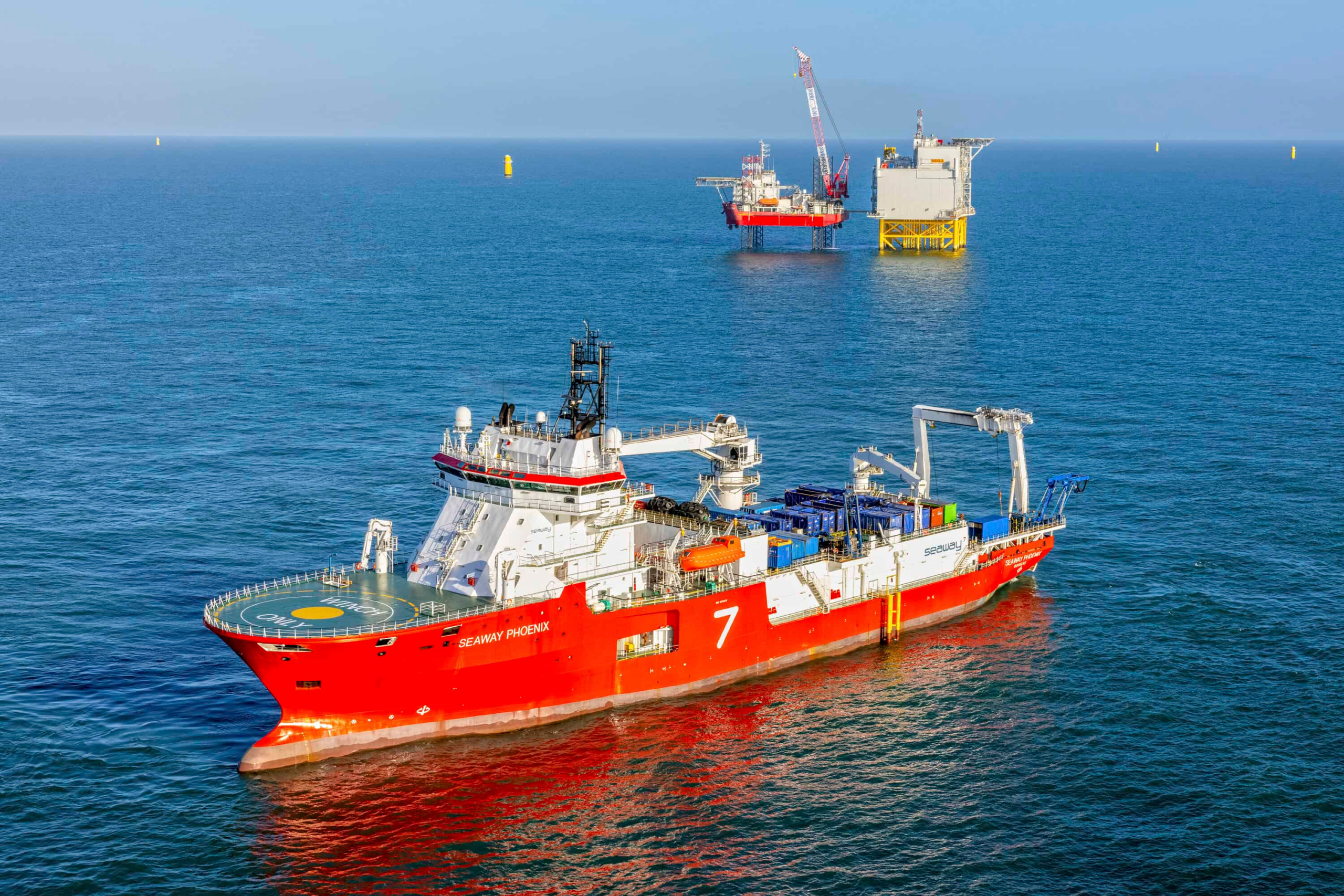
- Seaway7 has begun the inter-array cable installation campaign for Ørsted’s Hornsea 3 offshore wind development.
- Its current project scope identifies 197 sections of 66kV inter-array cabling, with Seaway Phoenix and Seaway Moxie assigned.
- The cables will link the planned 197 turbines to two offshore converter stations, ahead of subsequent testing and energisation.
Seaway7 has started installing the 66kV inter-array cables for Ørsted’s Hornsea 3 offshore wind farm in the North Sea. The cable network will collect output from the development’s planned 197 turbines and feed two offshore converter stations. Hornsea 3 is designed for approximately 2.9GW of generating capacity, with installation of its internal collection circuits now underway alongside other offshore construction work.
Seaway7’s current project record specifies 197 cable sections, with Seaway Phoenix undertaking cable laying and Seaway Moxie providing installation support. Recent industry reports describe a programme exceeding 500km of cabling. The contractor’s 2024 award announcement quoted an earlier scope of 192 sections measuring about 500km; its updated project record is the more recent statement of the section count.
Inter-array cables collect electricity from the turbines and transmit it towards the offshore electrical infrastructure. Turbine generators and power electronics must operate within an agreed electrical system, while the subsea cable network provides the physical route through which their output reaches the offshore converter stations. At Hornsea 3 the array cables operate at 66kV, a voltage selected for the internal collection system rather than for the project’s long distance transmission to shore.
Once power reaches the offshore converter stations, it enters a different stage of the electrical system. Hornsea 3 is Ørsted’s first European offshore project using high-voltage direct-current transmission, which is intended to move large quantities of electricity across the distance to the onshore connection. The array cabling and HVDC export equipment perform different functions. Installing array cables does not by itself confirm that either export circuit is ready, nor that turbines have begun supplying electricity to the grid.
Installation sequencing has to account for turbine and converter locations, seabed conditions, burial requirements, and access for other project vessels. The cable laying crew must control deployment tension and bend radius so insulation and mechanical protection are not damaged. After a section is positioned, further work can include burial or protection, preparation of cable ends, termination, and electrical testing before the circuit is available for energisation.
Seaway7 received the transport and installation contract in October 2024, when offshore execution was planned for 2026. The company then described 192 cable sections; its current project information specifies 197. Both figures refer to the contracted installation scope at different stages, not the number of sections already laid. The latest offshore activity confirms that the campaign has begun, with completion still dependent on the remaining installation and testing programme.
Hellenic Cables and Prysmian received separate 2023 cable supply orders for Hornsea 3. The published scopes covered approximately 262km and 280km respectively, both involving 66kV inter-array cables with cross-linked polyethylene insulation. More recent project reporting identifies JDR Cable Systems with array cable testing and termination activities. These manufacturing, installation, and electrical completion responsibilities must be coordinated before the cables can be placed in service.
Hornsea 3 will use Siemens Gamesa SG 14-236 DD turbines, with the project designed for 197 machines. Installation work on offshore foundations and turbine equipment has been progressing separately. Ørsted’s project management has described array cable work as a significant construction milestone and has pointed towards continuing turbine, foundation, and export cable activity through the remainder of 2026 and into 2027. Exact energisation timing remains dependent on the wider commissioning programme.
Hornsea 3 lies approximately 120–160km from the Yorkshire and Norfolk coasts, within a wind farm zone where seabed depths vary substantially. Cable deployment windows must therefore reflect offshore weather, the position of the work vessels, cable handling constraints, and protection requirements on individual routes. Installation teams also have to sequence their work with foundation and turbine contractors operating across the same site.
Seaway7 has worked on the previous two Hornsea developments. Its project records show approximately 170km of 33kV inter-array cables installed at Hornsea 1 and around 382km of 66kV cables at Hornsea 2. The Hornsea 3 work therefore extends an existing installation sequence, but it represents a larger electrical collection system and a different overall transmission arrangement. Methods and equipment developed on earlier projects provide experience, not a substitute for testing the new cables and connections.
After installation, cable sections must be terminated, inspected, and subjected to appropriate electrical tests before they can form part of an energised network. The transition from mechanical completion to operating equipment will also involve coordination with turbine commissioning, protection systems, and converter station readiness. Work that is finished on the seabed can remain electrically unavailable until the rest of the circuit has passed its required checks.
The continuing campaign will be measured by cables laid and protected, terminations completed, and circuits that pass electrical testing. Those milestones must then align with the readiness of turbines, offshore converters, and the export system before power can be delivered to shore. Seaway7’s present assignment is the 66kV collection network, while the timing of wider energisation depends on the coordinated commissioning of Hornsea 3.