IN Brief:
- SSEN Transmission and National Grid have secured a marine licence covering EGL3's subsea cable infrastructure in Scottish waters.
- The proposed 525kV HVDC system would transfer up to 2GW between the Peterhead area and Walpole in Norfolk.
- The Scottish approval follows marine surveys and environmental assessments, while the wider project remains subject to further consent and construction requirements.
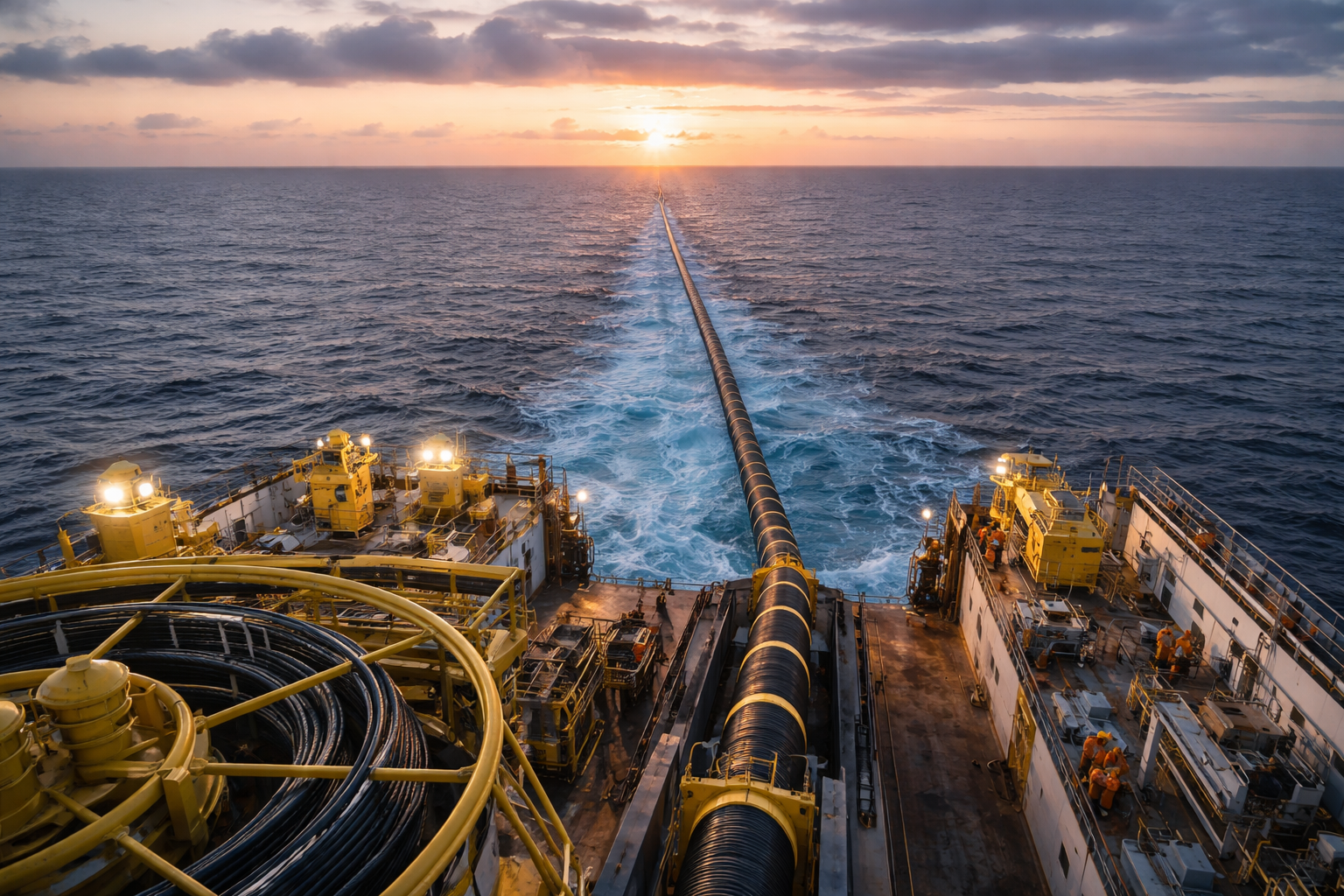
SSEN Transmission and National Grid Electricity Transmission have secured a marine licence for the Scottish waters section of Eastern Green Link 3, advancing the proposed 2GW electricity transmission connection between Scotland and England. The approval covers installation and operation of subsea cable infrastructure in Scottish waters, including nearshore works where the transmission route approaches land near Peterhead in Aberdeenshire.
The licence was granted on 11 November following several years of engineering development, marine surveys, environmental assessment and consultation. It provides consent for a defined section of the proposed cable route, rather than authorisation for construction and operation of every element of the complete transmission project.
Eastern Green Link 3, or EGL3, is being developed jointly by SSEN Transmission and National Grid Electricity Transmission. The proposed link will connect the electricity transmission network in the Peterhead area with infrastructure near Walpole in Norfolk, increasing the capacity available to transfer power between Scotland and England.
The scheme is designed as a 525kV high-voltage direct current connection capable of transferring up to 2GW. Its electrical system will include subsea and underground cables, converter stations and associated connections to the existing alternating-current transmission network.
At the Scottish end, the cable system will connect with planned converter infrastructure in Aberdeenshire. The southern converter station will be located in the Walpole area, with the transmission route reaching the English coast before continuing inland through underground electrical infrastructure.
The marine licence specifically covers the installation and operation of the subsea cable infrastructure within Scottish waters. The consent includes the nearshore work required where the cable meets land near Peterhead, an area where offshore installation methods must be coordinated with the transition to land-based equipment.
Marine investigations have informed the route design. Surveys establish seabed conditions and identify existing infrastructure, geological features and other constraints that can influence how a high-voltage cable is installed and protected.
Environmental assessments provide additional information about habitats, species and potential effects associated with marine construction. SSEN Transmission has undertaken engagement with offshore developers, fisheries, local communities and other stakeholders while preparing the project.
The route must also account for the presence of other marine assets and activities. Subsea infrastructure can intersect areas used by shipping, fishing and offshore developments, creating requirements for coordination during route selection and cable installation.
High-voltage DC technology allows large quantities of electricity to be transferred over long cable routes while avoiding the substantial capacitive charging currents associated with alternating-current submarine transmission. Those currents increase with cable length and can limit the useful power transferred through an AC circuit.
A DC system requires power conversion equipment at its terminals. Converter stations use power electronic components to change electricity between AC and DC, supported by transformers, switching equipment, protection systems, cooling arrangements and controls.
For EGL3, the planned bipolar arrangement uses two DC poles within the transmission system. Electrical design must establish suitable insulation, conductor ratings, protective arrangements and operating controls for the specified voltage and power transfer capability.
Cable engineering introduces different requirements along the offshore and onshore portions of the route. The subsea system must withstand its installation conditions and subsequent operating environment, while land cables require ducts or trenches, cable joints, terminations and arrangements for crossing existing infrastructure.
Nearshore transitions are especially important because installation conditions change where marine cables approach land. The final design must coordinate cable protection, access for construction equipment and the electrical interfaces between cable sections.
High-voltage cable joints and terminations require controlled installation procedures to maintain the intended insulation and electrical field distribution. Following installation, the cable circuits will undergo inspection and testing before they can be energised as part of the complete transmission system.
The project has already secured significant equipment and delivery contracts. In March 2026, the developers confirmed Hitachi Energy as the contractor for the HVDC converter stations and NKT as the supplier of the subsea and underground cable system, under agreements with a combined value approaching £3bn.
More recently, National Grid appointed BAM UK & Ireland to deliver civil construction works for the southern converter station. The southern converter station appointment, announced on 9 November, concerns a separate part of the project from the Scottish marine licence.
Those procurement arrangements support project preparation, but they do not remove the need to secure the remaining statutory approvals. The developers submitted a Development Consent Order application covering EGL3 and EGL4 infrastructure in England on 30 October 2026. Submission of that application does not constitute the granting of development consent.
Further regulatory work is also continuing. Ofgem is consulting on additional early construction funding for EGL3, covering activities such as strategic land purchases, enabling works and procurement commitments. The regulator has made clear that its funding process does not determine the outcome of planning applications.
Once installed and commissioned, the connection would provide an additional route for transferring electricity between Scotland and England. The development is intended to address transmission constraints that can arise when generation in one part of the network exceeds the capacity available to move electricity towards demand elsewhere.
Those constraints depend on circuit ratings, power flows and the need to maintain system security during equipment outages or faults. Additional transfer capacity can help network operators manage these conditions, although the contribution of EGL3 will depend on the operation of the surrounding transmission infrastructure.
The Scottish marine licence resolves one important element of the project's consenting programme. Construction and eventual operation remain dependent on the other required approvals, completion of the converter stations and cable systems, and the electrical testing needed to bring the new 2GW connection into service.