IN Brief:
- Octopus Energy Generation has launched an Asian electrification fund targeting $600m, with an initial $50m commitment from Japanese investors.
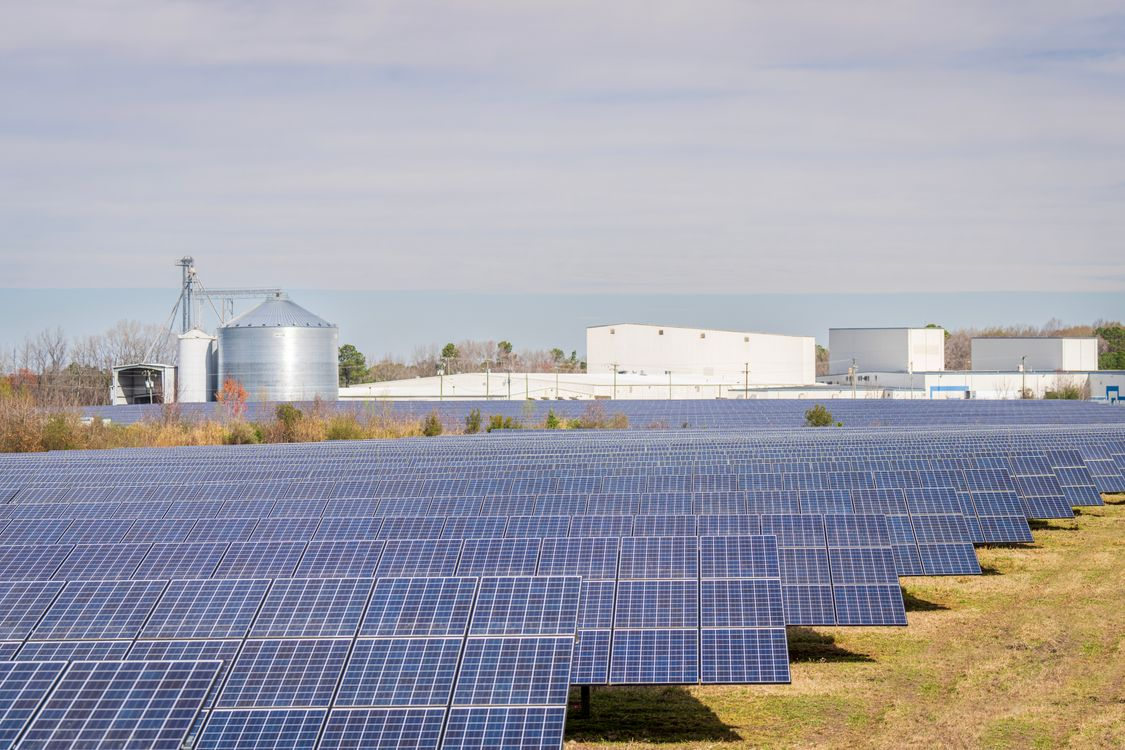
- The first investment backs Manila-based Octali Energy Development, which is targeting 450MW of solar and 350MWh of battery storage.
- The fund plans to support projects across seven Asian markets, including wind, microgrids, electric vehicle charging and other power infrastructure.
Octopus Energy has launched an Asia Electrification Fund aimed at mobilising $600m for renewable generation and related power infrastructure, with Japanese investors initially committing $50m. Introduced on 10 November at COP31 in Antalya, Turkey, the fund’s first investment is in Manila-based Octali Energy Development. The $600m figure is a target for capital the fund hopes to attract; it is not an amount already raised or committed to operating projects.
Managed by Octopus Energy Generation, the vehicle will back local developers rather than buy a disclosed portfolio of completed power stations at launch. Octali is targeting 450MW of solar photovoltaic capacity and 350MWh of battery storage in the Philippines. These are development objectives, without a published list of permitted sites, construction contracts or grid connection dates. Octopus has not specified how much of its initial $50m commitment will be invested in Octali or when the full pipeline might reach operation.
The solar component is expressed as a power rating, while the storage figure describes energy capacity. Without a corresponding battery power rating, the 350MWh figure cannot establish how many megawatts the proposed batteries will discharge or for how long at full output. The planned projects would need electrical designs specifying inverter equipment, connection capacity, control systems and the operating relationship between the generating and storage installations before their dispatch characteristics could be assessed.
Integrating solar with batteries can change when some generated electricity is exported: surplus production can charge storage for later discharge, subject to system losses, equipment limits and network permissions. The planned Philippine portfolio’s storage capacity is expressed only in MWh, so neither its maximum discharge in MW nor its rated duration can yet be calculated. Octopus also has not said whether every proposed battery would be built alongside a solar farm or at a separate network location.
Octopus says the Philippine development pipeline could ultimately support clean electricity generation equivalent to the annual needs of more than 300,000 homes by 2030. That is a future projection and not measured output. It will depend on the amount of capacity actually constructed, operating performance and the assumed electricity demand per household. No detailed construction programme, individual grid connection schedule or battery equipment supplier was disclosed with the fund launch.
Early development capital can pay for design studies, land rights, permits and grid connection applications before a project reaches the construction stage. Later investment and commercial agreements must still cover equipment procurement, installation and commissioning. The fund has not identified individual photovoltaic module or inverter suppliers, storage equipment contracts or financing arrangements for specific Philippine sites. The initial investment therefore establishes a developer partnership and capital access, rather than a fully funded construction programme for all stated capacity.
Beyond the Philippines, Octopus identifies Japan, South Korea, Singapore, Indonesia, Thailand, Malaysia and Vietnam as potential markets. Its investment mandate covers solar and onshore wind alongside storage, microgrids, charging infrastructure and related electrical systems. Each technology brings different connection and control obligations: large generators generally require export capacity, whereas microgrids coordinate local supply and demand and can require controls for operation during network disruption. No specific projects in those additional markets were disclosed as part of the new fund launch.
Octopus Energy Generation already reports about 2GW of Asian renewable projects in development, including arrangements in Japan and South Korea. That earlier pipeline is separate from the new fund’s $600m ambition. Globally, the division says it manages renewable projects worth more than $11bn. The fund is described as an Article 9 vehicle under the EU Sustainable Finance Disclosure Regulation, a disclosure classification that does not establish the performance of any individual solar or battery project.
Expansion into the Philippine electricity sector brings questions of project location, access to network capacity and the ability to connect intermittent generation at appropriate voltage levels. The extent to which storage can relieve particular local constraints depends on where it is placed and how its control systems are configured. Developers will also need to establish procurement, construction and operations arrangements that match local regulatory requirements. None of those choices can be established from the headline capacity targets alone.
Octopus identifies the region’s reliance on imported fuels and rising electricity demand as reasons for seeking more renewable capacity. It estimates that coal still accounts for more than 60% of electricity in the Philippines, a figure given in the company announcement. The broader policy and market argument does not remove the project-specific challenges of building plants, obtaining firm grid connections and achieving reliable electrical operation. Financing announcements are an early step in that delivery process.
The next measurable milestones will be additional fund subscriptions, identification of Octali’s first permitted sites, confirmation of electrical connection arrangements and movement into funded construction. A full technical profile will require the actual solar ratings, battery power as well as energy capacity, and the commissioning sequence for each location. The confirmed November development is an investment platform with $50m initially committed and a first developer backing in the Philippines; the $600m fundraising and 450MW/350MWh project targets remain prospective.