IN Brief:
- HydroWing has awarded Ecodetect a contract to monitor wildlife around its planned Morlais tidal array.
- The 30 MW scheme is planned to comprise 18 devices of approximately 1.67 MW each.
- The first device is scheduled for 2027; full project completion is targeted for 2030.
HydroWing, the tidal energy division of Inyanga Marine Energy Group, has appointed Anglesey technology company Ecodetect to supply artificial intelligence-based environmental monitoring for its planned 30 MW tidal stream project at Morlais in North Wales. The agreement, announced on 26 October 2026, will bring together underwater imaging, sonar and automated wildlife identification around the proposed generating equipment. It is a contract for monitoring technology at a project still being developed, not confirmation that the tidal turbines or their environmental systems have entered commercial operation.
Morlais is a tidal stream demonstration zone off Ynys Môn, or Anglesey, owned by social enterprise Menter Môn and managed by Menter Môn Morlais Ltd. The wider consented development area could eventually accommodate up to 240 MW through phased deployment. HydroWing’s scheme is a specific 30 MW part of that programme and should not be confused with the total capacity potentially available across Morlais. HydroWing plans 18 generating devices, each rated at approximately 1.67 MW. Its first device is scheduled to be deployed in 2027, with completion of the 30 MW scheme targeted for 2030.
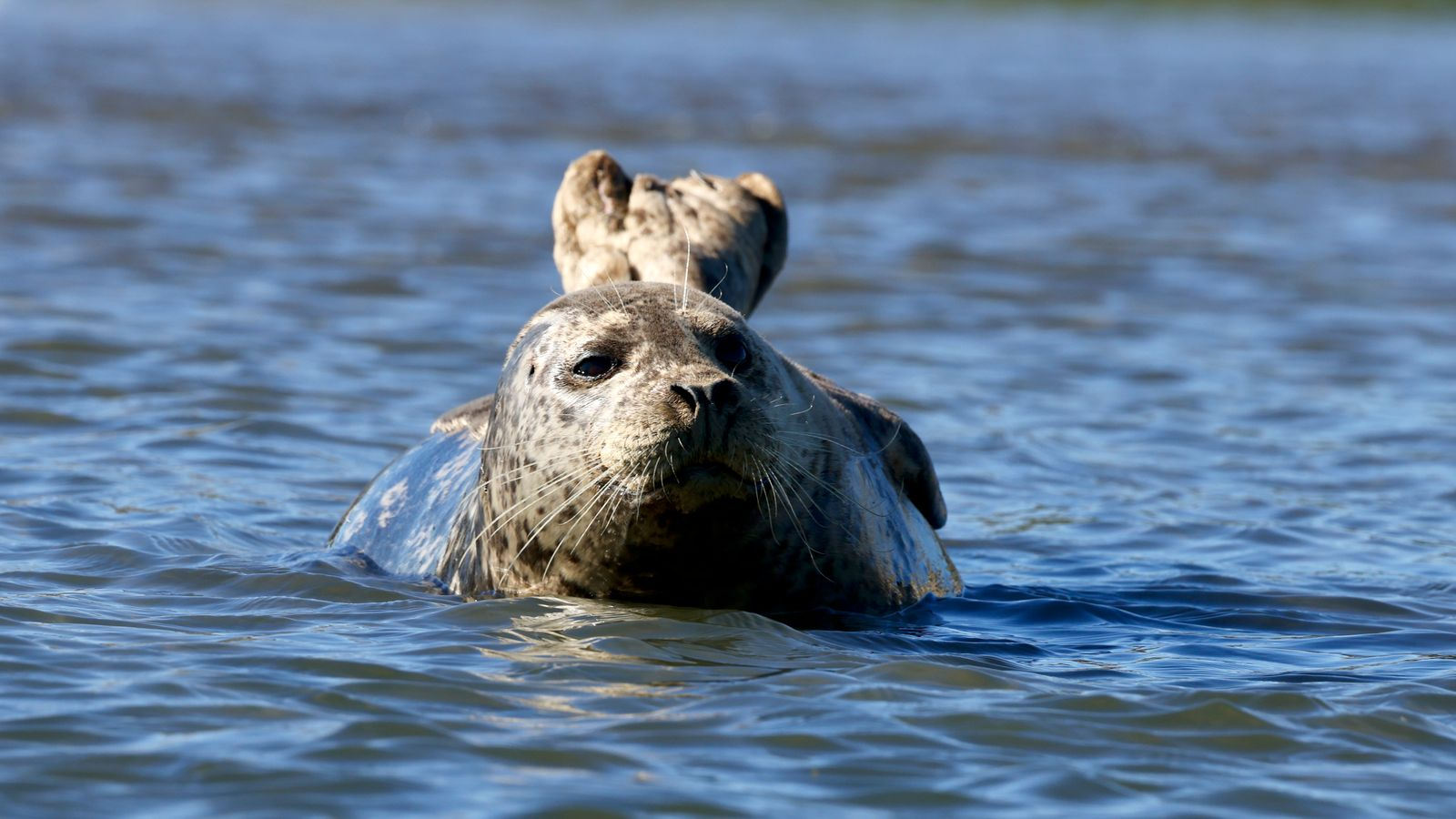
Ecodetect’s approach combines sensors mounted at the surface and on the seabed with a marine communications network. Underwater cameras provide visual information while sonar contributes acoustic observations of activity in the water. Software processes incoming data to distinguish marine wildlife, including seals, dolphins, fish and diving seabirds, from seaweed, algae and other material. The equipment is intended to operate alongside offshore renewable infrastructure, allowing the project team to assess movements near equipment as conditions change. The companies have not disclosed the total number of sensors, their precise installation positions or the contract value.
Identifying an object is only one part of an environmental monitoring system. Operators also need to interpret whether a detected animal is approaching an area of concern, what operational restrictions apply and whether an intervention is warranted. Ecodetect says its network will relay findings in real time so that environmental mitigation procedures can be initiated when necessary. Ecodetect has not disclosed turbine shutdown thresholds, response times or independently measured species-recognition accuracy for the proposed installation. Those details will matter when the system moves from project specification to practical operation in a variable marine environment.
Tidal stream turbines generate electricity by extracting energy from moving water. Their resource is predictable in timing but the marine setting presents engineering and ecological demands, particularly where turbines operate in habitats used by protected species. Camera and sonar systems can add information about wildlife presence and behaviour, complementing surveys undertaken for consenting and project design. Detection does not itself prove the absence of ecological impact. A credible monitoring programme must record what has been observed, the reliability of the observations and any actions taken under the relevant environmental requirements.
Inyanga’s chief executive, Richard Parkinson, says that continuous detection of marine life interactions and assessment of infrastructure activity will help the company manage ecological risks while operating the tidal installation. Ecodetect chief executive Dr David Gold presents the technology as a means of demonstrating that tidal generation can coexist with marine wildlife. Their assessments describe intended operating benefits, rather than evidence that the newly contracted system has already delivered a measurable improvement at Morlais. Subsequent reporting will need to distinguish the installation of equipment from the results of monitoring after generating devices are in the water.
The contract also has a regional industrial dimension. Ecodetect is based at M-SParc in Gaerwen, Anglesey, while Inyanga Marine Energy Group operates from Falmouth and maintains an Anglesey presence. Menter Môn Morlais chief executive Andy Billcliff has highlighted the selection of a local monitoring supplier. Environmental sensing, data analysis, subsea installation and communications are all supporting activities required for marine energy developments. The precise number of local jobs arising from this particular contract has not been stated, so its wider economic contribution should not be quantified on the basis of the agreement alone.
HydroWing’s current capacity builds on a sequence of Contracts for Difference awards. The company states that it received a further 10 MW in the February 2026 Allocation Round 7a, adding to 20 MW allocated through earlier rounds. Those awards support the planned project’s commercial framework, but they are not the same as completed construction or metered electricity generation. Moving to operation will also involve manufacturing, installing and commissioning the turbines, securing their electrical interfaces and deploying the monitoring equipment with suitable marine access and servicing arrangements.
The monitoring package is intended to produce records that can support compliance with environmental requirements in the United Kingdom and other applicable jurisdictions. The usefulness of those records will depend on sensor performance, maintenance, data interpretation and the specific conditions imposed on the project. Operators will need to consider visibility, currents, debris and changes in marine activity when relying on any monitoring system. These are practical issues for developers throughout the emerging tidal sector rather than evidence of shortcomings in Ecodetect’s particular design.
For the Morlais programme, the immediate milestone is the agreement to incorporate AI-assisted wildlife monitoring into HydroWing’s planned infrastructure. The first device remains scheduled for 2027 and the full 18-device scheme for 2030. If delivered, the monitoring arrangements could provide operational evidence on marine interactions at a larger tidal array, informing future project design and environmental management. Until deployment and operating results are available, the contract should be treated as an engineering and environmental-monitoring commitment, not proof of reduced wildlife impacts or completed 30 MW generation capacity.