IN Brief:
- Sumitomo Electric opened a £350 million HVDC subsea cable factory at the Port of Nigg on 19 October 2026.
- The facility occupies 15 hectares and provides 58,000 square metres of floor space for planned 525 kV HVDC XLPE cable and other subsea cable manufacture.
- More than 200 direct jobs are forecast, with wider projected employment exceeding 400; production volumes remain unreported.
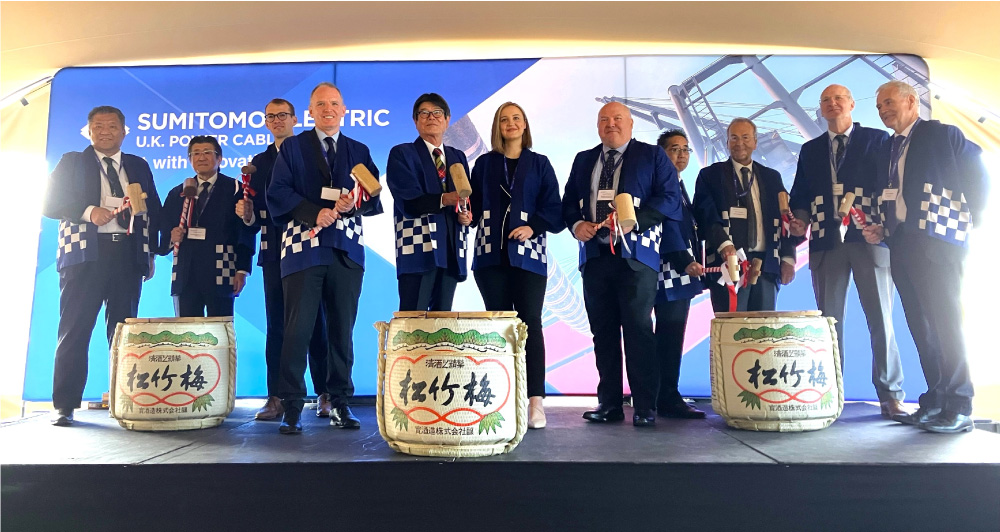
Sumitomo Electric has opened its £350 million subsea power cable factory at the Port of Nigg in the Scottish Highlands, establishing a UK manufacturing site intended to serve high-voltage direct-current (HVDC) transmission projects. The 19 October opening follows the investment announcement of April 2023 and construction beginning in May 2024. Sumitomo describes the facility as the first UK factory dedicated to HVDC subsea cables. The ceremony confirms the industrial premises have opened; it provides no measured output figure or confirmation that commercial-length cables have already been delivered.
Within the Inverness and Cromarty Firth Green Freeport, the factory occupies a 15-hectare plot and provides 58,000 square metres of floor space. Sumitomo plans to manufacture 525 kV crosslinked polyethylene (XLPE) insulated HVDC submarine transmission cables and subsea inter-array cable products. The 525 kV specification concerns an insulation and voltage class of cable, whereas the power transferred by any resulting link will also depend on its conductor, converters, current rating and system design.
High-voltage direct-current technology is used on long submarine connections because alternating-current cables develop charging current through their capacitance. On sufficiently long routes, that reactive component can consume part of the cable’s usable current capacity and necessitate additional compensation. An HVDC connection requires converter stations at its ends, but it can transfer substantial power across long sea crossings without the same steady-state cable charging limitation. The new Scottish factory provides a manufacturing component of those systems, not the converter stations or complete transmission links.
The XLPE insulating layer surrounds the conductor and has to be extruded with controlled dimensions and cleanliness over long production lengths. Contamination, eccentricity and handling damage can increase local electrical stresses, making consistent manufacture and factory testing essential at HVDC voltage. Cable sections also need suitable storage, loading and marine handling before installation. Each project will require its own product acceptance, termination and jointing work, route installation and electrical tests before the connection can be energised.
Sumitomo projects more than 200 direct skilled roles at Nigg and a total employment effect exceeding 400 jobs when the wider UK supply chain is included. Those are company forecasts rather than a verified number of workers already employed at full production. The company has prepared for the specialist manufacturing requirements through operator training in Japan and a “Train the Trainer” approach intended to build technical skills at the Scottish site. The available announcement does not quantify the plant’s current production rate.
Scotland’s government has invested £24.5 million in constructing the cable factory. Separately, the UK Government identifies £25 million of seed funding for the wider Inverness and Cromarty Firth Green Freeport. Those programmes are not two direct subsidies of the same kind to Sumitomo, and the £350 million figure describes the industrial investment rather than a sum of public contributions. Customer contracts and output delivered from Nigg will be measured against separate commercial milestones.
Manufacturing beside the Port of Nigg gives heavy cable products access to marine logistics without first moving full-length cable consignments over long overland routes. Specialist storage systems, cable carousels, loading equipment and cable-laying vessels are needed to manage product weight and minimum bend radius safely. Port proximity helps but does not remove limitations imposed by vessel bookings, sea conditions and installation windows. Copper or aluminium conductor supply, polymer insulation materials and other specialist components must also arrive to match production schedules.
The site has prospective demand from UK transmission projects. A July 2026 framework agreement between Sumitomo, Van Oord and SSEN Transmission provides for engineering work and a possible cable supply call-off for Shetland 2, subject to regulatory approvals; the company expected Nigg manufacture for that link to begin in the second quarter of 2027. National Grid has separately awarded Sumitomo the HVDC cable contract for Sea Link. Both provide commercial context for the investment, while their grid connection and installation schedules remain distinct from the factory opening.
The factory adds UK-based capability in a market where major offshore wind connections, interconnectors and wider transmission reinforcements compete for specialist cable capacity. A domestic production location does not eliminate programme risks, including conductor-material supply, quality assurance, manufacturing slots, vessel availability and weather windows at sea. Customers must still coordinate factory readiness with offshore survey work, permissions, onshore construction and converter installation if transmission assets are to come into service on schedule.
The facility has therefore passed its construction and opening milestone, with 525 kV HVDC manufacturing capability and several prospective transmission customers identified. Subsequent production, tests and despatches will establish the rate at which cables can be supplied from Nigg. Each resulting grid connection will still depend on cable installation, converter works, network integration and end-to-end commissioning; none of those project milestones follows automatically from the factory ceremony.