IN Brief:
- Olana Energy has commissioned Gunnarsnäs at 10MW/10MWh and Koski Tl at 7MW/8MWh in southwest Finland.
- Both facilities connect to Caruna’s 20kV distribution network and have completed electrical safety and protection checks.
- The additions bring Olana’s Finnish operating fleet to five battery sites totalling 48MWh.
Olana Energy has brought two battery storage installations into commercial operation in southwest Finland, adding 17MW of power and 18MWh of energy capacity to its operating fleet. The Gunnarsnäs system is rated at 10MW/10MWh and the Koski Tl facility at 7MW/8MWh. Both connect to Caruna’s 20kV distribution network and are participating in ancillary services markets through Fingrid’s balancing arrangements.
Together the projects raise Olana’s operating Finnish portfolio to five sites and 48MWh of installed storage capacity. Gunnarsnäs has 10MWh of energy capacity against 10MW of rated power, a nominal one hour ratio, while Koski Tl’s 8MWh against 7MW provides slightly longer at its full rated output. Usable charge, conversion losses, and plant operating limits will affect either duration in practice, even though the sites share a technology platform with other installations in Olana’s fleet.
Olana Energy Construction Oy managed the two builds in parallel with Finnish contractors after financial close in late 2025. Because Olana developed the sites and retains ownership and operating responsibility, the completed commissioning transfers the assets from construction activity into ongoing electrical maintenance and market dispatch. The change involves different responsibilities, including keeping protection and monitoring equipment available while preserving the conditions of each distribution connection.
At 20kV, both facilities connect to Caruna’s distribution network rather than directly to the high voltage transmission infrastructure operated by Fingrid. Caruna is responsible for the local network connection, while Fingrid operates national balancing markets in which qualified resources can participate. These separate relationships mean that a battery’s ability to supply a system service still depends on complying with its distribution connection agreement and remaining within the electrical limits of the local network.
Independent verification of relay settings and selectivity calculations was completed before the two batteries entered operation, alongside certified electrical safety inspections. Those checks concern the way faults are detected and isolated within the approved connection scheme, including the interaction between a battery and Caruna’s distribution equipment. The ability to charge as well as export electricity introduces operating states that must be covered by the site’s protection and switching arrangements.
Under a coordinated protection scheme, a fault should normally cause the nearest appropriate protective device to operate while upstream equipment remains available as intended by the network design. The settings must account for possible fault currents and the configuration of connected equipment; a battery’s power electronic converters can behave differently during a network disturbance from traditional rotating generators. Olana has confirmed independent verification but has not published individual relay models or setting values.
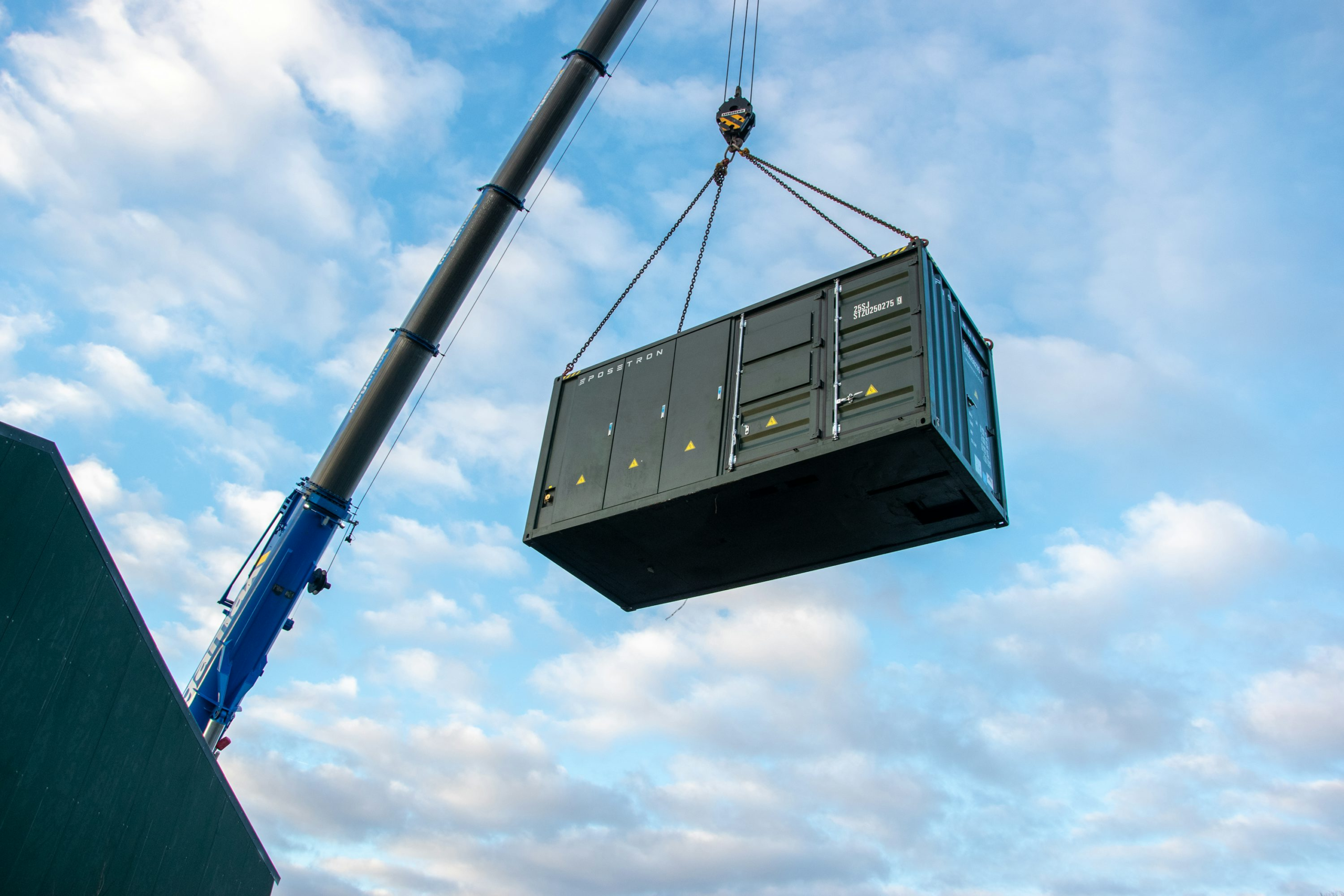
Containerised batteries at both sites are designed for repeated charging and discharge while participating in frequency regulation markets. Power conversion equipment controls the exchange between the battery’s direct current circuits and the alternating current network, with stored energy released or accumulated as instructed. A rapid change in electrical output can support frequency regulation, provided the battery has sufficient charge and remains within its thermal, converter, and connection limits for the requested response.
To provide those services commercially, the batteries are dispatched through an external trading and optimisation partner while Olana continues to operate the physical assets. Market offers and resulting instructions have to reflect the actual energy available, the permitted converter output, and Caruna’s network conditions. Olana has not identified every reserve product or trading strategy used at the two sites, although its stated participation establishes that the new facilities have progressed beyond technical commissioning.
With Gunnarsnäs and Koski Tl operating commercially, Olana must now inspect and monitor their electrical, cooling, and safety systems throughout the service life of the equipment. Equipment alarms, changing temperature readings, and performance records can direct maintenance attention, while planned inspections follow the electrical and safety arrangements specified for the installed systems. Olana has not disclosed quantified cycling, availability, or degradation guarantees for Gunnarsnäs and Koski Tl, so claims about their operating life must remain separate from the fact that both have entered service.
Those operating responsibilities now extend across Olana’s five Finnish sites at Turku, Selkiö, Siilinjärvi, Gunnarsnäs, and Koski Tl. Additional capacity remains at a different stage: Olana’s 30MW/34MWh Ristimäki battery in Finland is moving towards commissioning, while its 70MW/140MWh Šalčininkai development in Lithuania is under construction. Neither contributes to the 48MWh already in commercial operation in Finland, where the five completed sites have separate connections and market responsibilities.
At Gunnarsnäs and Koski Tl, the contractors’ completed protection and safety checks now underpin daily operating decisions about when each battery can charge, discharge, or reserve energy for a system service. Those decisions must reflect the connection limits as well as the battery’s available charge, with monitoring and maintenance affecting whether the plant can respond when instructed. The remaining development projects cannot take part on the same basis until their own commissioning is complete.
Caruna’s 20kV connections provide the physical routes for the two new batteries to exchange power with the network, while Fingrid’s markets provide a mechanism for scheduling their flexibility. Their contribution will be measured by delivered response and plant availability rather than by nominal storage capacity alone, with further additions to Olana’s operating fleet dependent on commissioning of its other projects.