IN Brief:
- atNorth has secured 75MW for the first phase of its FIN05 data centre development in Salo.
- The 28.6 hectare campus has a route to 230MW of gross power capacity and up to 160MW of IT capacity.
- The developer plans to examine grid flexibility and heat reuse as Finland absorbs several gigawatts of new data centre demand.
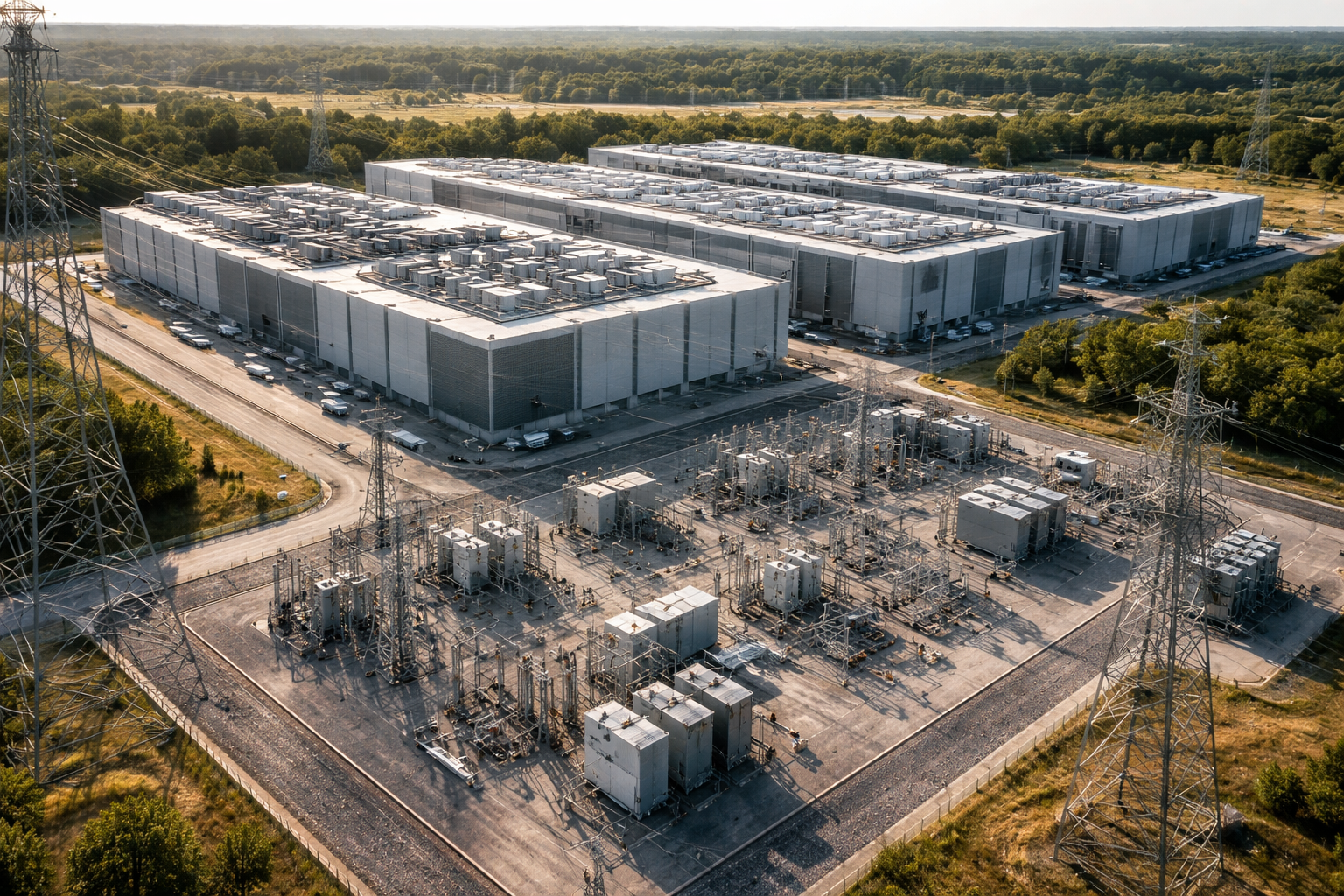
atNorth plans to develop a new data centre campus in Salo, Finland, with 75MW of power secured for its first phase and a route to 230MW across the wider site. FIN05 will connect through a Fingrid substation as Finland prepares for a sharp increase in electricity demand from data centres and other large industrial loads.
The 28.6 hectare campus is planned around high density computing workloads. atNorth says the complete development could reach 230MW of gross power capacity and up to 160MW of IT capacity, with the first phase expected to provide 60MW of IT capacity and power availability targeted for the third quarter of 2028.
Gross connection capacity is higher than the power delivered directly to servers because cooling equipment, pumps, power conversion systems, lighting and other auxiliary systems also consume electricity. The difference between connection capacity and IT load therefore affects both network planning and the efficiency targets applied to the site.
atNorth estimates investment in FIN05 at around €2bn, excluding customer owned servers and their installation. It says customer computing systems could represent up to another €10bn, although the power system impact is driven principally by the campus connection capacity and operating profile rather than the capital value of the IT equipment.
Connection through a Fingrid substation places FIN05 in the same transmission planning environment as several other major new Finnish loads. Fingrid said in August that data centre projects with signed connection agreements had reached nearly 5GW of planned final capacity, while agreements for more than 4GW of electricity storage had also been signed.
Large data centre loads can remain close to a high operating level for long periods, unlike many industrial processes whose consumption varies more substantially with production cycles. Several campuses connecting in the same region can therefore create a persistent increase in transmission flows rather than an occasional peak.
Fingrid is applying additional technical requirements to large demand facilities connected directly to the transmission system. Its framework covers installations above 30MW and includes fault ride through and the ability to limit power intake, reflecting the influence a large consumer can have on frequency, voltage and system recovery during a disturbance.
At 75MW for its first phase, FIN05 is well above that threshold if its final connection falls within the relevant category. The precise compliance package will depend on the detailed connection design, but protection, power quality, dynamic behaviour and controllability have to be considered as transmission issues rather than ordinary building services.
atNorth also plans to examine flexibility arrangements with Fingrid. A data centre could reduce demand temporarily by adjusting selected computing workloads, changing the operating mode of cooling equipment or using onsite energy assets where the facility and customer contracts permit.
Continuity requirements restrict how far that flexibility can be taken. Computing loads cannot be curtailed casually, while uninterruptible power systems and backup generation are principally installed to protect customer equipment. Any grid service therefore has to preserve the availability and power quality commitments made to the users of the campus.
Finland’s electricity demand is expected to rise as data centres, electric boilers and electrified industrial processes connect. Fingrid has warned that new capacity created by current investments is already heavily reserved in several areas, so additional demand has to be planned alongside generation, storage and transmission reinforcement.
FIN05’s proposed long term power purchase agreements with local energy suppliers can support the commercial case for additional generation, but they do not create a dedicated physical route between one generating plant and the data centre. The transmission system still has to balance total production and consumption continuously.
Heat reuse creates another potential connection with local energy infrastructure. Almost all electricity consumed by computing hardware ultimately becomes heat that cooling systems must remove. Where temperatures, distance and network economics are suitable, that heat can be recovered for district heating or nearby users instead of being rejected to the environment.
atNorth already has heat reuse arrangements elsewhere in the Nordic region and says it will work with local stakeholders in Salo to examine comparable options. The usable quantity will depend on cooling temperatures, the availability of a heat network and demand from customers able to accept the recovered energy.
Power availability for the first phase is not expected until 2028, leaving connection engineering, construction and customer deployment ahead. By that point, Finland may have several gigawatts of additional data centre projects competing for network capacity.
FIN05 is consequently part of a much wider change in Finnish system demand. Securing the initial 75MW connection establishes the first electrical milestone; integrating a campus that could ultimately reach 230MW without creating an inflexible transmission constraint will be the longer engineering challenge.