IN Brief:
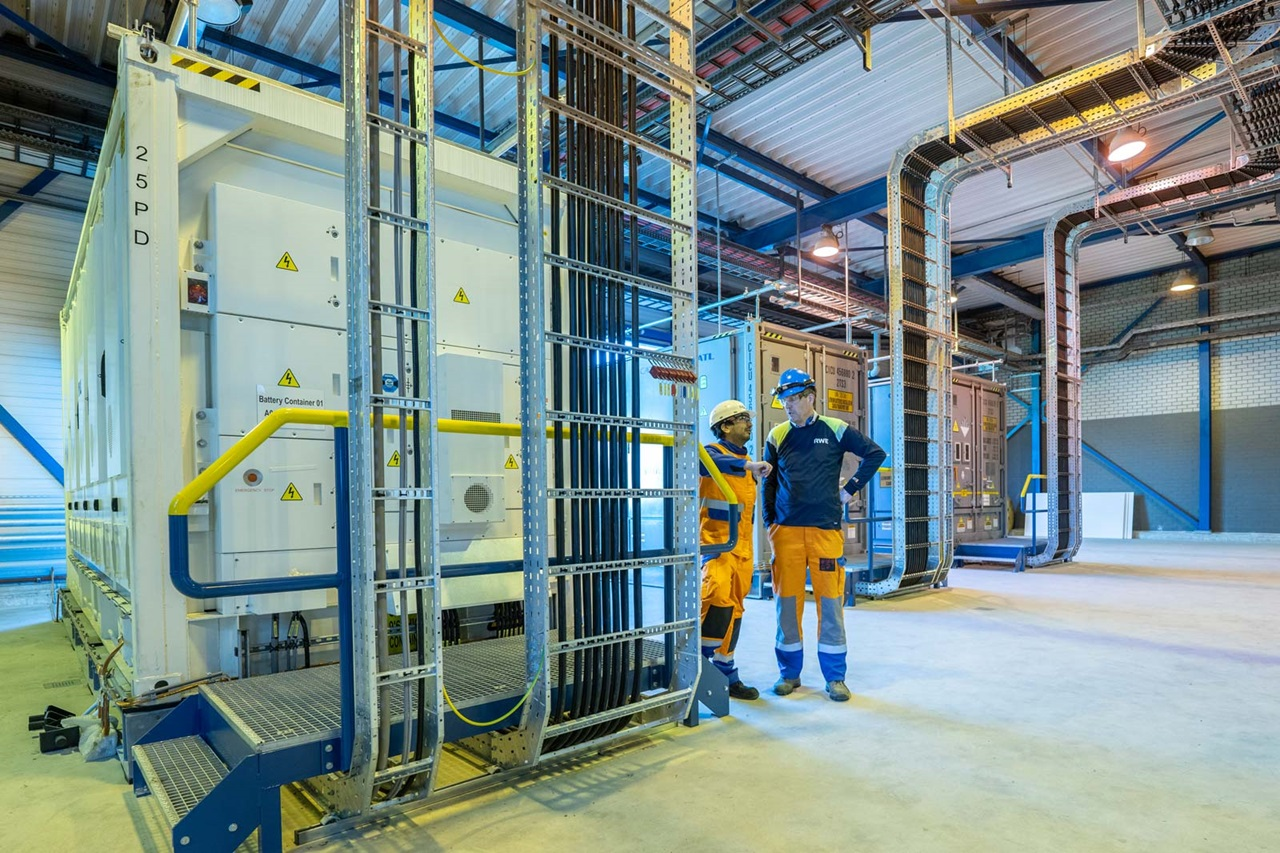
- RWE will build a 400MW/1.1GWh lithium-ion battery using 208 containers at its Moerdijk power station.
- TenneT capacity-steering arrangements will dispatch the battery to relieve congestion in Noord-Brabant and support additional grid connections.
- Commissioning is planned for Q2 2028, with the system also equipped to provide instantaneous reserve and support OranjeWind integration.
RWE has taken the final investment decision on a 400MW/1.1GWh battery energy storage system at its Moerdijk power station in the Netherlands, moving one of the country’s largest planned batteries into construction. The lithium-ion installation will comprise 208 battery containers and is scheduled for commissioning in the second quarter of 2028.
The system will be able to deliver its full output for almost three hours, giving it substantially more energy duration than the smaller batteries historically deployed for rapid frequency-response services. At maximum discharge, RWE says the stored energy could cover the evening peak demand of around 500,000 households for close to three hours.
Moerdijk sits in Noord-Brabant, where electricity-network congestion has become a material constraint on new connections. The battery will use the existing substation at RWE’s power station and operate under capacity-steering arrangements with transmission system operator TenneT, allowing charging and discharging to be coordinated around network conditions.
TenneT and regional distribution operator Enexis will assess how the additional flexibility changes available network capacity and incorporate the project into the next congestion-management review for the area, due in December 2026. The intention is to create additional headroom for customers waiting to draw electricity from a constrained network.
The battery will also be equipped to provide instantaneous reserve. Moerdijk already hosts a 7.5MW/11MWh synthetic-inertia battery, commissioned in 2025, which uses grid-forming converter technology to respond rapidly to frequency deviations. The new 1.1GWh installation adds a far larger energy reservoir alongside that fast-response capability.
Its operating role also extends into RWE and TotalEnergies’ 795MW OranjeWind offshore wind programme. OranjeWind entered its main offshore construction phase earlier this month, with the first monopile installed in the Dutch North Sea and turbine installation scheduled during 2027.
The wider OranjeWind system-integration programme combines offshore generation with flexible demand and storage rather than treating the wind farm as an isolated generating asset. Batteries at Moerdijk and Eemshaven sit alongside electrolysers, electric boilers, and smart charging, allowing electricity to be absorbed when renewable output is high and redirected when system conditions tighten.
Battery development at this scale is changing the balance between power and energy in European storage projects. Earlier systems were often sized around short-duration ancillary services, where a high megawatt rating mattered more than stored energy. A 400MW/1.1GWh installation can still respond within seconds, but it can also move substantial quantities of electricity across several hours.
Location remains critical. A battery connected behind the wrong network constraint cannot automatically relieve congestion elsewhere, and charging at the wrong moment can intensify the bottleneck it is intended to address. Moerdijk’s connection beside existing high-voltage infrastructure, combined with TenneT’s capacity-steering arrangements, gives the project a defined operating role within the constrained Noord-Brabant system.
The use of an established power-station site also provides access to existing electrical infrastructure. Brownfield generation sites can offer high-voltage compounds, switchgear interfaces, access roads, and established grid connections, although a battery of this scale still requires new transformers, power-conversion equipment, protection systems, fire-safety systems, control hardware, and detailed compliance testing before energisation.
Coordination between the battery-management system, power-conversion equipment, plant controller, and TenneT’s dispatch requirements will determine how effectively the asset can move between market operation and network support. The same stored megawatt-hour cannot be committed simultaneously to congestion relief, wholesale trading, and reserve services, so the control platform will need to preserve sufficient state of charge for whichever obligation takes priority.
RWE currently operates two battery systems in the Netherlands: the 7.5MW/11MWh inertia installation at Moerdijk and a 35MW/41MWh battery at Eemshaven. Across its international portfolio, the company reports around 1.7GW of battery storage in operation and a further 3GW under construction.
Construction of the new Moerdijk system is due to begin shortly, followed by container installation, grid-interface work, protection testing, control integration, and commissioning. The Q2 2028 target gives RWE less than two years to turn a 208-container battery into a dispatchable grid asset whose value will depend as much on when it charges and discharges as on its 1.1GWh nameplate capacity.