IN Brief:
- Two trial areas across Sydney and the Central Coast are intended to reach around 32,000 customers.
- The Botany-area programme plans roughly 130 batteries across 12 candidate locations.
- ARENA is providing A$13.2 million while research will examine customer, market, and regulatory outcomes.
Ausgrid has launched a community power network trial that will coordinate distributed batteries with local rooftop solar across parts of Sydney and the Central Coast, testing a network-led model for storing surplus generation and sharing the resulting value across participating communities.
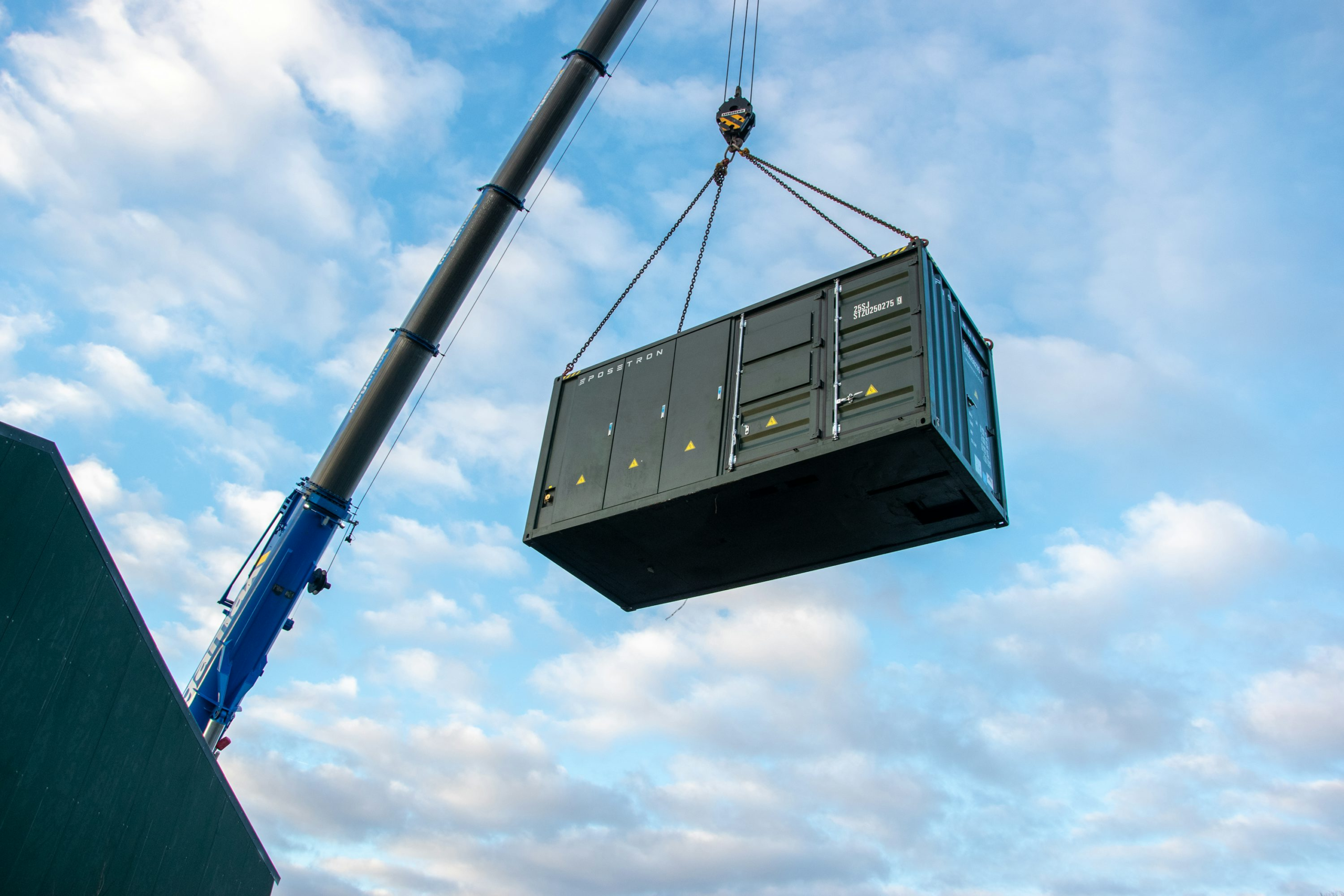
The programme is intended to benefit around 32,000 customers. Its first trial area covers Mascot, Botany, Rosebery, Eastlakes and Pagewood in Sydney’s Bayside area, where approximately 130 batteries are planned across 12 candidate sites. A second trial will cover communities on the Northern Central Coast.
The batteries will absorb surplus solar electricity when local generation is high and release energy later as demand rises. Ausgrid is also targeting larger rooftops on industrial buildings, schools, shopping centres and other premises where photovoltaic capacity can exceed the host property’s daytime consumption.
The operating problem is increasingly familiar on distribution networks with high rooftop-solar penetration. Residential and commercial photovoltaic systems can produce strongly around the middle of the day while local electricity demand remains comparatively low. The same feeder can then move back towards heavy imports during the evening as solar output falls and household demand increases.
Those changing flows affect voltage, transformer loading and the amount of additional distributed generation that can be connected without reinforcement. A community battery adds controllable demand during a solar-rich period and controllable supply later, allowing part of the daily imbalance to be shifted through time.
Ausgrid’s project is broader than a collection of standalone batteries. The assets are intended to operate as a coordinated network, with control systems deciding how individual units respond to local electricity flows, stored energy, customer demand and other operating signals.
The model also aims to increase the incentive for owners of large rooftops to install more solar than they require for their own immediate consumption. Midday exports can have limited commercial value where local generation is already abundant, whereas storage creates a route to retain that energy until demand and system value are higher.
Customers without their own solar or battery equipment are also intended to benefit. Ausgrid says revenues generated through the community batteries will contribute to a pool distributed across homes and businesses within the trial areas, including renters, apartment residents and properties that cannot practically install their own systems.
The final benefit-sharing formula has not been fixed. Ausgrid is working with communities, consumer organisations and researchers on the arrangement, while Australian Energy Regulator approval will be required before payments can be made.
The network estimates that a customer without rooftop solar could receive benefits of around A$150 to A$200 a year under the model being tested. The eventual value will depend on battery revenues, operating costs and the mechanism approved by the regulator rather than being a guaranteed saving at this stage.
The project is supported by A$13.2 million from the Australian Renewable Energy Agency. Research linked to the trial will examine how customer, market and regulatory arrangements influence the operation of community energy systems and whether the approach can be repeated elsewhere.
Control strategy will determine much of the electrical value. A distributed fleet has to balance local network conditions against state of charge, forecast photovoltaic output, expected demand and any market opportunity available to the batteries.
Those objectives can compete. Charging aggressively to capture midday solar may leave less available capacity if another network condition requires additional charging later, while discharging for a market opportunity can reduce the energy available to manage an evening peak. The fleet therefore needs forecasting and optimisation rather than a fixed charge-and-discharge timetable.
Ausgrid says the community batteries can provide approximately two to four hours of local power at full output. That is sufficient for intraday energy shifting and peak reduction, although operating part of the network independently during an upstream outage would require additional islanding, protection and voltage-control arrangements.
The trial could also defer some conventional network reinforcement. Distribution operators traditionally respond to sustained load growth or export constraints with larger transformers, upgraded conductors or new substations. Storage can reduce or delay some of those requirements where the constraint is driven by predictable peaks rather than continuous loading.
Batteries are not a substitute for all network investment. Electrification, EV charging, industrial development and sustained growth can still require larger physical assets, while storage remains limited by both power rating and available megawatt-hours.
The programme will therefore be judged on measured network performance as much as customer participation. Solar hosting capacity, local peak flows, battery utilisation, operating revenue and the final benefit-sharing arrangement will show whether a distributed community battery network can become a repeatable alternative to conventional reinforcement in suitable locations.