IN Brief:
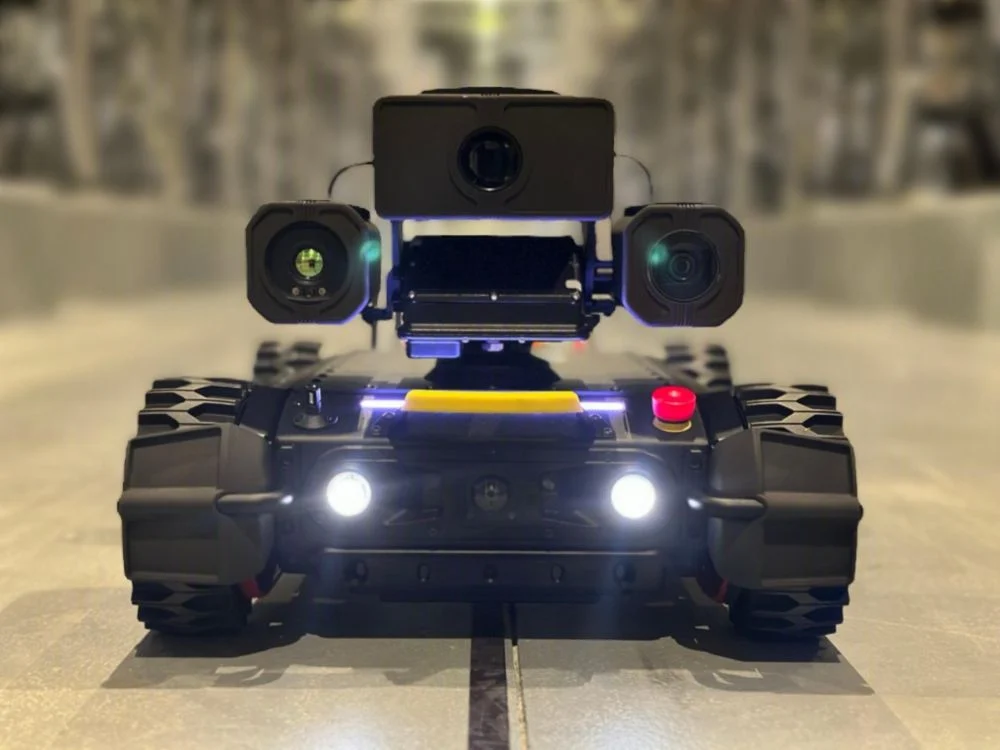
- Seven additional robots are being introduced across Blackhillock, Spittal, Kergord, and Noss Head HVDC facilities.
- The eight-machine fleet is expected to complete more than 5,000 autonomous inspections and travel over 1,700km during the next 12 months.
- Thermal and ultraviolet monitoring supports earlier fault identification, while the ODIN programme is developing AI-assisted condition analysis.
SSEN Transmission is expanding autonomous inspection across its high-voltage direct-current infrastructure in northern Scotland, with seven additional robots being introduced at converter and switching stations following two years of operation with an initial machine at Blackhillock.
The new units are being deployed across Blackhillock, Spittal, and Kergord HVDC converter stations and the Noss Head DC Switching Station at Wick. Together with the original Blackhillock robot, the programme takes SSEN Transmission’s inspection fleet to eight machines.
The network operator expects the robots to complete more than 5,000 autonomous inspections during the next 12 months while travelling a combined distance of more than 1,700km. Their role is to perform regular monitoring inside electrical environments that can be difficult or impossible for personnel to enter while equipment remains energised.
HVDC converter stations operate at very high voltage and contain converter equipment, switchgear, busbars, transformers, cooling systems, and associated control infrastructure. Safe human access to some areas depends on the operating state of that equipment, which can make conventional inspection dependent on restricted access arrangements or outages.
Autonomous machines offer a different approach. A robot can repeatedly travel an established route, stop at defined inspection points, and collect measurements from broadly consistent positions without requiring the high-voltage environment to be made accessible for every routine observation.
SSEN’s trial programme has already captured thermal and ultraviolet images inside energised HVDC halls. Thermal monitoring can reveal unusual heating associated with problems such as deteriorating connections, abnormal resistance, cooling deficiencies, or overloaded components, while ultraviolet imaging can help detect electrical discharge activity.
The greater value comes from repeating those measurements. A single inspection gives engineers a snapshot of equipment condition; regular autonomous surveys produce a sequence of observations that can be compared over time.
A component does not necessarily have to exceed a fixed temperature threshold before its behaviour becomes interesting. If its operating temperature begins to diverge consistently from similar equipment under comparable loading and ambient conditions, that trend can justify closer investigation before the defect develops into an outage.
This is the basis of condition-led asset management. Fixed maintenance intervals remain useful for many tasks, but more frequent condition information can allow inspection and replacement decisions to respond to the actual behaviour of individual assets rather than relying exclusively on calendar-based intervention.
The consequences matter particularly on transmission equipment. HVDC infrastructure can transfer large volumes of electricity between regions and is increasingly used to connect remote renewable generation. A forced converter-station outage can therefore remove a substantial transmission path from service rather than affecting only one local electrical load.
Earlier identification of abnormal equipment behaviour can give engineers more opportunity to investigate, plan an intervention, secure replacement parts, and coordinate an outage before a developing defect causes an unplanned loss of availability.
Repeatability is another advantage. Manual inspections remain essential, but observations made by different personnel at different distances, angles, and operating conditions are difficult to compare precisely. A robot following the same route can collect sensor data from defined positions and make trend analysis more consistent.
The machine does not replace engineering judgement. A higher temperature, ultraviolet signature, or other anomaly is not automatically a diagnosed fault. Electrical loading, ambient temperature, equipment design, sensor condition, and recent maintenance can all change the measurements.
Condition-monitoring systems therefore have to provide enough context for engineers to distinguish genuine deterioration from normal operating variation. Increasing the volume of inspection data is useful only if the resulting information can be prioritised without overwhelming maintenance teams with false alarms.
SSEN developed the robotic approach with Ross Robotics through a three-year innovation collaboration supported by Ofgem’s Network Innovation Allowance and Strategic Innovation Fund mechanisms. The significance of the latest deployment is that the technology is moving beyond a limited trial and into routine asset-monitoring activity.
That transition is more demanding than demonstrating that a robot can move around an HVDC hall. The machines need maintenance support, reliable communications, repeatable inspection routes, appropriate cybersecurity controls, and an operating process that ensures significant observations reach engineering teams quickly enough to influence asset decisions.
SSEN and Ross Robotics are also continuing development through the ODIN — Optimisation and Diagnostic Innovative Networks — project. ODIN is examining how artificial intelligence can be combined with autonomous inspection data to provide deeper assessment of asset condition.
Automated analysis is a logical next step when eight machines are expected to generate thousands of inspection records, but it introduces its own engineering discipline. An algorithm that identifies unusual sensor patterns can help narrow the data requiring human review, yet anomaly detection should not be confused with automatic fault diagnosis.
False positives, sensor drift, changes in loading, and incomplete datasets all need to be managed if AI-assisted monitoring is to improve maintenance rather than create another stream of alarms. The underlying measurements also have to remain traceable so engineers can understand why a system has flagged a particular asset.
Connected inspection equipment creates a cybersecurity consideration as well. The robots do not need to control the HVDC process to become part of the station’s digital environment. Software updates, user access, communications, data transfer, and network segregation therefore have to be managed in accordance with the security requirements applied to critical electricity infrastructure.
SSEN’s immediate objective is more practical: use autonomous machines to increase the frequency and consistency of inspection in areas where conventional access is restricted. If the programme achieves its intended value, success will not be measured by the number of kilometres travelled by robots, but by whether the additional condition information prevents faults, improves outage planning, and keeps expensive HVDC assets available for longer.