IN Brief:
- The Butera battery will provide 40MW of power and 320MWh of energy capacity.
- Its eight-hour configuration could support sustained energy shifting alongside shorter balancing services.
- Financing, equipment procurement, grid delivery, construction, and commissioning remain ahead of the project.
Pacifico Energy Partners has advanced an eight-hour battery project in Sicily after regional authorities granted a single authorisation for a 40MW/320MWh system in the municipality of Butera.
The authorisation was issued to Pacifico Rame Srl on 3 June 2026 and published the following day. It covers a standalone battery intended to provide several grid services, moving the project beyond preliminary development while leaving financing, equipment procurement, construction, and commissioning still to be completed.
At its rated output, the plant could discharge 40MW for a nominal eight hours. Usable duration will depend on conversion losses, auxiliary consumption, minimum state-of-charge limits, degradation allowances, and the operating capacity reserved for contracted services.
The project has been progressing through the Sicilian consent process since at least 2023, when Pacifico agreed a co-development and investment arrangement with Ulysses Energy. The parties said they would work on development, engineering, and permitting, with Pacifico providing financial support.
Butera lies in the province of Caltanissetta, within a region where photovoltaic generation is expanding and the electricity system must manage a widening difference between strong daytime production and demand later in the day. An eight-hour battery can sustain energy shifting for longer than the one- or two-hour systems that dominated earlier European pipelines.
Duration alone does not determine the plant’s commercial role. The battery could participate in wholesale markets, balancing services, capacity arrangements, or longer-term storage procurement, depending on its grid connection, technical configuration, market qualification, and contracted revenues. Pacifico has not said which route will underpin the investment case.
Italy is developing a more structured market for storage through the MACSE mechanism, under which Terna procures capacity for future delivery. The country’s next scheduled MACSE round targets 16GWh for 2029, with Sicily among the zones expected to require substantial capacity as renewable generation grows.
A separately authorised project still faces many of the same engineering and commercial questions. Developers must secure a bankable connection position, define usable energy capacity, select cells and power-conversion equipment, establish degradation and augmentation assumptions, and decide how much capacity should be reserved for contracted obligations rather than merchant trading.
The eight-hour configuration magnifies those decisions. More battery modules are required for each megawatt of power, increasing land requirements, cable runs, thermal-management equipment, fire-safety systems, and capital expenditure. The larger energy inventory can support longer discharge periods, but its value depends on whether market spreads and system-service revenues reward sustained operation frequently enough to justify the additional cost.
Battery duration also changes over the operating life of the asset. Cell degradation reduces usable capacity unless modules are replaced or additional capacity is installed, while temperature, depth of discharge, charge rate, and cycling frequency influence the rate of decline. The final design must therefore support the promised operating duration over the relevant contract period, not merely on the day of commissioning.
Different grid services place competing demands on the same equipment. Frequency response requires rapid and accurately controlled changes in output, together with sufficient headroom around the operating point. Energy shifting requires deeper and longer cycles. Capacity or adequacy obligations may require stored energy to remain available during defined stress periods, limiting the freedom to trade immediately beforehand.
Sicily’s position adds another layer to dispatch strategy. The island is connected to mainland Italy but remains a distinct bidding zone, and local renewable output, demand, and interconnector conditions can create price and congestion patterns that differ from the national average. Storage can respond to those conditions, although it cannot replace transmission reinforcement or remove every network constraint.
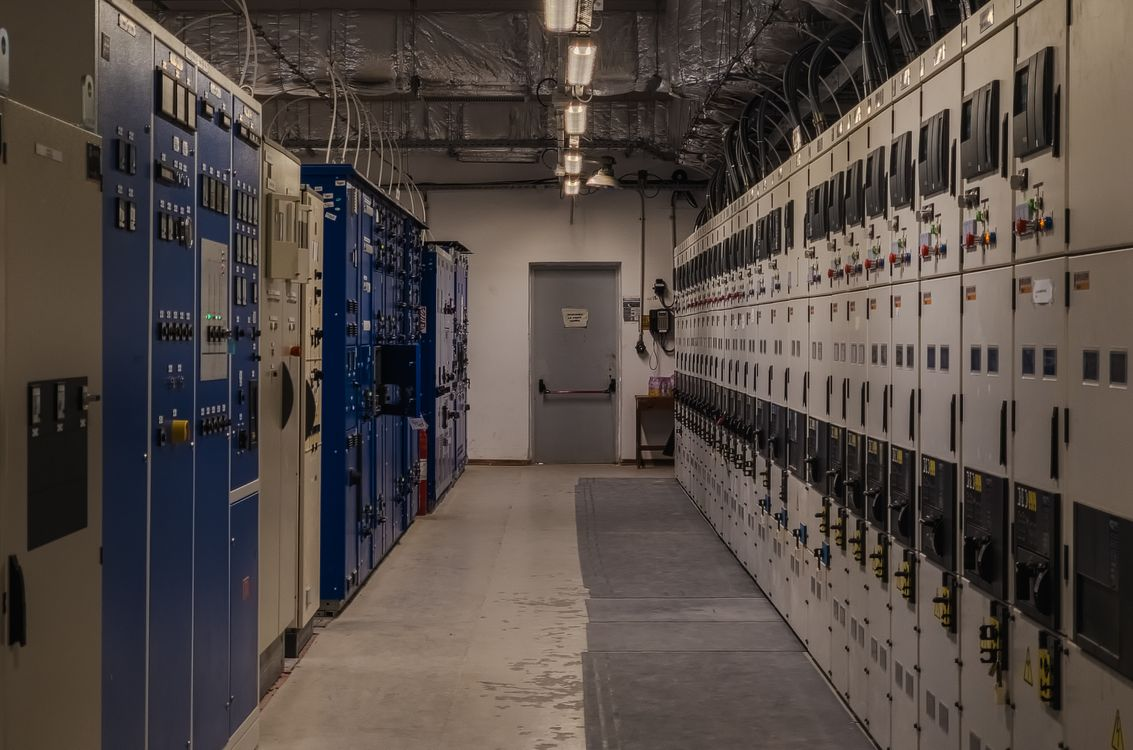
Connection design will determine how the project interacts with the wider system. Transformers, switchgear, protection, metering, control software, and communications must satisfy Terna’s requirements, while the battery management and power-conversion systems must coordinate dispatch without breaching cell or inverter limits. Fire prevention, detection, separation, and emergency response will also be central to detailed engineering.
The single authorisation is therefore a material development rather than the end of delivery. Pacifico and its partners must still complete the technical design, secure equipment and finance, satisfy connection conditions, build the plant, and pass performance and grid-compliance tests before the 320MWh system can enter service.
What distinguishes Butera is not simply its 40MW output, but the quantity of energy behind it. Eight hours places the project in Europe’s longer-duration battery segment, where the engineering is increasingly credible and the commercial structures remain rather less settled.