IN Brief:
- Tunnel boring machine Caroline has completed the 2.2km drive between Tilbury and Gravesend 49 days ahead of programme.
- The replacement tunnel will carry 12 cables forming part of existing 400kV transmission circuits across the Thames.
- Machine removal, cable installation, overhead line work, testing, and network integration remain before the wider programme completes.
National Grid has completed the 2.2km tunnel drive beneath the River Thames between Tilbury and Gravesend 49 days ahead of programme, ending the main tunnelling phase of its Grain to Tilbury electricity network upgrade.
Tunnel boring machine Caroline broke into the reception shaft at Gravesend on 27 September after installing more than 10,000 precast concrete lining segments and almost 1,700 tunnel rings. National Grid attributes the early finish to sustained tunnelling performance, favourable ground conditions, continuous segment logistics, and reliable treatment of excavated material.
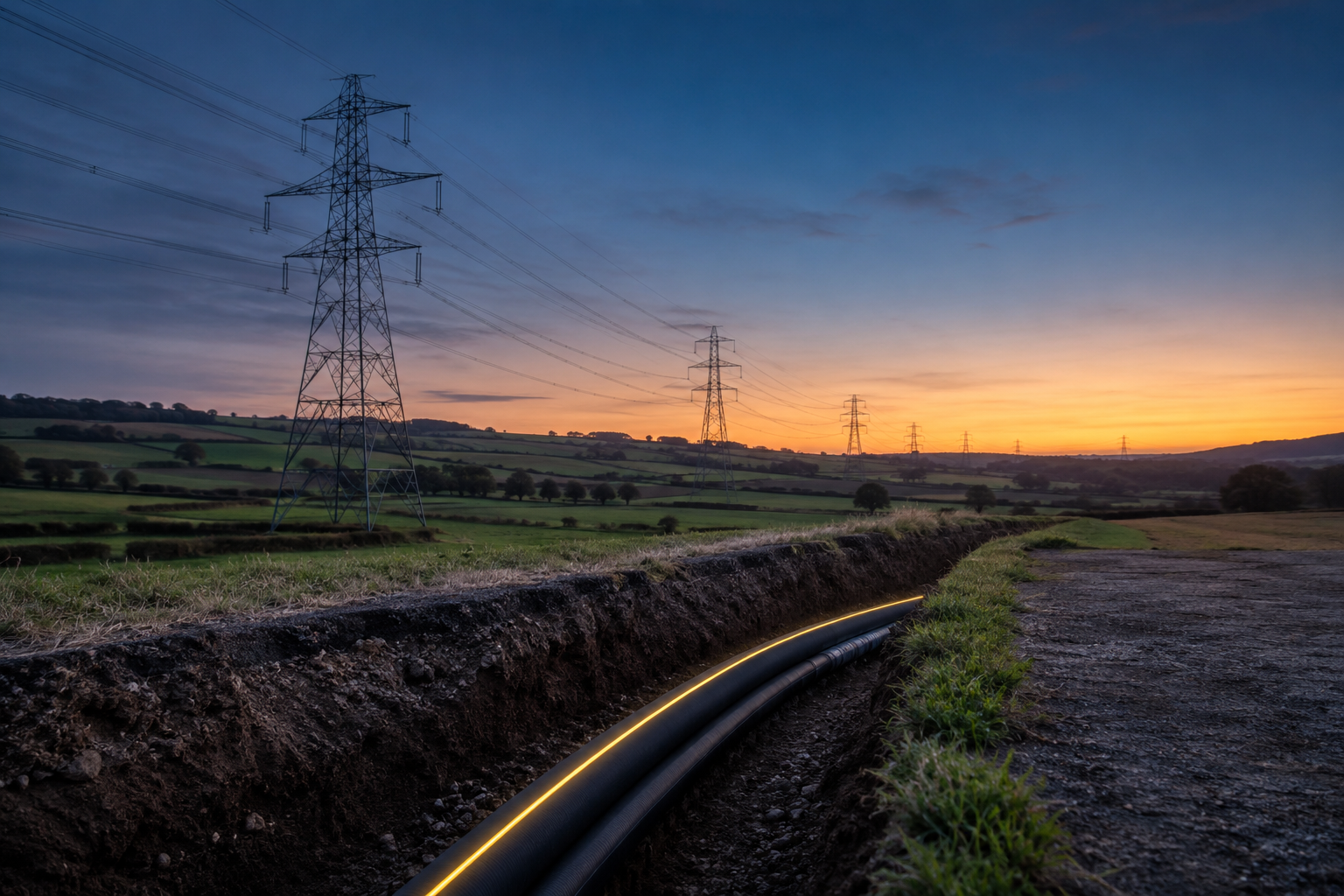
The new bore is an electricity transmission asset rather than a transport tunnel. It will replace the existing Thames cable tunnel, which dates from the late 1960s and is approaching the end of its operating life. Twelve new cables will carry the tunnelled sections of the Tilbury to Grain and Tilbury to Kingsnorth 400kV circuits beneath the river.
National Grid’s wider Grain to Tilbury programme also includes work on overhead lines between Tilbury, Kingsnorth, and the Isle of Grain. The tunnel and line upgrades are intended to replace ageing assets and increase the capability of the transmission corridor as generation and demand patterns change.
The drive reached its halfway point in August after a slower initial period while the machine settled into stable operation. Performance then increased, with National Grid recording 926 metres of advance and 712 installed rings during the most productive month. The best week covered 229 metres, while the strongest 24 hour period achieved 41 metres.
That progress depends on a continuous construction chain rather than the cutterhead alone. Excavated material has to be removed as the machine advances, lining segments must reach the working face in the correct sequence, and each concrete ring must be installed behind the machine before the next section can proceed. A failure in spoil handling or segment delivery can stop progress even when the boring equipment remains available.
A separation plant processed excavated material throughout the drive, while digital design systems and live machine data supported monitoring of tunnelling conditions and construction quality. National Grid also used an underwater telescopic camera for inspections where direct intervention would have been more difficult.
The final approach to Gravesend required the reception shaft to be flooded before Caroline entered it. Balancing water pressure in the shaft against the surrounding chalk reduced the risk of groundwater entering uncontrollably as the machine passed through the final section. Dewatering then had to follow before the machine could be moved into its final position and prepared for removal.
Tunnel completion therefore removes one major civil engineering risk without completing the electrical project. Caroline still has to be lifted and dismantled, the bore has to be prepared for cable installation, and the new circuits must be installed, terminated, tested, and integrated with the existing transmission network.
At 400kV, the cables have to manage insulation stress, conductor heating, mechanical restraint, bonding, earthing, and the forces created during faults. The tunnel provides a controlled route beneath the Thames, but the electrical capability of the connection is determined by the cables and associated equipment rather than by the diameter or length of the bore itself.
Raising transmission voltage allows a given level of power to move at lower current than would be required at a lower voltage. Lower current reduces resistive losses and heating, which is one reason bulk transmission networks operate at hundreds of kilovolts. Cable ratings still depend on conductor design, insulation, installation conditions, thermal environment, and the ability to dissipate heat.
Protection settings have to be coordinated across the new underground section and the overhead circuits connected to it. A fault in one cable or associated item of equipment should be cleared rapidly without unnecessarily disconnecting healthy parts of the network. Commissioning will therefore involve more than proving electrical continuity from one side of the river to the other.
The project is also replacing ageing infrastructure while the existing network continues to serve customers. Cutovers have to be sequenced so new equipment can be tested and brought into service without creating avoidable loss of transmission capacity. Overhead line work near Kingsnorth has already begun and must eventually align with the new cable section as one operating circuit.
National Grid expects the wider Grain to Tilbury programme to continue through 2028. Finishing the bore 49 days early creates additional programme margin, but cable installation, line upgrades, testing, and final integration remain before the new route can take over the role of the 1960s tunnel.