IN Brief:
- Invinity will supply 43MWh of Endurium vanadium flow batteries for multiple Dairyland Power Cooperative sites.
- The projects form part of the US Department of Energy-supported REVIVE long-duration storage programme.
- Delivery is expected from late 2027, with the systems intended to support rural grid resilience and reliability.
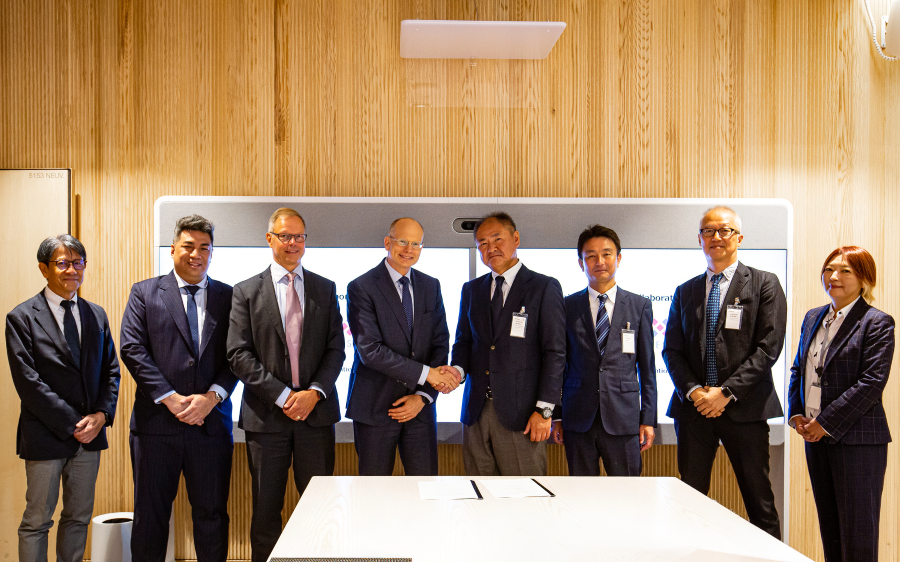
Invinity Energy Systems has secured its largest sale to date, agreeing to supply 43MWh of vanadium flow battery capacity to Dairyland Power Cooperative for long-duration storage projects across the US Upper Midwest.
The Endurium systems will be deployed at several locations in Dairyland’s service territory, which covers member-owned utilities and municipal electricity providers across Wisconsin, Minnesota, Iowa, and Illinois. Delivery is expected to begin in late 2027.
The installations form part of the Rural Energy Viability for Integrated Vital Energy programme, known as REVIVE. Dairyland is leading the US Department of Energy-supported initiative, which is intended to strengthen resilience and integrate energy resources across rural Midwestern communities.
Detailed site capacities, discharge durations, locations, and construction schedules have not yet been released. Dairyland is expected to provide further project information following an announcement event later in summer 2026.
Multi-site deployment tests repeatable delivery
The order is notable for both its size and distribution across several sites. A single 43MWh installation would concentrate civil works, grid connection, controls, and commissioning in one place. A portfolio approach requires equipment and operating arrangements to be repeated across different network locations.
That increases development complexity, but it also allows storage to be positioned closer to specific rural loads, substations, renewable resources, or areas where resilience support is most valuable. Each site can be sized and operated according to local requirements rather than treating Dairyland’s broad territory as one uniform system.
Dairyland supplies wholesale electricity and services to 24 Class A distribution cooperatives, two Class B members, and 27 municipal utilities. Those organisations collectively serve more than 800,000 people across a 44,500-square-mile area.
The cooperative operates approximately 3,700 miles of transmission lines and 400 distribution substations. Maintaining reliability across that geography involves long circuits, dispersed demand, severe weather exposure, and communities where an outage may affect essential services over a wide area.
Long-duration batteries can support several parts of that operating challenge. They may charge when electricity is abundant, discharge through sustained peaks, provide reserve, support power quality, and maintain output for longer periods than short-duration systems designed principally for rapid balancing.
The final service mix will depend on each site’s connection and control arrangements. A battery connected near a distribution constraint may operate differently from one paired with renewable generation or used to reinforce a critical local load.
Coordination across the portfolio will therefore matter. Dairyland and its operating partners need visibility of state of charge, available power, maintenance status, and forecast demand at every location, while ensuring that local dispatch does not conflict with wider transmission requirements.
Flow chemistry targets repeated deep cycling
Invinity’s Endurium platform uses vanadium flow battery technology. Energy is stored in liquid electrolyte held outside the electrochemical stack and circulated during charge and discharge, separating much of the system’s energy capacity from its power-conversion equipment.
That architecture is intended for repeated deep cycling and long operating lives. Invinity markets Endurium for projects ranging from several megawatts to more than 100MW and for discharge periods extending from several hours into long-duration applications.
Flow batteries use a different engineering model from sealed lithium-ion containers. Tanks, pumps, pipework, stacks, power conversion, controls, and electrolyte systems must operate together, while the larger balance of plant needs sufficient space and access for maintenance.
The trade-off is a chemistry suited to frequent cycling without the same relationship between cycle count and capacity loss associated with many conventional battery systems. That characteristic can be valuable where an operator expects to charge and discharge the asset regularly rather than preserve it for occasional emergency use.
Dairyland selected Endurium on the basis of its long-duration cycling capability, Invinity’s US delivery record, and the field performance of existing systems. The 43MWh agreement follows a 32MWh order for Pacific Steel Group in California and a 2MWh commercial and industrial project in Wisconsin.
The sequence gives Invinity three recent US project wins and adds demand for its North American manufacturing capacity. The contract value has not been disclosed, leaving the financial contribution dependent on final site configuration, delivery timing, and revenue-recognition arrangements.
Delivery beginning in late 2027 gives both parties time to complete project engineering, site preparation, network studies, procurement, manufacturing, and logistics. It also leaves substantial execution risk between the contract announcement and commercial operation.
Each location will require foundations, electrical equipment, communications, protection, control integration, safety procedures, and acceptance testing. Differences between sites may prevent a fully standardised design even where the same battery platform is used.
A multi-site programme also places pressure on manufacturing consistency and field support. Components must arrive in the required sequence, installation teams must move between locations without delaying commissioning, and spare-parts and maintenance arrangements must cover a dispersed asset base.
For Dairyland, the principal test is whether the portfolio improves reliability at a cost appropriate for member-owned rural systems. For Invinity, it is a demonstration that flow batteries can be manufactured and deployed repeatedly across a utility territory rather than delivered as an isolated pilot.
The 43MWh order is the company’s largest, but the more consequential figure will emerge after operation begins: the amount of energy cycled through the systems, across how many years, and with what availability. Long-duration storage is sold on endurance. These projects will eventually have to provide the operating record.