
IN Brief:
- The 42MWp Derril Water Solar Park has been curtailed during its first full summer because of temporary network constraints in north Devon.
- The restriction is linked to operating conditions around the Alverdiscott transmission substation and may remain until September 2026.
- The shutdown demonstrates how upstream transmission configurations can constrain distribution-connected generation despite completed local compliance testing.
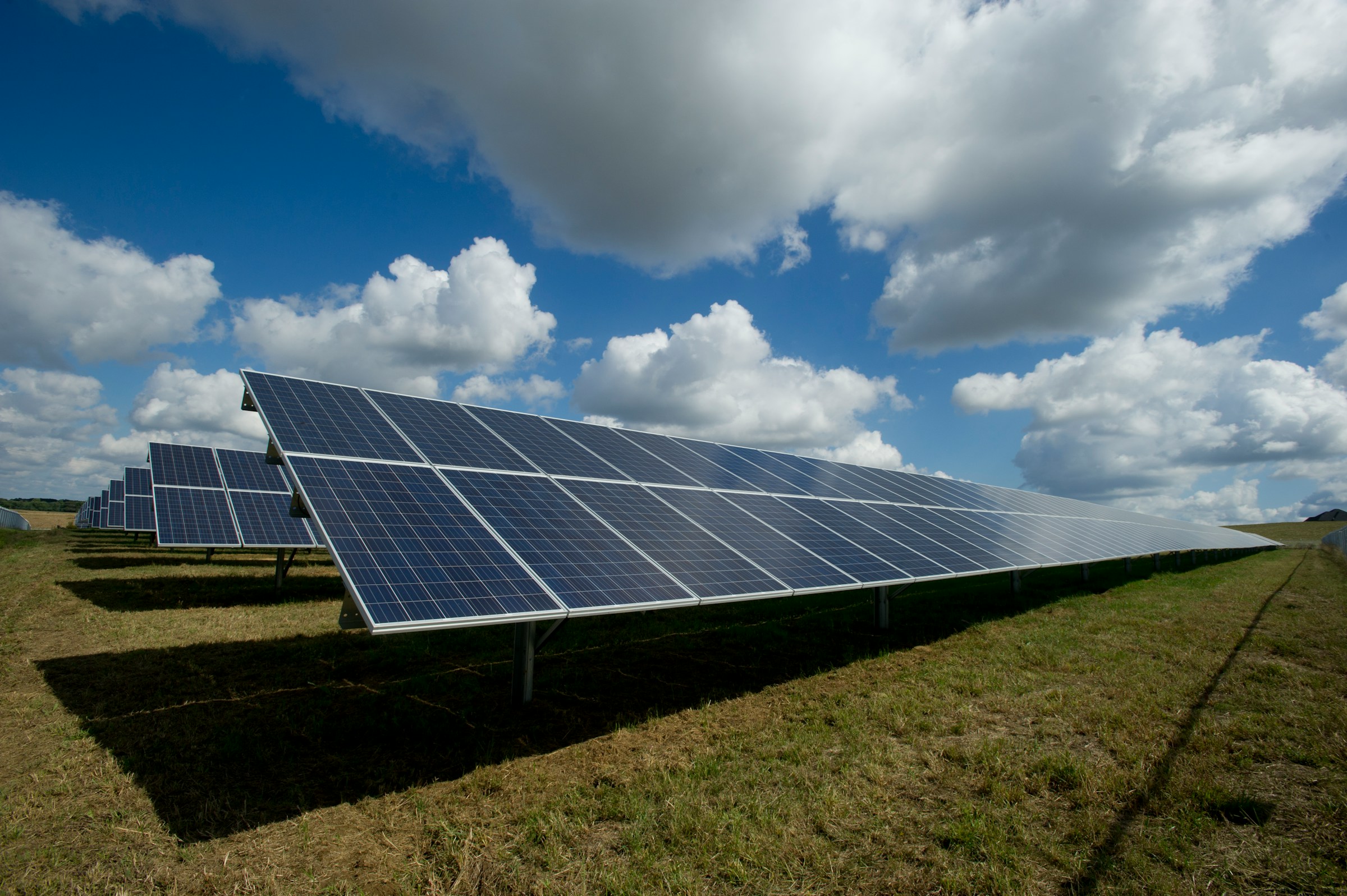
Derril Water Solar Co-op has been required to stop exporting from its 42MWp solar park in north Devon while network operators manage temporary constraints associated with the wider Alverdiscott grid area.
Beginning during the project’s first full summer of operation, the restriction may remain in place until specialist work is completed in September 2026. Other renewable generators connected in the area have also been affected.
National Grid Electricity Distribution has linked the curtailment to the wider network configuration rather than a fault within the solar farm. A supergrid transformer was taken out of service at the request of the National Energy System Operator to maintain system security, reducing available headroom for generators connected through the local network.
Derril Water began exporting electricity in September 2025 after completing G99 compliance tests and later G100 export-control testing. The cooperatively owned project is funded by almost 10,000 households and small businesses, which raised more than £20 million alongside long-term debt finance.
Designed around approximately 70,000 modules and an operating life of up to 40 years, the solar park sells its output through a power-purchase arrangement. Members receive financial benefits linked to their share of generation, making a prolonged summer curtailment particularly damaging because the asset would normally produce a large proportion of its annual output during this period.
The cooperative has estimated that the interruption could reduce revenue by approximately £2 million. Compensation is not expected to cover the loss, leaving the project exposed to a network condition outside the operation of its own generating equipment.
A local connection depends on the upstream system
Distribution-connected generation is assessed through detailed studies before connection, with G99 testing confirming compliance across generating equipment, protection, controls, and network interfaces. G100 schemes can restrict export to an agreed level, although neither process removes the possibility of later constraints arising elsewhere on the system.
A solar farm may connect to a local feeder, but its output alters power flows through substations and transformers several voltage levels upstream. During periods of low demand and high embedded generation, electricity can flow from the distribution network towards the transmission system.
Voltage rise, transformer thermal limits, fault levels, and reactive-power requirements become harder to manage as output increases across several sites at once. An outage or altered transmission configuration can reduce available capacity even where individual generators remain compliant with their connection agreements.
The north Devon restriction demonstrates the distinction between holding a connection and enjoying unrestricted access to it. Projects may be curtailed when maintenance, delayed reinforcement, equipment outages, or unusual power-flow conditions reduce network headroom.
Analysis of Britain’s connection reform and transmission investment programme has highlighted the scale of reinforcement still required. Derril Water provides a direct example of the operational gap that can arise before additional transformers, voltage-control equipment, and circuits are commissioned.
Active network management can allow more generation to connect without completing every reinforcement in advance, but it transfers part of the utilisation risk to the generator. Curtailment forecasts are normally based on modelled network conditions, while an unplanned outage or changed configuration may produce a substantially different operating pattern.
Voltage control becomes central to renewable integration
High solar output creates the greatest challenge when local electricity demand is low, since reverse power flow can raise voltage and increase loading on transformers originally designed for one-directional operation. On-load tap changers, reactive-power control, voltage regulators, inverter functions, and network reconfiguration can all help, although each has defined limits.
Specialist voltage-management equipment had been expected in the area before Derril Water’s first full summer and is now due later in 2026. Delays to that installation have reduced operating flexibility while the relevant transmission asset remains unavailable.
Solar inverters can provide reactive-power and voltage-support functions, but coordinated settings and reliable communications are required if several generators are responding to the same local condition. Inverter control at one site cannot always resolve a constraint caused by a major upstream transformer or transmission configuration.
The project also exposes the concentration of curtailment risk within single-asset community schemes. Larger commercial developers can diversify across portfolios and may price network constraints into several projects, while a cooperative tied to one generating asset carries the full effect of lost output.
Restoring a secure operating arrangement will require completion of the specialist work and sufficient network headroom for Derril Water and neighbouring generators to resume export. The incident will also place connection assumptions, outage planning, voltage control, and compensation arrangements under closer examination.
The solar park’s modules and inverters remain capable of producing electricity, yet the output cannot be used while the upstream system lacks sufficient operational capacity. Renewable generation becomes dependable system capacity only when the transformers, controls, and circuits carrying it are available.

