
IN Brief:
- METLEN has taken a 40% stake in the project vehicle developing a 251.9MW solar and 375MWh storage scheme in Central Greece.
- The joint company will oversee development, construction, energy management, operation, and commercial management.
- Implementation is scheduled to begin during 2026, with completion targeted for early 2028.
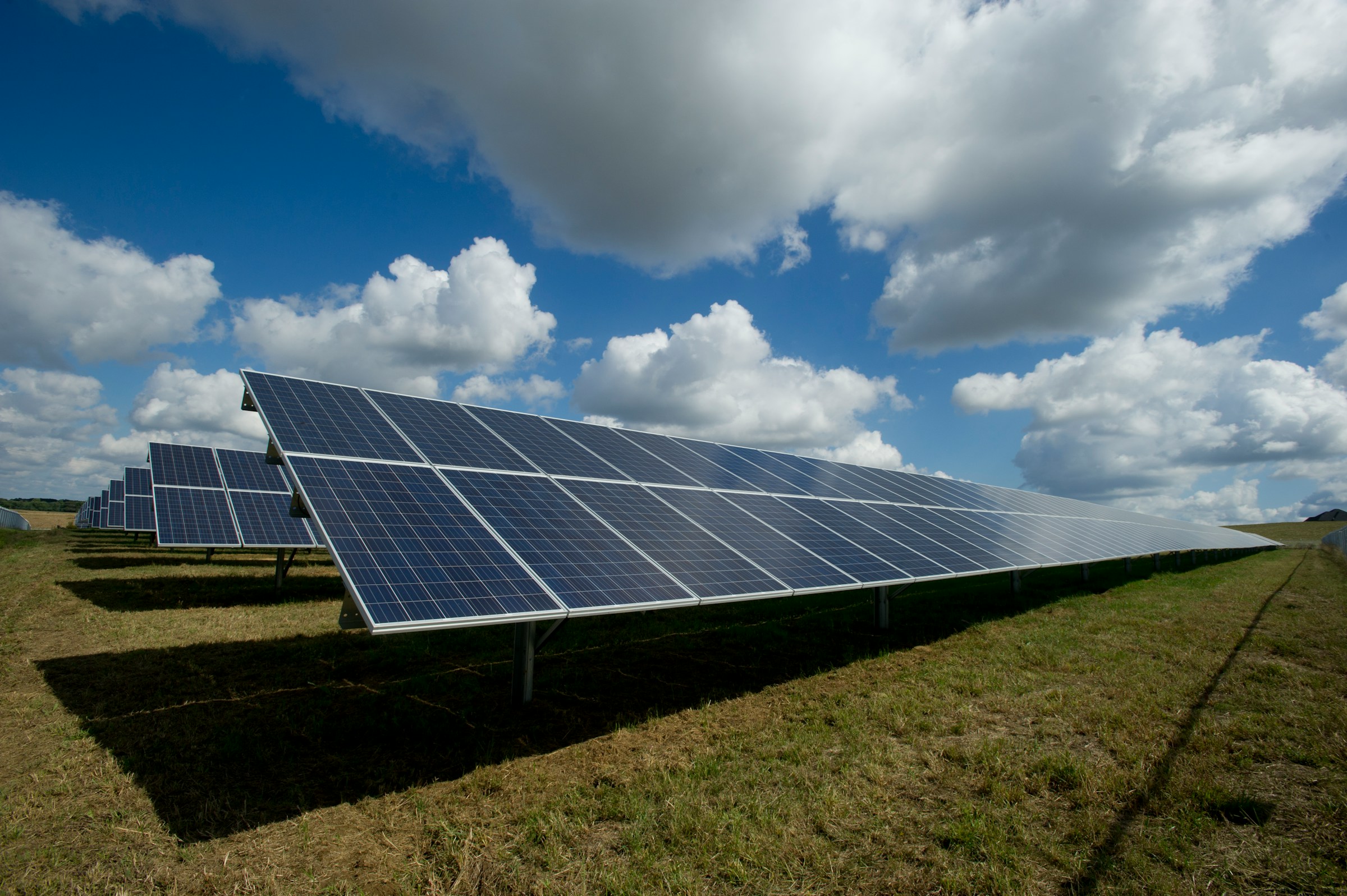
METLEN has entered the special-purpose vehicle developing a 251.9MW photovoltaic plant and approximately 375MWh of battery storage in Central Greece, formalising its partnership with Tsakos Group as the hybrid project moves towards implementation.
Under the ownership structure, METLEN holds 40% of the project company while Tsakos Group retains 60%. The venture will oversee development, construction, operation, energy management, and commercial management, placing ownership and the route to market within a single structure.
Construction activity is expected to begin during 2026, with completion targeted for early 2028. By combining a large solar asset with battery storage, the development will be able to shift part of its daytime generation into periods of higher demand or lower renewable output.
Published capacity figures identify the solar plant’s maximum electrical output and the battery’s energy capacity, although the BESS power rating and discharge duration have not yet been disclosed. Those parameters will define how quickly the 375MWh can be delivered and which services the system can provide.
Depending on the final design, the battery could support solar shifting, intraday trading, balancing, reserve, and local network management. Its commercial value will also depend on the permitted import and export limits at the grid connection.
METLEN will undertake construction and integrate the plant into its energy-management and commercial operations. That arrangement brings engineering delivery, forecasting, battery dispatch, and market participation under one industrial group, reducing the number of interfaces between the asset owner, EPC contractor, and optimiser.
Electrical design will need to coordinate the PV array, inverters, medium-voltage collection system, battery containers, power-conversion equipment, transformers, switchgear, protection, metering, and grid connection. Shared infrastructure can reduce duplication, although the controls must prevent combined imports or exports from exceeding the project’s connection agreement.
Hybrid design changes the solar operating profile
Where a standalone solar plant produces entirely according to irradiance, a co-located battery can absorb output during low-price or constrained periods and discharge later. This gives the project a more controllable export profile and reduces direct exposure to midday price compression.
The operating value depends on the relationship between generation capacity, storage size, network limits, and market conditions. A battery that is too small may have limited influence on the solar profile, while an oversized system may struggle to find enough charging opportunities within the site.
Pairing 375MWh of storage with 251.9MW of photovoltaic capacity indicates a substantial shifting role, although the final power rating will determine whether the system is optimised for shorter high-power events or longer periods of energy delivery.
Storage introduces conversion losses and degradation alongside its flexibility. Each cycle reduces usable life, while charging and discharging consume energy through the battery and power-conversion system, requiring dispatch models to balance market revenue against round-trip efficiency, warranty limits, temperature management, and long-term capacity fade.
Rapid renewable growth has placed pressure on network capacity across Greece and several neighbouring markets, with distribution queues delaying generation and storage projects. Hybrid developments can improve use of an existing connection, but they cannot remove every upstream constraint.
If local export capacity is restricted during high renewable output, the battery may absorb generation that would otherwise be curtailed. Where the wider system remains constrained during the discharge period, however, the project may still face limits despite having stored the energy.
Storage becomes part of project delivery
The joint ownership and management structure reflects a wider move away from treating batteries as optional additions to renewable projects. Storage is increasingly incorporated during initial design, allowing developers to coordinate land use, cable routes, substations, fire safety, control systems, planning, and commercial contracts from the outset.
Designing the technologies together also reduces the complexity associated with later retrofits. Adding storage to an operating solar plant may require revised connection agreements, additional protection studies, new switchgear, civil works, communications integration, and substantial changes to operating procedures.
Across Europe, projects totalling around 11GWh of new battery capacity have reinforced the importance of scale, location, connection design, and contracted revenues. METLEN’s combined role as constructor and energy manager gives the Greek development an internal route for handling those requirements.
Procurement will remain exposed to equipment lead times and changing technical standards. Battery suppliers must meet fire-safety, thermal-management, cybersecurity, warranty, and grid-code requirements, while transformer and high-voltage switchgear availability may affect the timetable even where modules and battery containers are secured.
As implementation proceeds, the final technical configuration will determine how closely generation and storage are integrated. The battery is likely to function as a central operating asset rather than an auxiliary system, controlling when a significant share of the project’s electricity enters the Greek power market.

