
IN Brief:
- Lumcloon Energy and KEPCO are developing a demonstration-scale supercapacitor energy storage system in County Offaly.
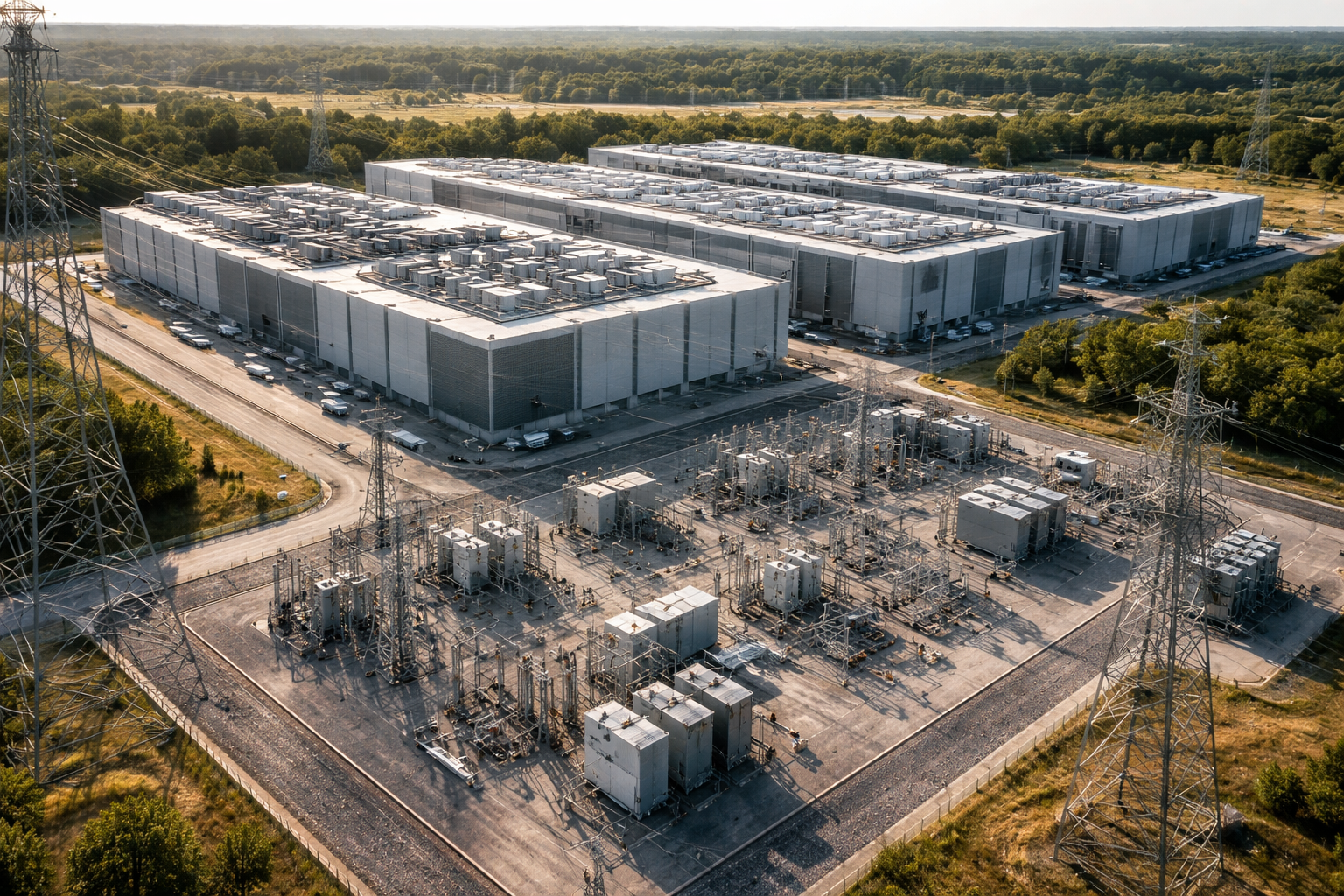
- Project Daejeon will be installed at Rhode Green Energy Park, the site of a former peat-fired power station.
- The project will be co-located with a liquid-cooled mini data centre to demonstrate power stability for digital infrastructure.
Lumcloon Energy has partnered with Korea Electric Power Corporation to develop a demonstration-scale supercapacitor energy storage system at Rhode Green Energy Park in County Offaly, Ireland.
The project, named Project Daejeon, will be installed at the site of a former ESB peat-fired power station that closed in 2003. The location connects Ireland’s legacy thermal generation estate with new storage and digital infrastructure, using a former power station site for a technology demonstration focused on grid stability.
Supercapacitors differ from conventional electrochemical batteries by offering very fast charge and discharge capability, high cycle life, and low degradation. Their lower energy density makes them less suited to long-duration energy shifting, but their response characteristics suit applications such as frequency response, voltage support, ride-through, power smoothing, and rapid stabilisation.
Project Daejeon will be co-located with a demonstration-scale mini data centre using liquid-cooling technology. The servers and IT infrastructure will be housed in a container submerged in cooling fluid, creating a live test environment for fast-response storage support around a sensitive electrical load.
Data centres increasingly behave as large, high-dependability loads inside constrained electricity systems. They require stable voltage, resilient supply arrangements, controlled thermal conditions, and careful interaction with grid connection capacity. Fast-response storage can help manage short electrical disturbances, although it remains one part of a wider power-quality and resilience design.
Ireland’s storage development pipeline is already widening beyond conventional battery siting. The Rathrush storage plan, covered at electricalnews.co.uk, shows how flexibility assets are being brought forward to support a system with high renewable ambitions, constrained grid capacity, and growing demand from electrified sectors.
The supercapacitor route adds a more specialised technology class to that landscape. Lithium-ion batteries dominate most grid-scale storage pipelines because they are commercially mature, widely available, and able to provide multi-hour energy services. Supercapacitors occupy a narrower but technically valuable area where response time, high cycling, and power quality carry more weight than stored energy volume.
That distinction is becoming sharper as electricity networks move away from conventional synchronous generation. Thermal plant historically provided inertia and certain fault characteristics as a consequence of rotating machinery. As inverter-based generation and large electronic loads grow, grids require additional equipment and control strategies to maintain stability.
The Rhode demonstration brings those questions into a practical site arrangement. A fast storage device, a digital load, and a former generation location offer a compact testbed for power stability, control response, and integration with wider clean-energy infrastructure.
Commercial deployment will depend on cost, performance, reliability, and the availability of markets or contracts that reward ultra-fast response. Supercapacitors must compete against lithium-ion batteries, flywheels, power electronics, grid reinforcement, and conventional power-conditioning equipment. The technology’s strongest case is likely to appear where repeated high-power cycling and rapid disturbance management are required.
If Project Daejeon demonstrates dependable operation, the model could inform future designs for data-centre campuses, industrial parks, and local energy hubs. The broader direction is clear enough: as electricity systems become more dynamic, stability equipment is moving closer to loads, substations, and distributed assets rather than remaining solely at the level of central generation.

