
IN Brief:
- BOOM Power has secured planning permission for the Carrog substation and cable connection on Anglesey.
- The approved infrastructure includes an underground 400kV cable and 400kV substation.
- The works will connect the consented Carrog BESS to the National Grid transmission network.
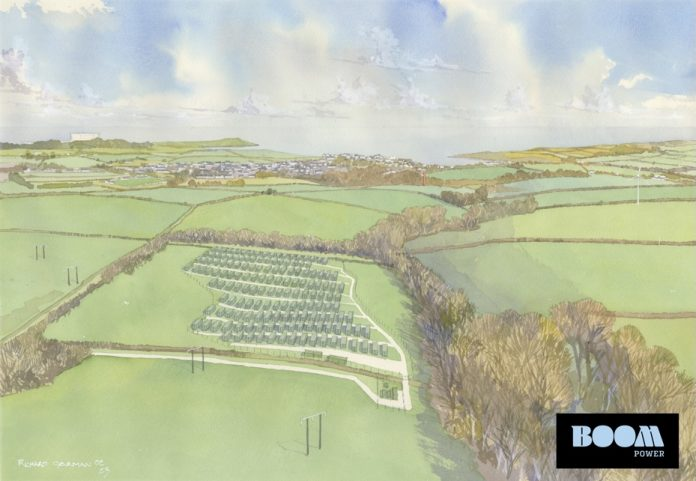
BOOM Power has secured planning permission for the Carrog Substation and Cable Connection project on Anglesey.
The approved development includes an underground 400kV electrical cable and a 400kV substation. The infrastructure will connect the previously consented Carrog battery energy storage system to the National Grid transmission network, enabling import and export of electricity from the wider project.
The proposal forms a key part of the Carrog energy project and provides the high-voltage connection infrastructure required for the storage asset to operate as a transmission-connected flexibility resource. Planning permission follows assessment by the local planning authority and statutory consultees.
Developed over several years, the project has been designed to provide critical grid infrastructure while limiting environmental effects and integrating the works into the surrounding area. The underground cable route and substation design have both required technical, environmental, and planning work.
The Carrog approval highlights a fundamental feature of battery storage delivery. Securing consent for the storage site is only one part of the project. Large BESS assets require a complete electrical connection package, including cable routing, substation works, protection design, communication links, metering, grid compliance, and commissioning arrangements.
A 400kV connection places the project firmly in the transmission category. Transmission-connected batteries can operate at a scale and location useful to wider system balancing, renewable integration, and constraint management. They also face more demanding technical requirements than smaller distribution-connected assets, particularly around fault levels, protection coordination, grid code compliance, availability, and control integration.
The underground cable element carries its own engineering requirements. Underground transmission cable can reduce visual impact compared with overhead line infrastructure, but it introduces different constraints around route design, ground conditions, thermal performance, installation access, repair times, and cost. Substation placement must also account for grid access, environmental effects, security, drainage, and long-term maintenance.
Britain’s wider cable and overhead-line debate has become more prominent as grid reinforcement accelerates, with recent analysis of underground cable and pylon trade-offs showing how route, terrain, cost, repairability, and visual impact shape network decisions. Carrog sits within that same technical context, where underground cable is a design choice rather than a universal alternative.
Anglesey has long been strategically important for generation, grid connection, and energy development. New storage and connection infrastructure can support renewable integration and system flexibility, but projects must still navigate local planning, landscape, ecology, and community considerations.
The approval also reflects the increasingly high-voltage character of UK storage. Early battery projects often connected at distribution level and operated mainly in fast-response markets. Newer projects are larger, longer-duration, and closer to transmission planning, bringing BESS development closer to conventional power infrastructure delivery.
Detailed engineering, procurement, construction planning, and grid interface work will now determine the delivery path. The substation and cable connection will need to align with National Grid requirements, equipment lead times, outage windows, commissioning procedures, and grid-code compliance. High-voltage components, including transformers, switchgear, protection systems, and cables, remain subject to supply-chain constraints across Europe.
Planning and grid connection cannot be treated separately. A BESS can secure planning permission, but if the connection route and substation design are delayed, the project remains stranded. Conversely, a well-designed connection package can improve deliverability and give the storage asset a clearer operational pathway.
As renewable generation grows, transmission-connected storage will be expected to absorb surplus output, release power during constrained or high-demand periods, and provide system services. The effectiveness of that role depends on the strength of the electrical connection as much as the battery containers themselves.
Carrog’s approval moves the project closer to that operating role. It also reinforces a wider direction in UK storage development: the next phase of BESS delivery will depend heavily on substations, cables, grid access, and high-voltage engineering.

