
IN Brief:
- Sungrow and Sunotec have commissioned Enery’s 150MW/600MWh battery storage project in Nova Zagora, Bulgaria.
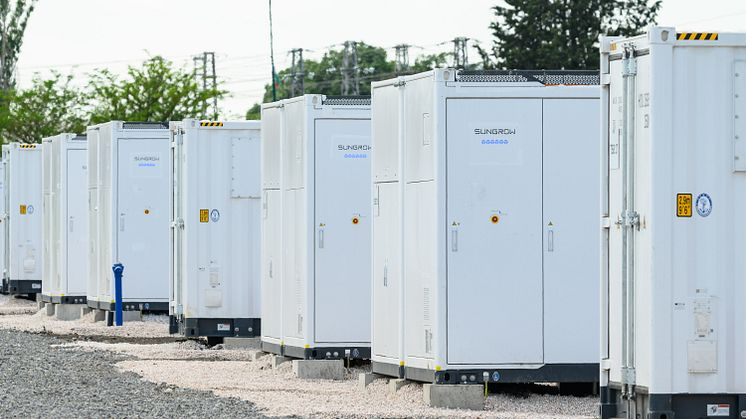
- The project uses Sungrow’s liquid-cooled PowerTitan 2.0 energy storage technology.
- The partners expect wider Bulgarian storage deployment to reach 3GWh by the end of 2026.
Sungrow and Sunotec have commissioned Enery’s 150MW/600MWh battery energy storage system in Nova Zagora, Bulgaria, adding one of the country’s largest grid-scale storage assets to commercial operation.
Developed and owned by Enery, the project uses Sungrow’s PowerTitan 2.0 liquid-cooled battery energy storage technology. It has been financed through Bulgaria’s national RESTORE programme and is designed to support grid flexibility, renewable integration, and power-system resilience.
The Nova Zagora system gives Bulgaria a significant operating reference as the country’s storage sector moves beyond pilot activity. At 150MW and 600MWh, the asset can participate in power and balancing markets while supporting a grid that is absorbing higher volumes of renewable generation.
The commissioning also represents a major milestone in the wider collaboration between Sungrow and Sunotec. The partners have set out plans for up to 800MWh of battery storage capacity in the Nova Zagora region, with further expansion of up to 1GWh under consideration.
Across Bulgaria, the companies expect 2.2GWh of storage capacity to be brought online over the next two months, with total capacity expected to reach 3GWh by the end of 2026. Such a pace would move Bulgaria rapidly from early-market deployment to one of the more active storage buildout zones in Southeast Europe.
The technical architecture of the project is built around liquid-cooled storage. Thermal performance is central to battery availability, safety, degradation management, and lifetime economics, particularly as system sizes increase and assets cycle more frequently in market operation.
Large BESS projects are now judged on the complete system rather than battery capacity alone. Cooling, monitoring, battery management, power conversion, container layout, protection, communications, fire strategy, and grid compliance all determine whether installed capacity becomes dependable operating capacity.
Nova Zagora will also provide a practical test of storage optimisation in the Bulgarian market. Revenue depends on dispatch strategy as much as connection size, with state of charge, price spreads, grid-service requirements, cycling limits, availability, and warranty constraints all influencing operating decisions.
Planning and safety expectations are increasing as battery projects become larger and more visible. Recent industry guidance on BESS planning concerns has placed fire safety, emergency response, environmental effects, cybersecurity, and operational resilience higher up the project development agenda. Those issues apply across European markets as storage assets become more closely integrated with transmission and distribution networks.
For Bulgaria, storage can help manage the system effects of growing solar and wind output. Batteries can absorb renewable generation during high-output periods, discharge into tighter periods, provide short-duration balancing, and reduce exposure to curtailment. They cannot substitute for transmission reinforcement, but they can give system operators a faster flexibility tool while network investment continues.
The scale of planned deployment will also test construction and supply-chain capacity. Bringing gigawatt-hours of storage online in a compressed period requires transformer availability, medium-voltage equipment, commissioning teams, fire-safety systems, site logistics, software integration, and market registration processes that are ready to support operation.
Nova Zagora is therefore more than an isolated storage installation. It gives Bulgaria an operational reference for larger BESS deployment, while adding practical experience in grid connection, market participation, and asset operation. If the wider pipeline is delivered as planned, the country’s storage market will mature quickly and provide a stronger flexibility base for renewable generation.

