IN Brief:
- Great British Energy – Nuclear has signed the contract that starts delivery work on the UK’s first SMR programme.
- The next phase covers site-specific design, planning, and regulatory engagement ahead of a future final investment decision.
- The move pushes factory-built nuclear power further into the UK’s wider clean-power and industrial strategy.
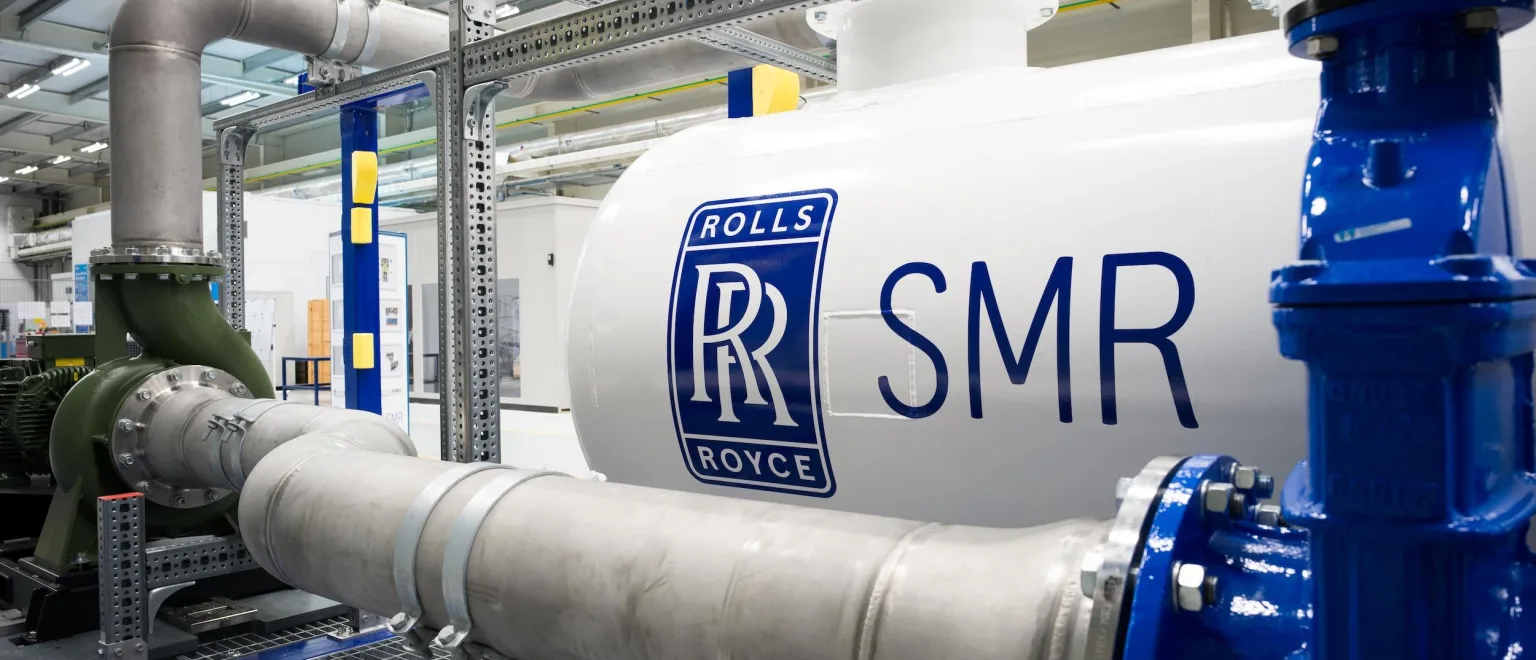
Rolls-Royce SMR has moved into the next delivery phase of the UK’s small modular reactor programme after signing a contract with Great British Energy – Nuclear to begin technology design activities for the country’s first SMR projects.
The agreement shifts the programme from technology selection into formal delivery work, with the next stage focused on site-specific design, regulatory engagement, and planning activity ahead of a future final investment decision. Rolls-Royce SMR was chosen as the preferred technology partner in June 2025, and the government’s 2025 Spending Review set aside £2.6 billion for the contract and wider programme delivery.
The first UK SMR project is expected to support around 3,000 jobs at peak construction, with additional work flowing through the domestic nuclear supply chain. Great British Energy – Nuclear has also said it has already awarded more than £350 million in contracts across the supply chain this year, underlining that the programme is beginning to create engineering demand well before any reactor enters service.
Rolls-Royce SMR’s design centres on a 470 MWe pressurised water reactor, using a heavily modularised approach intended to move more manufacturing and assembly work into controlled factory environments. That model has been at the heart of the UK’s SMR case for several years: repeatable design, standardised manufacturing, shorter on-site programmes, and a route to building multiple units rather than treating each project as a one-off civil megaproject.
The contract lands at an important point in the UK’s power strategy. Large nuclear remains essential to the country’s long-duration low-carbon generation plans, but large stations carry long lead times, high capital intensity, and significant construction risk. SMRs are being positioned as a complement rather than a substitute, with the expectation that smaller, repeatable units could add firm capacity in places where grid demand, industrial load, or retiring generation create a clear case for new supply.
That does not remove the harder parts of delivery. Site development, licensing, financing structure, supply-chain qualification, and grid connection will still determine whether the programme can move at the pace ministers want. Even with a standard design, nuclear projects only become industrial programmes when they progress beyond paper milestones and into repeatable procurement, fabrication, and construction sequences.
For that reason, the contract matters less as a political signal than as a test of execution. It creates a defined workstream through which design maturity, regulatory progress, and supply-chain readiness can be measured. If those milestones hold, the UK will have moved closer to turning SMR policy into an energy asset class with a pipeline rather than a headline.