IN Brief:
- SSEN Transmission is using advanced weather and climate data to refine how transmission assets are rated and designed.
- The work covers overhead line behaviour, corrosion, ice loading, and local environmental conditions.
- More accurate asset modelling could reduce over-engineering while supporting grid expansion for renewable generation.
SSEN Transmission is using advanced weather and climate data to increase the usable capacity of Britain’s electricity transmission network while maintaining asset safety and resilience.
The work, developed with the Met Office, applies high-resolution meteorological and environmental data to the way transmission assets are modelled. It is intended to improve the engineering assumptions used for overhead lines, substations, and wider network infrastructure, replacing broad static inputs with more location-specific analysis.
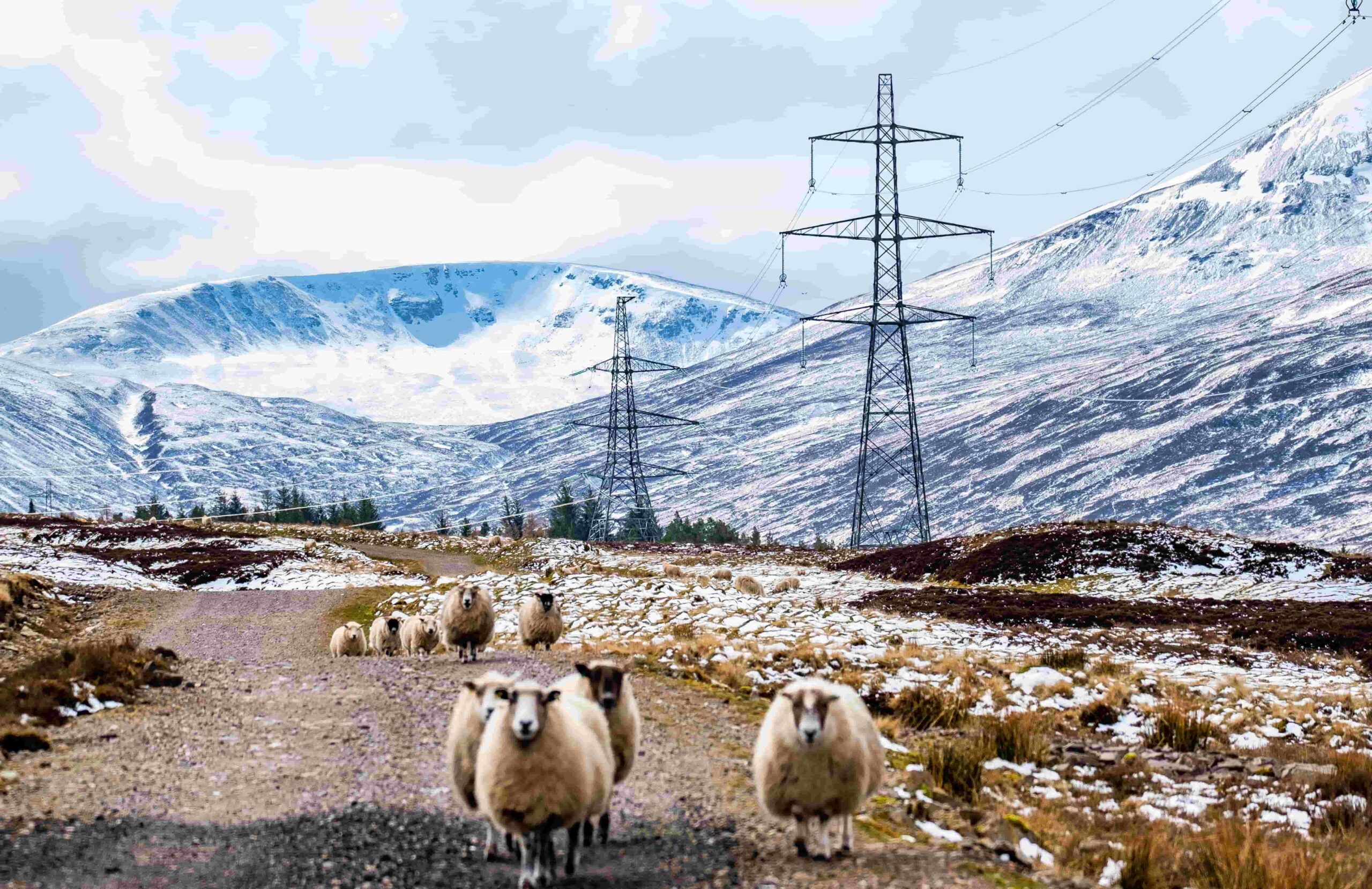
Transmission assets have traditionally been rated using conservative environmental assumptions. Those assumptions provide safety margins, but they do not always reflect the operating conditions of individual circuits. A conductor exposed to cooler temperatures and stronger winds can carry more current than one exposed to hotter, stiller air, while ice loading, corrosion, and terrain can vary significantly across different parts of the network.
More granular modelling allows engineers to distinguish between assets that genuinely need reinforcement and those that can safely operate at higher ratings under defined conditions. That distinction is becoming more valuable as transmission networks face larger renewable generation queues, rising constraint costs, and growing demand from electrification.
The UK’s transmission system was not built around the volume and geographic distribution of renewable generation now seeking connection. Large volumes of wind generation are being developed in Scotland and offshore zones, while major demand centres remain concentrated elsewhere. Moving that power efficiently requires new infrastructure, but it also requires better use of existing routes.
Weather-led modelling provides one route to that better use. Overhead line ratings are shaped by conductor temperature, ambient weather conditions, and cooling effects. When those factors are modelled more accurately, network operators can make more precise decisions on operating limits, asset replacement, reinforcement sequencing, and long-term design standards.
The approach also supports a wider shift towards data-led network operation. Electricity networks are becoming more weather-dependent on both sides of the system. Renewable output rises and falls with the weather, while the carrying capacity of overhead lines is also affected by weather conditions. Better integration of those datasets can help system planners manage generation growth without relying only on physical expansion.
That does not remove the need for new transmission infrastructure. Britain still requires substantial reinforcement to connect offshore wind, interconnectors, storage, and industrial demand. More accurate asset modelling can, however, reduce unnecessary build, defer lower-priority upgrades, and strengthen the evidence base behind investment decisions.
The work also has a resilience dimension. Climate change is increasing the value of localised environmental data, particularly for infrastructure exposed to storms, flooding, high temperatures, and icing conditions. A model that captures local weather behaviour can support safer asset management as operating conditions become less predictable.
Transmission expansion will remain one of the defining engineering tasks of the UK’s clean power programme. Weather-led modelling gives network operators another tool to release capacity from existing assets, target reinforcement more accurately, and reduce the risk of building more infrastructure than the system actually needs.