IN Brief:
- UK Power Networks Services will design SCADA for Sizewell C’s Construction Electrical Supplies network.
- The scope covers the main site substation, smaller substations, and secure communications.
- The work adds a control-system layer to one of the UK’s most complex infrastructure construction programmes.
UK Power Networks Services has been appointed to deliver the detailed design of the Supervisory Control and Data Acquisition system for the Construction Electrical Supplies network at Sizewell C.
The scope covers the end-to-end SCADA design for the temporary and enabling electrical network required during construction of the Suffolk nuclear project. The Construction Electrical Supplies system will provide resilient power across construction activities, with the control architecture designed to monitor and operate the site network in real time.
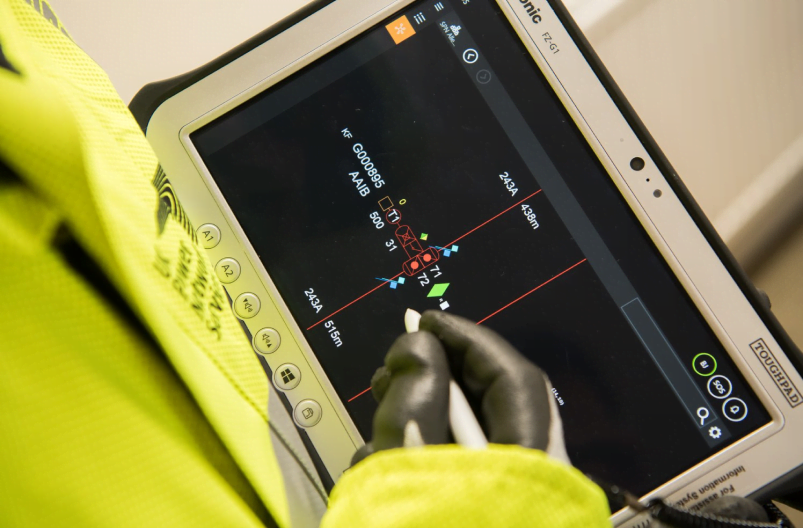
The design package includes the main substation where electricity enters the site, smaller substations distributing power around the construction area, and a secure communications network linking the system. Operators will be able to oversee the network and control it remotely from an on-site control room.
Construction sites of this scale need dependable power for cranes, temporary buildings, tunnelling and excavation equipment, welfare facilities, security systems, lighting, pumps, workshops, and specialist construction plant. On a nuclear site, the design must also reflect regulated operating conditions, cybersecurity requirements, and controlled access to critical systems.
Sizewell C is planned as a 3.2GW nuclear power station that will replicate much of the Hinkley Point C design. The construction phase is itself a major electrical undertaking, with network control, monitoring, communications, safety systems, and resilience embedded long before the completed plant enters service. The SCADA package therefore sits between construction logistics and critical power infrastructure.
Control systems now carry a larger share of major infrastructure delivery. Electrical supply is no longer managed only through switchgear, transformers, cabling, and protection settings. Real-time visibility, secure communications, remote operation, alarm handling, data capture, and cyber-resilient system architecture are part of the practical design of major power networks.
Across the wider power sector, digital network operation is being used to release capacity, monitor assets, and operate infrastructure closer to technical limits. Dutch grid operators have already used dynamic line rating, time-dependent rights, and connection controls to manage constrained networks while physical reinforcement catches up. The same operational logic appears in a different form on a major construction site, where changing loads and staged energisation require strong visibility and control.
At Sizewell C, the construction electrical network will evolve as the site moves through different phases. Loads will change as construction advances, substations are energised, temporary systems are added or removed, and contractors require power in different areas. SCADA design provides the operational layer needed to manage those changes without relying only on manual inspection or local switching.
The nuclear setting adds further requirements around resilience, documentation, and access control. Control systems must support safe operation, traceability, defined permissions, alarms, and operational discipline. Secure communications also become more important as electrical systems, site operations, and cyber requirements converge. The design must satisfy both engineering performance and the governance expected around regulated infrastructure.
The work also sits within the wider return of nuclear delivery to European energy planning. Sweden’s selection of Rolls-Royce SMR technology showed how nuclear programmes are increasingly being assessed through supply-chain readiness, grid integration, repeatability, and project execution as well as reactor technology. Large nuclear and small modular nuclear projects both require robust enabling infrastructure long before generation begins.
Construction power failures can delay work, increase cost, and create safety risks. Poor visibility across site networks can also make faults harder to isolate and recovery slower. On a site the scale of Sizewell C, temporary electrical systems must therefore be treated as managed infrastructure rather than background construction services.
By placing SCADA design into the Construction Electrical Supplies programme, Sizewell C is building the control layer required to operate a complex temporary network as an engineered power system. Large energy projects are increasingly delivered through integrated electrical, communications, cybersecurity, and operational technology design, with site power becoming part of the critical delivery architecture rather than a support function.