
IN Brief:
- UK-commissioned research has found overhead lines remain the cheapest route for major grid expansion.
- Ramboll examined undergrounding methods, while Deloitte reviewed international grid infrastructure policies.
- The findings add technical and cost evidence to the debate over pylons, underground cables, and clean-power delivery.
The Department for Energy Security and Net Zero has released government-commissioned research indicating that overhead lines remain the lowest-cost option for upgrading and expanding Britain’s electricity grid.
The research includes work by Ramboll and Deloitte. Ramboll examined different technologies for moving electricity across Britain, including newer undergrounding methods such as cable ploughing, while Deloitte reviewed policies used in other countries during electricity network infrastructure rollouts.
The findings reinforce the cost case for overhead transmission. Cable ploughing can be cheaper than traditional cut-and-cover trenching, but average build costs for underground options remain between 3.5 and five times higher than overhead lines, depending on circuit capacity.
The research has been published as the UK faces a substantial network expansion programme. Westminster has said thousands of miles of new cables are needed to meet growing demand, replace ageing infrastructure, and connect more low-carbon generation. Much of Britain’s grid was built during the 1960s, while the clean-power target for 2030 requires faster connection of wind, solar, storage, and new demand.
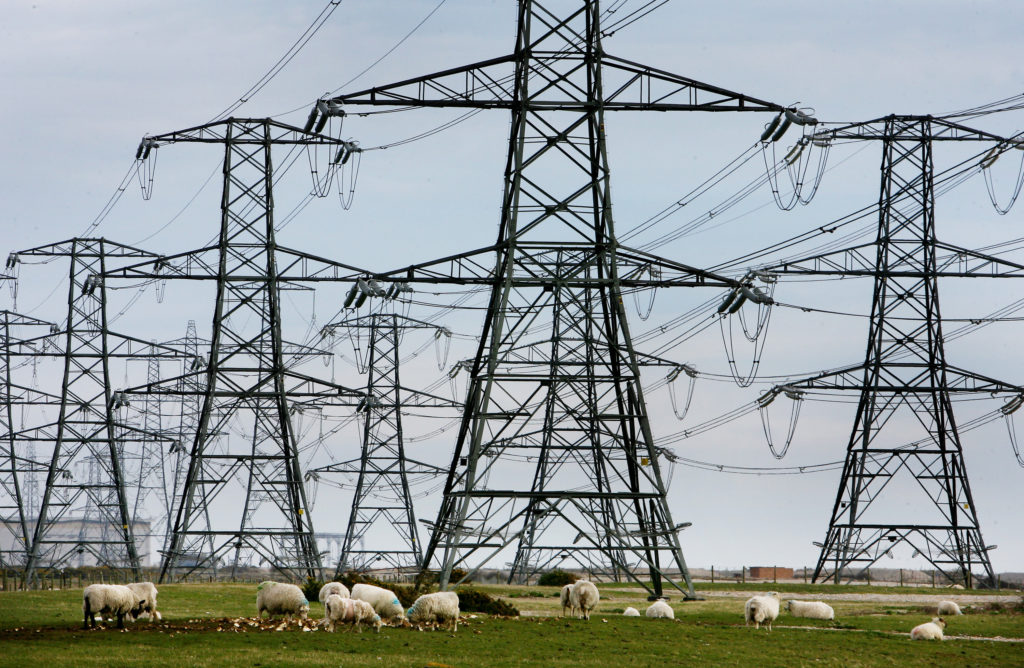
The pylon debate remains one of the most politically sensitive parts of the energy transition. New overhead lines can face strong local opposition, particularly in rural areas and landscapes already affected by large infrastructure. Campaigners have argued for undergrounding or offshore alternatives, while network planners have pointed to cost, construction complexity, environmental disturbance, and delivery timelines.
The international review adds further context. Undergrounding can reduce visual impact and may reduce opposition in some locations, but it has also added cost and time to major projects elsewhere. Germany’s experience with prioritising underground cabling for some transmission schemes has become a prominent reference point in UK policy discussions.
Engineering considerations extend well beyond visual impact. Underground cables behave differently from overhead lines, particularly at higher voltages and over long distances. Thermal performance, reactive power, fault repair, access, soil conditions, joint bays, construction corridors, and outage duration all affect project design. Overhead lines are visually prominent but generally easier to inspect, maintain, and repair.
That does not make undergrounding irrelevant. There will remain locations where environmental, community, planning, or technical factors justify underground or subsea solutions. The research instead strengthens the view that undergrounding cannot be treated as a like-for-like default replacement for overhead transmission across the wider network build-out.
Britain’s grid reinforcement programme is not limited to new routes. Substation upgrades, voltage-control assets, reactive power equipment, and operational stability measures are developing alongside major transmission corridors, including National Grid’s recent energisation of shunt reactors at three substations. Physical routes and electrical control equipment are part of the same reinforcement agenda.
The UK’s grid challenge combines new transmission routes, distribution upgrades, connection reform, flexibility, storage, and control-room visibility. Physical infrastructure remains the limiting factor in many areas, but the best project route will depend on geography, demand growth, generation location, outage planning, cost allocation, and community impact.
The government has also signalled that communities hosting new pylons could receive direct bill discounts over 10 years. Such arrangements are becoming part of the delivery model because transmission infrastructure requires public consent as well as engineering justification.
The research narrows one part of the argument. Overhead lines remain the cost benchmark for large-scale expansion, and newer undergrounding methods do not remove the cost differential. The more difficult task is translating that evidence into projects that can pass planning, maintain public confidence, and deliver capacity quickly enough for clean-power targets.
Further information is available through the Department for Energy Security and Net Zero.

