IN Brief:
- The first Enercon turbines have arrived in Iceland for the 120MW Vaðölduver wind farm.
- Components will be transported from Þorlákshöfn to the project site near Sultartangi Hydropower Station.
- The project will add commercial-scale wind generation to Iceland’s hydro and geothermal power mix.
COWI is supporting Landsvirkjun as Iceland’s first large-scale wind farm moves into turbine delivery and installation, following the arrival of the first Enercon turbines for the 120MW Vaðölduver project.
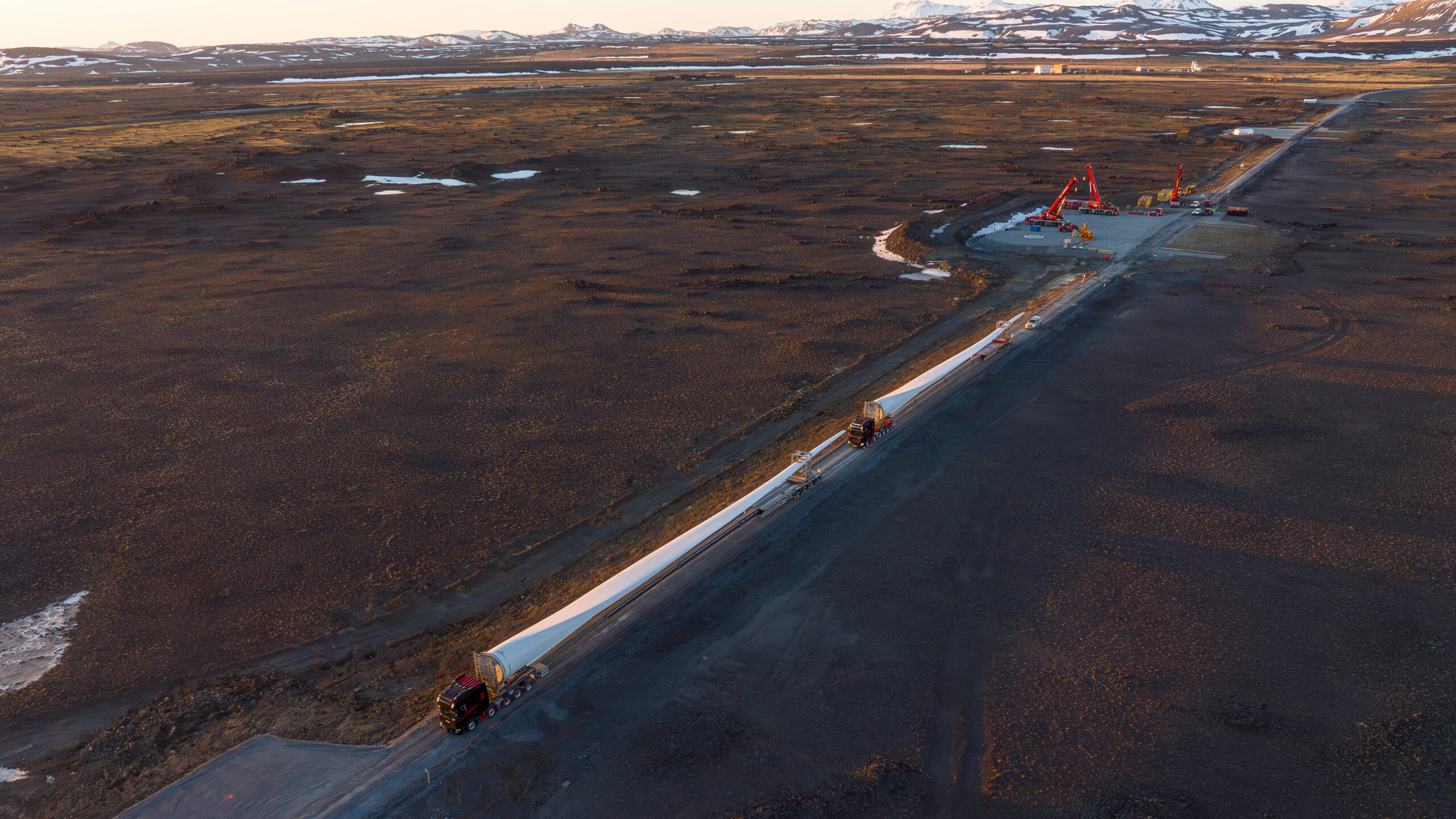
The initial turbine shipment has arrived from Germany at the port of Þorlákshöfn. Transport to the project site near Sultartangi Hydropower Station in South Iceland is scheduled to begin in early May, with final deliveries expected to be completed by the end of June.
Vaðölduver will use 28 Enercon E-138 EP3 turbines, each installed on an 81m hub height. The project covers an area of around 17km² and is located approximately 130km from Reykjavík. After several years of planning, environmental assessment, civil works, and project preparation, the scheme is now moving into its most visible construction phase.
The transport programme is among the more complex logistics operations undertaken on Iceland’s road network. Oversized blades, tower sections, nacelles, and associated components must be moved from port to site within a compressed delivery window, requiring route planning, site coordination, traffic management, and specialist handling.
COWI is providing site supervision, engineering oversight, and coordination during the delivery and installation phase. Its role follows earlier involvement in the project, including preparation of the environmental impact assessment in 2016 and technical support across civil, structural, electrical, and environmental disciplines.
The Vaðölduver wind farm is expected to enter operation in 2026–2027. Once commissioned, it will become Iceland’s first commercial-scale wind project and will complement an electricity system already dominated by hydropower and geothermal generation.
Iceland’s generation mix gives the project a different setting from many European wind developments. In most markets, wind is being added to reduce fossil generation and support decarbonisation. In Iceland, wind also adds resource diversity to an established low-carbon system, creating another generation profile alongside hydro and geothermal output.
The project also brings new technical requirements into Icelandic power generation. Turbine performance, cold-weather operation, access roads, lifting windows, grid connection, control systems, and long-term maintenance all carry specific demands in Icelandic conditions. With the first turbine components now in country, the focus moves from development and civil preparation to sequencing, installation, commissioning, and energisation.
Onshore wind remains active across Europe where resource quality, grid access, and permitting conditions support new projects. Vestas’ Bulgaria turbine order showed how established onshore markets are continuing to rebuild development pipelines, while Iceland’s first utility-scale project opens a new chapter for a power system historically built around hydro and geothermal assets.
Operations and maintenance planning will become increasingly important as Vaðölduver moves towards commissioning. Remote sites require careful access planning, spare-parts strategy, weather monitoring, and service coordination, particularly where turbine availability depends on narrow working windows. The same discipline is evident in mature wind markets, including the Mynydd Clogau wind farm maintenance contract in Wales, where long-term turbine performance depends on consistent service delivery and component availability.
For Iceland, Vaðölduver introduces utility-scale wind power into a national system already built around renewable generation. The project will not displace the country’s hydro and geothermal base, but it will add a new resource type and a new set of operating, maintenance, and grid-integration requirements.
The arrival of the first turbines marks the point at which Iceland’s wind programme becomes a physical grid asset under construction. Transport, installation, commissioning, and system integration will now determine how quickly the country can bring its first commercial wind farm into service.