IN Brief:
- Sonaura has signed a private-wire power purchase agreement to supply Bentley Motors’ Crewe manufacturing headquarters.
- The proposed Eardswick Private Wire Solar project will have a capacity of 7MW and connect directly to the Bentley factory.
- The project remains subject to planning and regulatory approvals, with consultation and design work progressing through 2026.
Sonaura has signed a private-wire power purchase agreement to supply Bentley Motors’ UK manufacturing headquarters in Crewe through a proposed 7MW solar project.
The project, known as Eardswick Private Wire Solar, is planned on land north of the Bentley Motors factory near Bradfield Green, Crewe. It would connect directly to the factory through a private-wire arrangement, supplying locally generated electricity without relying on a standard export-and-import model through the wider grid.
Sonaura will develop and operate the solar project under the agreement. The development remains subject to planning and regulatory approvals, with the project website setting out a pre-submission consultation stage in spring 2026, a public consultation event in summer 2026, design finalisation in autumn 2026, and planning submission and decision stages in 2027.
The proposed scheme has a capacity of 7MW and is expected to support Bentley’s manufacturing operations by providing a secure, clean electricity supply close to the point of use. The project information states that the solar farm would offset about 35,365 tonnes of CO2 over its lifetime, while existing trees and hedgerows are intended to be retained and enhanced to provide screening.
The site is described as a temporary development with an operating period of up to 40 years, after which decommissioning and restoration would be secured through planning conditions. The scheme is designed as a small-scale private-wire solar farm, with proximity to the factory reducing the infrastructure required to move electricity from generation to use.
Private-wire projects are gaining ground among industrial energy users seeking greater control over power costs, carbon performance, and site energy resilience. The structure allows a generating asset to be built close to a large load and supply that load directly through dedicated infrastructure. Where site conditions, planning, land availability, and load profile align, it can provide a practical route to decarbonising part of an industrial electricity requirement.
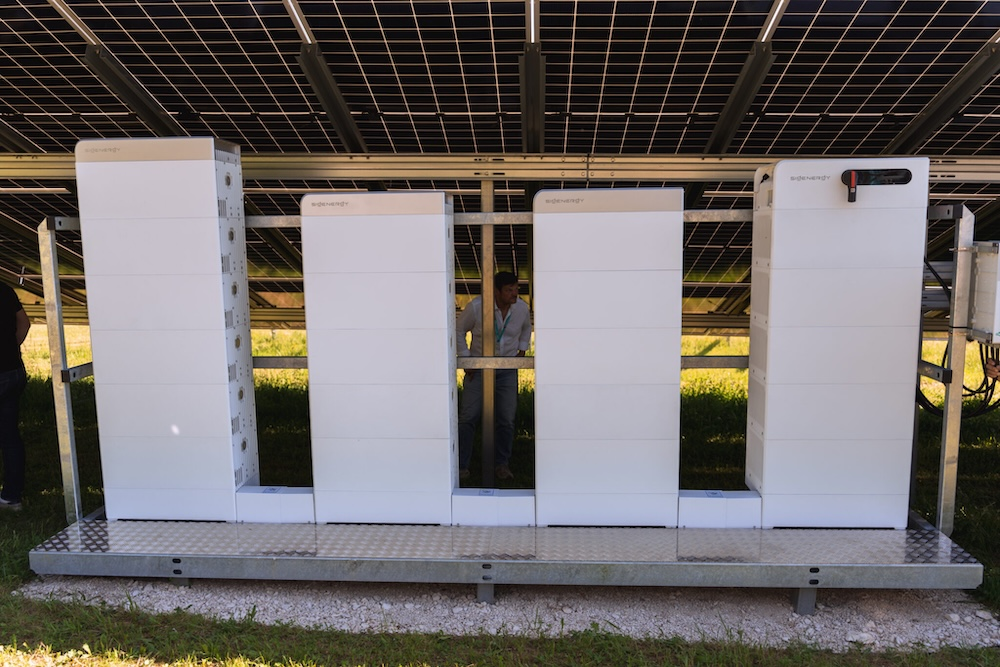
The model is well suited to manufacturing sites with consistent daytime demand. Solar generation can be consumed directly by the factory when output and load coincide, while site-level storage, demand management, or wider supply arrangements can cover periods of lower solar output. Bentley’s Crewe headquarters already includes solar generation and battery storage, with the new agreement adding a further proposed private-wire element to the site’s energy mix.
IN Power recently covered UK solar installations passing two million, reflecting the scale of solar deployment across domestic, commercial, and industrial settings. The Sonaura and Bentley project sits at the industrial end of that market, where the engineering requirements include grid interaction, private-wire connection, planning, and long-term energy procurement.
Private-wire solar also sits within a wider movement towards onsite and near-site industrial generation. Large electricity users are increasingly looking at solar, batteries, flexible demand, and power purchase agreements as part of a combined energy strategy. The objective is carbon reduction, lower exposure to market volatility, greater control over electricity procurement, and clearer planning for future load growth.
The planning route remains material. Solar projects close to industrial loads still need to address land use, visual impact, ecology, access, construction traffic, drainage, noise from inverters and transformers, and decommissioning. Smaller private-wire schemes can be more targeted than utility-scale projects, but they still require detailed local engagement and technical assessment.
The Bentley agreement shows how industrial decarbonisation is moving closer to site-specific power engineering. Rather than relying solely on certificates or distant renewable generation, manufacturers are increasingly tying clean power procurement to assets that can be physically connected to their operations. That creates work for private-wire developers, electrical designers, grid specialists, and industrial energy teams able to integrate generation, load, storage, and compliance into one working system.
Further project details are available through the Eardswick Private Wire Solar project website.