IN Brief:
- The 22km Kergord to Gremista link has been completed as a new double-circuit 132kV connection.
- The scheme links the new Gremista Grid Supply Point to Kergord, where the Shetland HVDC connection comes ashore.
- Full operation is due later this year, when the standby solution enters service and the islands’ supply model shifts further away from routine thermal generation.
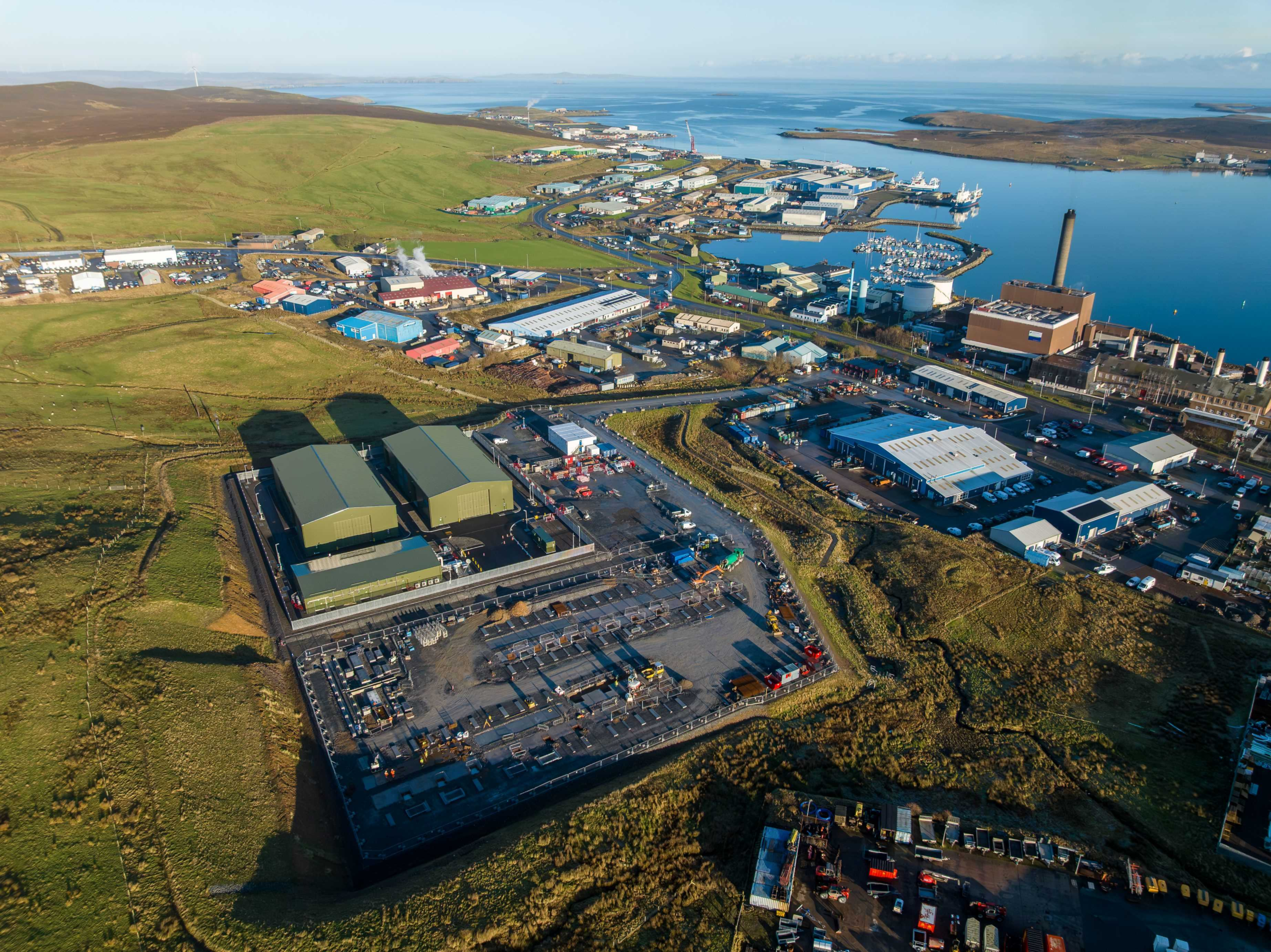
SSEN Transmission has completed the new Kergord to Gremista electricity transmission link in Shetland, bringing the islands to the final stage of a broader restructuring of local supply. The 22km, double-circuit 132kV connection runs between the new Gremista Grid Supply Point and Kergord Substation, where the Shetland HVDC link comes ashore, and combines overhead line sections with underground cable.
The completed link provides the route needed for electricity imported through the mainland connection to flow into Shetland’s local network once the remaining supporting systems are brought into service. SSEN has said the scheme will become fully operational later this year, when the standby solution enters service. That marks a substantial shift in how the islands are supplied, with the network moving further away from routine dependence on the existing thermal generation base.
The project forms part of a wider build-out rather than a stand-alone line scheme. It includes the new 132/33kV grid supply point at Gremista and the connection back to Kergord, which is also the landing point for the HVDC link to mainland Scotland. The broader programme is designed to allow imported power, local network assets, and standby capability to work together as a more resilient operating model. A battery at Gremista is intended to support system requirements as Lerwick Power Station transitions to a standby role.
That sequencing matters on an island system. Supply changes cannot be treated as a simple replacement exercise, because resilience has to be built into the network as it shifts from one operating arrangement to another. Transmission, distribution, storage, and standby plant all have to be coordinated, and the energisation of the Kergord to Gremista link is the point at which those separate workstreams begin to look like a single, functioning network design.
Construction of the link was also shaped by local delivery considerations. SSEN worked with Morgan Sindall Infrastructure and Omexom on the main contract, while Shetland-based businesses supplied civil works, transport, plant, logistics, and accommodation. The company said more than £23 million of contracts were placed with over 25 local businesses, while more than 30 local jobs were created over the course of the project. Helicopters were used for selected tower lifts in order to avoid building temporary access tracks across sensitive peatland areas.
The latest milestone lands at a time when island and remote-area networks are under growing pressure to do more than maintain security of supply. They are increasingly expected to accommodate renewable generation, provide headroom for electrified demand, and support wider regional development without losing resilience. In that sense, Shetland is not a special case so much as a particularly visible one. It shows how network operators are having to combine transmission investment, local reinforcement, storage, and contingency planning in places where the margin for operational error is narrow.
The project also illustrates the changing role of transmission infrastructure in the north of Scotland. Network investment is no longer just about carrying additional renewable output southwards. It is also about changing how peripheral systems operate internally, how local demand is served, and how islands and remote regions are integrated more fully into the wider electricity system. The Kergord to Gremista link is a relatively contained piece of infrastructure on paper, but it sits inside that much larger shift.
There is still another stage to complete before the islands are operating in the intended configuration. Distribution readiness, standby systems, and operational commissioning all still need to align. Even so, the completion of the line is a decisive step. It marks the point at which the Shetland programme starts moving from construction milestones into an operational network model with longer-term implications for supply security, future demand growth, and the way island systems are planned.