IN Brief:
- Salko UK has secured a nine-month extension for maintenance work across RWE’s Pembroke and Staythorpe sites.
- The contract covers exhaust gas housing and diffuser maintenance following an initial seven-year agreement.
- The work supports plant availability, turbine integrity, and operational performance across major UK CCGT assets.
Salko UK has secured a nine-month contract extension with RWE, continuing maintenance support at the Pembroke and Staythorpe gas-fired power station sites through to the end of 2026.
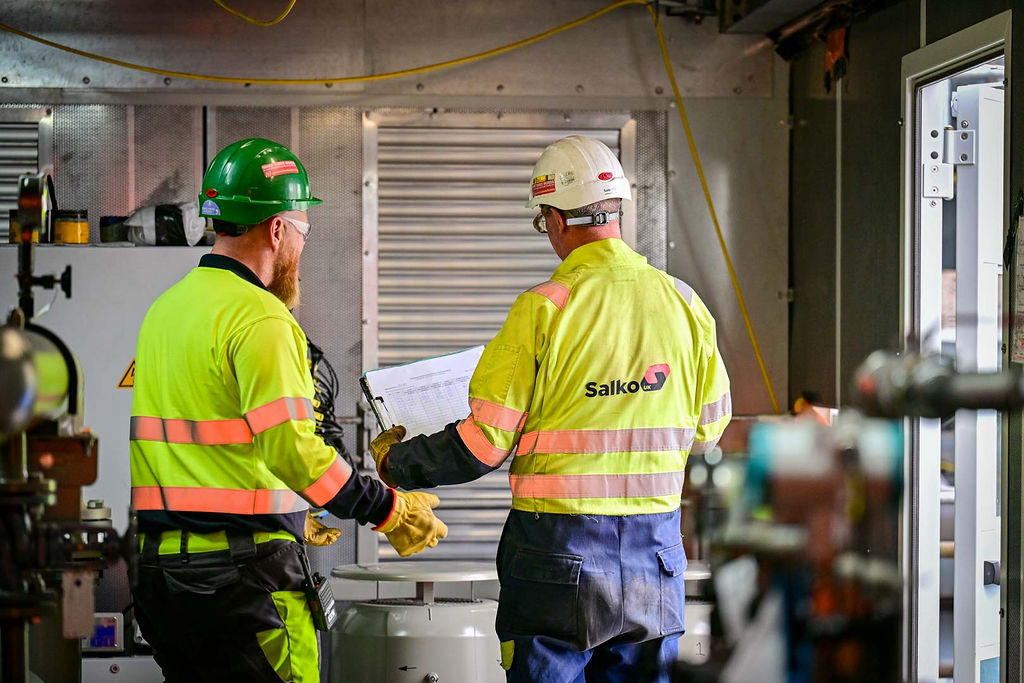
The mechanical and electrical contractor will continue to provide maintenance services focused primarily on exhaust gas housing and exhaust gas diffuser works. The extension follows an initial seven-year contract and will be delivered through a combination of call-outs and planned maintenance activity.
The scope will involve up to 15 Salko specialists and is intended to maintain structural integrity, operating safety, turbine efficiency, and component service life. The works are also designed to reduce the need for turbine de-loading during periods of peak electricity demand.
RWE operates one of the UK’s largest gas-fired generation portfolios. Pembroke Power Station in Wales is a combined-cycle gas turbine plant with net capacity of around 2,181MW, while Staythorpe Power Station in Nottinghamshire has gross capacity of up to 1,850MW. Both sites provide dispatchable generation within a power system increasingly shaped by variable renewable output.
Gas turbine exhaust systems operate in demanding thermal and mechanical conditions. Exhaust gas diffusers sit in the flow path between the turbine and downstream heat recovery steam generator, managing high-temperature gas flow while supporting safe operation and plant efficiency. Repeated thermal expansion, vibration, insulation stress, erosion, and casing movement can affect temperatures, structural performance, and adjacent equipment over time.
Maintenance of the exhaust gas housing and diffuser is therefore part of the reliability regime for large CCGT units. Defects in the diffuser assembly, insulation degradation, or movement in supporting structures can create operating restrictions and increase the likelihood of forced outage work. Planned intervention allows operators to manage those risks within defined outage windows rather than during periods when flexible generation is required by the system.
The extension comes as gas-fired power stations operate in a more variable role. Higher wind and solar penetration means CCGT assets are used increasingly for flexibility, responsiveness, and system support, rather than steady baseload output. More cycling, more starts, and more variable thermal loading place a different emphasis on inspection, repair, and condition monitoring.
Across the generation mix, specialist maintenance capacity is becoming more valuable as operators seek to preserve availability from assets with very different operating profiles. Wind farms are facing the same service-planning discipline, with Deutsche Windtechnik taking a maintenance contract at the Mynydd Clogau wind farm in Wales. For both thermal and renewable generation, uptime increasingly depends on access to technicians, spare parts, safe working methods, and detailed equipment knowledge.
Gas generation retains a specific role in the UK system while storage, interconnection, demand-side response, and renewable capacity continue to expand. CCGT stations are expected to support periods of low renewable output, demand peaks, and system stress events, even as annual running patterns change. That combination can make maintenance more demanding, because assets must remain available despite operating less predictably than in the past.
For plant owners, targeted maintenance also supports commercial performance. Reducing the likelihood of forced outages or turbine de-loading during high-demand periods preserves dispatch capability and reduces exposure to emergency repair work. Exhaust system integrity, insulation condition, casing performance, and diffuser reliability all feed into that wider availability picture.
Salko’s extension also reflects the continuing role of specialist mechanical and electrical contractors in large-scale power generation. As major stations age and operating requirements change, site owners rely on contractors with knowledge of plant layout, outage processes, safety procedures, access constraints, and equipment-specific repair methods.
The Pembroke and Staythorpe extension keeps Salko engaged across two major UK CCGT assets into the end of 2026. The scope is tightly focused, but it sits within a wider reliability requirement: flexible generation capacity must remain technically available while the UK power system builds the grid, storage, and renewable infrastructure needed for a lower-carbon operating model.