IN Brief:
- PacificLight has begun construction of a S$1.2 billion, 670MW CCGT plant on Jurong Island.
- The project integrates an 80MW lithium iron phosphate battery with Mitsubishi Power’s M701JAC gas turbine.
- Commercial operation is scheduled for 2029, with the turbine designed for up to 30% hydrogen co-firing from the outset.
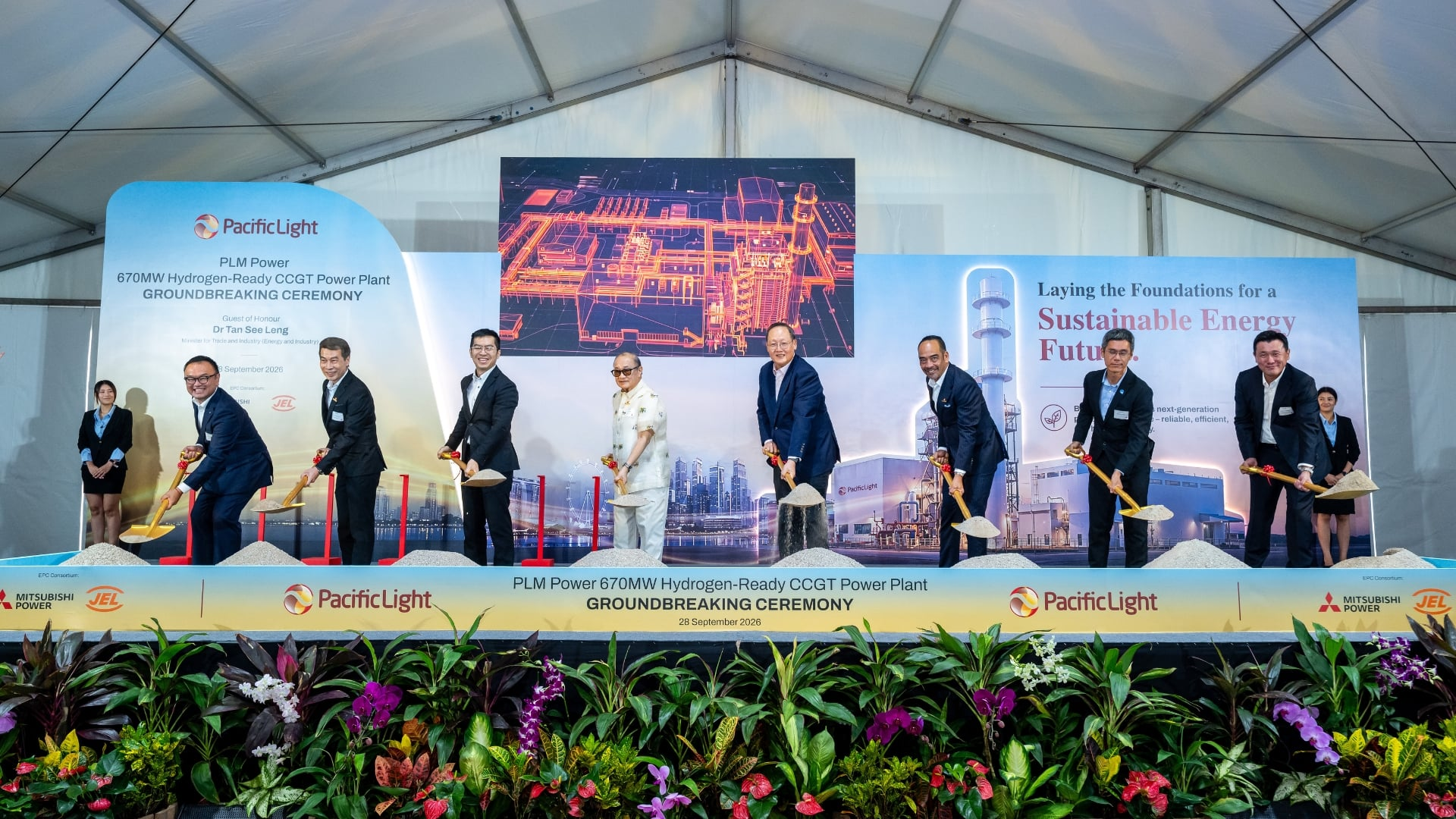
PacificLight Power has started construction of a S$1.2 billion, 670MW combined cycle gas turbine plant on Jurong Island, pairing a large thermal generating unit with an 80MW battery energy storage system as part of the same power station.
The project is being developed through PLM Power, a wholly owned PacificLight subsidiary, and is scheduled to enter commercial operation in 2029. PacificLight says the facility will be Singapore’s largest and most efficient single generating unit, while the battery installation makes it the country’s first gas-fired plant to integrate large-scale storage.
The main generating train will use Mitsubishi Power’s M701JAC gas turbine under an engineering, procurement, and construction contract led by Mitsubishi Power and Jurong Engineering. PacificLight puts the combined cycle efficiency above 64%, with the plant designed to recover exhaust heat from the gas turbine through a heat recovery steam generator and steam turbine rather than discharge that thermal energy unused.
The project’s environmental assessment identifies the storage system as an 80MW lithium iron phosphate battery. Its MWh capacity has not been disclosed publicly, so the duration available at maximum output cannot yet be calculated. The EIA states that the battery will provide dedicated reserve energy for the plant, while PacificLight says the system will support dynamic energy management and improve resilience during contingencies.
Combining the battery with a 670MW CCGT gives the operator two very different response characteristics within one facility. The gas turbine and steam cycle provide sustained generation, while the battery can change electrical output far more quickly and absorb short-duration variations that would otherwise have to be managed through turbine controls, reserve from elsewhere on the system, or changes in grid flows.
That faster response is particularly relevant where the generating unit itself is large. A single 670MW machine represents a material block of capacity on Singapore’s power system, so the ability to buffer plant or system disturbances can help reduce the operational consequences of a rapid change. Contemporary reporting from the groundbreaking says the battery is expected to respond within two seconds.
PacificLight is also building fuel flexibility into the thermal plant. The M701JAC installation will be capable of co-firing hydrogen at up to 30% by volume from the outset, with a longer-term technical pathway towards 100% hydrogen operation. That specification does not establish when low-carbon hydrogen will be available at the required volume or price, but it reduces the risk of having to replace the principal turbine if Singapore later develops a larger hydrogen supply chain.
The 30% figure therefore describes equipment capability rather than the expected fuel mix when the plant begins operating. Natural gas remains the primary fuel assumed for the project, and the commercial value of hydrogen readiness will depend on future fuel production, import infrastructure, standards, cost, and emissions policy as much as on the turbine hardware.
Singapore awarded PacificLight the right to build, own, and operate the plant through the Energy Market Authority’s centralised process for new generation capacity. The mechanism is intended to ensure that dispatchable plant is added before the system becomes short of firm capacity, rather than relying entirely on wholesale price signals to trigger investment after margins have tightened.
Demand growth is an important part of that planning problem. Advanced manufacturing, transport electrification, and the digital economy are increasing the amount of dependable power the system must be able to supply, while further solar deployment adds more variation to daytime generation. A large CCGT and a fast battery address different parts of that requirement: one provides sustained energy and capacity, while the other can respond rapidly to short-lived changes.
The new unit will sit alongside PacificLight’s existing 830MW combined cycle plant and 100MW Fast Start Ancillary Services facility on Jurong Island. The fast-start plant entered service in 2025 to provide rapid backup during generation outages or system disturbances, giving PacificLight three different operating assets at the same location once the 670MW project is completed.
Co-locating those facilities increases the importance of electrical protection, control, communications, and operating coordination. The battery management system, plant controller, turbine controls, transformers, switchgear, and grid interface must all operate within the requirements set by the system operator, particularly during a disturbance when fast response is most valuable.
The construction programme now has to move from civil works into equipment manufacture, installation, electrical integration, and commissioning. The battery will require its own power conversion, protection, thermal management, fire safety, and control systems, while the CCGT will add the gas turbine, steam cycle, cooling systems, generator, transformers, and associated balance of plant.
Commissioning will test whether those systems behave as one power station rather than a collection of separate assets. The key engineering question is not simply whether the battery can charge and discharge or the turbine can reach 670MW, but whether the combined plant can manage rapid changes while maintaining protection coordination, grid compliance, and stable operation across normal and contingency conditions.
PacificLight expects commercial operation in 2029. By then, the project will have to demonstrate both the efficiency expected from a modern CCGT and the response promised by the integrated battery, with hydrogen readiness remaining a longer-term option whose value will depend on the fuel infrastructure that emerges around it.