
IN Brief:
- National Grid has demonstrated equipment and techniques for high-voltage live line working.
- The work could allow selected transmission maintenance tasks to proceed without planned outages.
- The next phase will focus on live testing and possible integration into routine network operations.
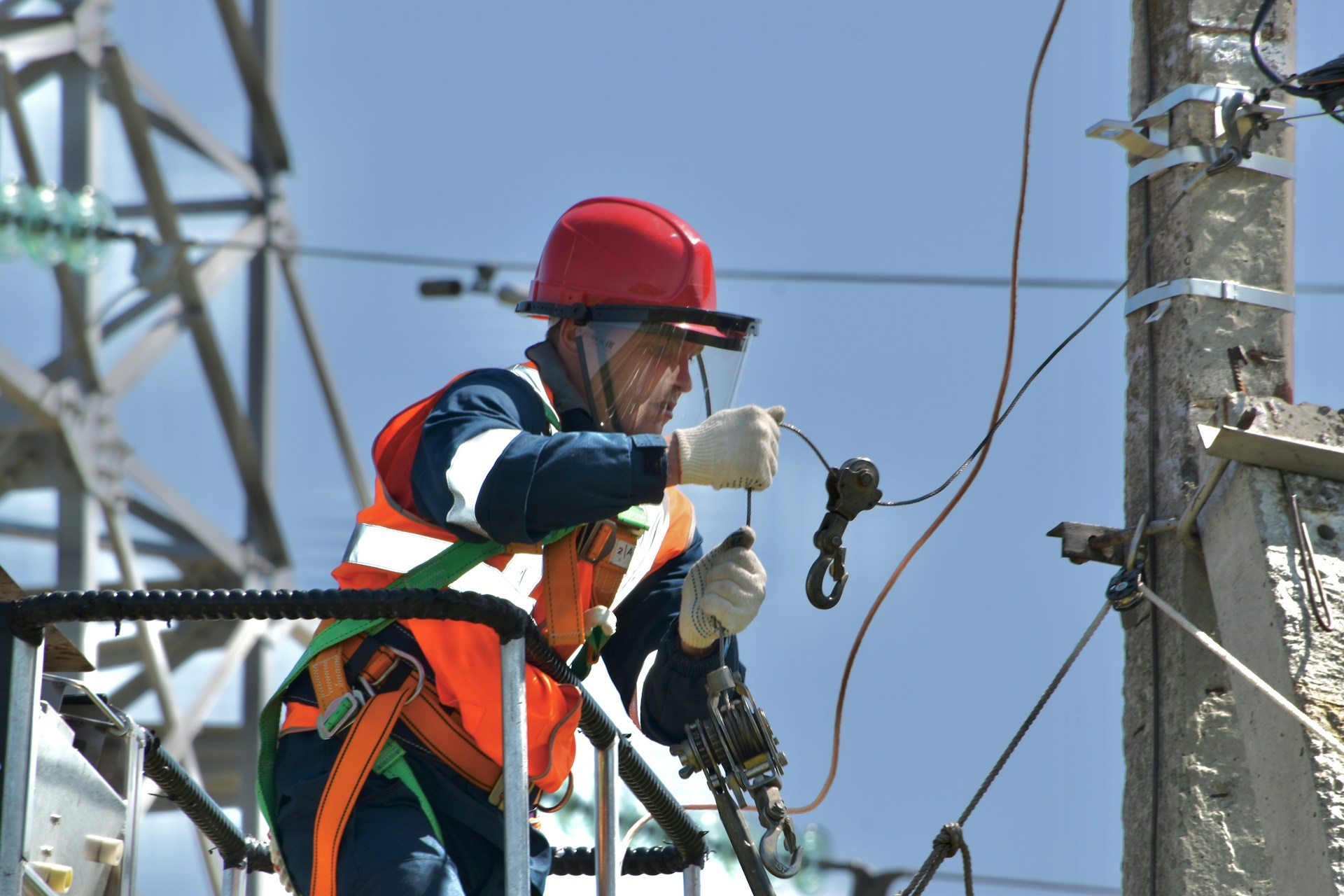
National Grid has demonstrated new equipment and techniques that could enable high-voltage live line working to return to the UK transmission network for the first time in 25 years.
The work has been supported by Ofgem’s Strategic Innovation Fund and is being progressed through a programme focused on live line technology acceleration. The objective is to allow selected maintenance and upgrade tasks to be performed on energised high-voltage assets, reducing dependence on planned outages where the engineering case and safety controls allow.
High-voltage live line working is a specialist discipline involving equipment, training, procedures, insulation systems, access methods, weather limits, risk controls, and operational governance that differ significantly from conventional de-energised maintenance. Any return of the practice would require a structured engineering and workforce development programme, rather than only a change in maintenance scheduling.
Britain’s transmission network is being asked to carry more electricity, connect more renewable generation, and maintain security of supply while reinforcement programmes move through construction. Planned outages are becoming harder to schedule because circuits are needed for existing demand, offshore wind flows, interconnector operation, system stability, and regional supply security.
Where selected maintenance tasks can be completed safely without removing a circuit from service, network operators gain more operational flexibility. Outage windows can be reduced, asset availability can improve, and some reinforcement or maintenance work can be sequenced with less disruption to system operation.
The work sits within a broader effort to extract more capacity and availability from existing infrastructure. Dynamic line rating is being used to assess real-time transmission capacity through sensors and live conductor data, while major overhead route refurbishment continues to maintain and improve the physical condition of existing circuits. Live working would add another option for preserving availability during selected interventions.
Safety will determine the pace and scope of adoption. Transmission live working involves exposure to high electrical stress, induced voltages, working at height, weather, lifting, conductor movement, and complex interface risks. Equipment must maintain insulation integrity under defined conditions, while procedures need to account for clearances, earthing philosophy, emergency response, communications, and control-room coordination.
Training requirements are likely to be substantial. A 25-year gap means operational knowledge cannot simply be reactivated. Specialist teams will need structured competence development, supervised testing, and repeatable methods before any wider operational use. That workforce requirement sits alongside existing demand for experienced overhead line, substation, protection, and high-voltage commissioning skills.
The next stage is expected to involve live testing and integration planning. That process will define which activities are technically and economically suitable. Some maintenance tasks will still require de-energisation because of equipment condition, access constraints, system risk, or the nature of the work.
For suitable tasks, live working could become valuable in outage planning. Transmission operators increasingly have to balance maintenance, new connections, reinforcement, and system security in a network with less spare headroom. Removing a circuit from service can increase constraints, limit renewable output, or reduce operational flexibility.
Britain’s transmission investment programme is entering a high-delivery period, with offshore wind connections, north-south reinforcements, substation expansions, HVDC schemes, and asset renewal all competing for resources. New infrastructure will remain essential, but better methods for maintaining existing assets can reduce operational pressure while that infrastructure is built.
National Grid’s demonstration addresses a practical high-voltage engineering problem: how to keep a heavily used transmission network available while more work is demanded from it. If live line working returns, it will be under tight controls, specialist competence, and carefully defined use cases. Its value will sit in giving network operators another option when the system cannot easily spare an outage.

