IN Brief:
- Invinity Energy Systems has delivered 20.7MWh of vanadium flow batteries to the Copwood VFB Energy Hub in East Sussex.
- The project combines 90 vanadium flow battery units with a 3MW solar array for long-duration energy shifting.
- The system is expected to become Europe’s largest vanadium flow battery installation when it enters service later in 2026.
Invinity Energy Systems has completed delivery of 20.7MWh of vanadium flow batteries to the Copwood VFB Energy Hub in East Sussex.
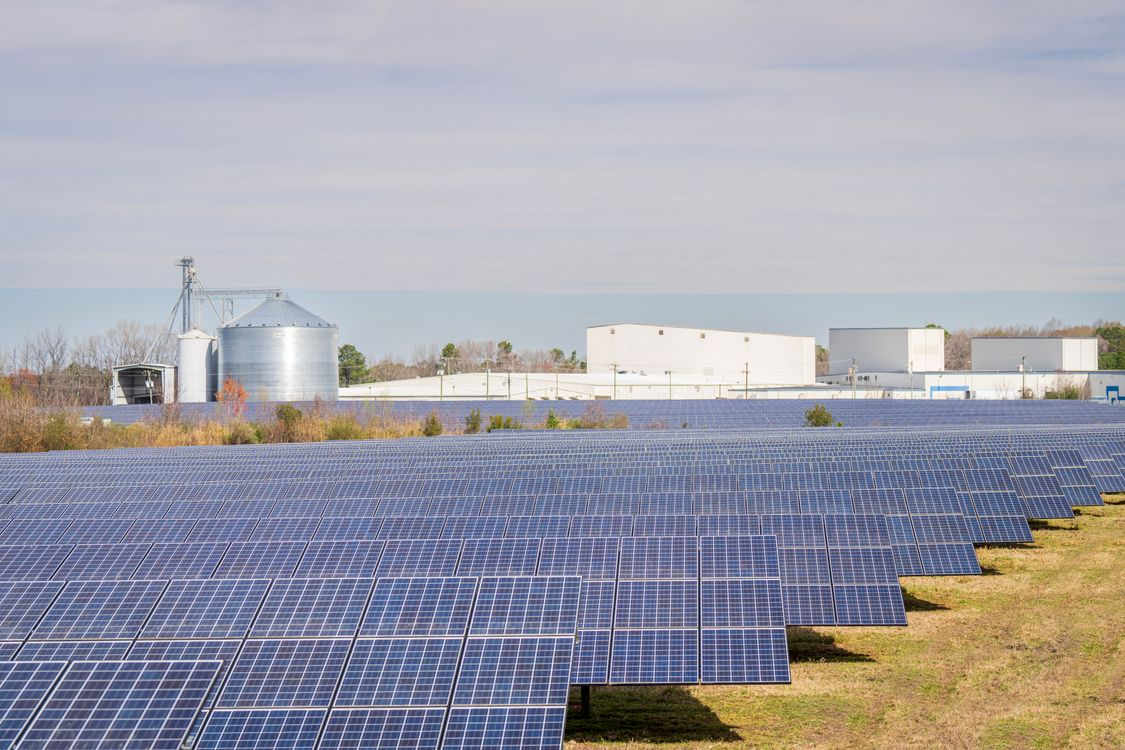
The project will combine 90 vanadium flow battery units with a 3MW solar array, creating a long-duration storage system designed to store surplus solar generation and discharge it later in the day, overnight, or during periods of higher demand.
Located in Uckfield, East Sussex, Copwood is expected to become Europe’s largest vanadium flow battery installation when it enters service later in 2026. The battery units were assembled at Invinity’s UK facilities, including operations in Motherwell and Bathgate in Scotland.
Vanadium flow batteries use a different architecture from conventional lithium-ion systems. Energy is stored in liquid electrolyte held in external tanks, with power delivered through electrochemical cells. By separating energy capacity from power conversion more clearly than many battery formats, the technology is suited to longer-duration cycling and repeated daily operation.
At Copwood, the battery system is intended for energy shifting rather than short bursts of response. The array will store daytime solar generation and release it when demand is higher or solar output has fallen. Invinity has said the capacity is roughly equivalent to the daily electricity needs of around 3,000 homes.
Public investment and grant support have also formed part of the project. Invinity used investment from the UK’s National Wealth Fund in delivering the system, while Copwood also received support from the Department for Energy Security and Net Zero through the Longer Duration Energy Storage demonstration programme.
The project arrives as the UK works through how long-duration storage should be financed and connected into the electricity system. Ofgem is expected to make key decisions under the long-duration energy storage cap-and-floor support scheme, which is intended to unlock investment in larger storage assets that may not be fully financeable through merchant revenues alone.
Storage requirements are becoming more varied as renewable penetration increases. Short-duration lithium-ion batteries are well suited to fast response, frequency services, and short-term price arbitrage. Longer-duration systems are being positioned for multi-hour shifting, renewable firming, capacity support, and resilience during extended periods of low renewable output.
Recent IN Power coverage has shown storage expanding across several operating models. Elements Green’s acquisition of the 300MW/600MWh Newarthill BESS project in Scotland underlined continued appetite for large grid-connected batteries in the UK. In Germany, BayWa r.e. has taken an operations contract for the 137MW/282MWh Alfeld BESS, while German storage revenues are forecast to exceed €17bn in 2026.
Copwood adds a different technology route to that market picture. Vanadium flow systems carry different cost, footprint, operational, and safety characteristics from lithium-ion batteries. Invinity’s technology uses a water-based electrolyte and is designed for decades of heavy-duty cycling, with fire risk and long operating life forming part of the system case.
Those attributes are increasingly relevant as storage moves closer to communities, distribution networks, solar farms, and industrial loads. Planning scrutiny around battery projects has become more detailed, particularly where fire safety, site access, drainage, visual impact, and emergency response have to be addressed. Technology choice can therefore shape consenting risk, operational planning, and lifecycle economics.
The industrial dimension is also notable. Invinity’s UK manufacturing footprint links the project to domestic battery assembly, skilled employment, and supply-chain development. Long-duration storage policy is often discussed through market design, but deployment at scale also depends on manufacturing capacity, power electronics, installation skills, commissioning resource, and long-term service capability.
Copwood will not resolve the UK’s long-duration storage requirement on its own. It does, however, provide a reference site for a technology class that may become more prominent as renewable penetration rises and system operators need options between short-duration batteries and large pumped storage schemes.