IN Brief:
- Global Port Services Shipping will support Seaway7’s Inch Cape offshore wind scope from Invergordon.
- The contract will support around 100 local jobs and four port calls totalling 90 days.
- Seaway Alfa Lift’s visits to the Port of Cromarty Firth mark the vessel’s first UK port calls.
Global Port Services Shipping has secured a multi-million-pound contract to provide marine logistics and vessel support to Seaway7 for its scope of work on Inch Cape Offshore Wind Farm.
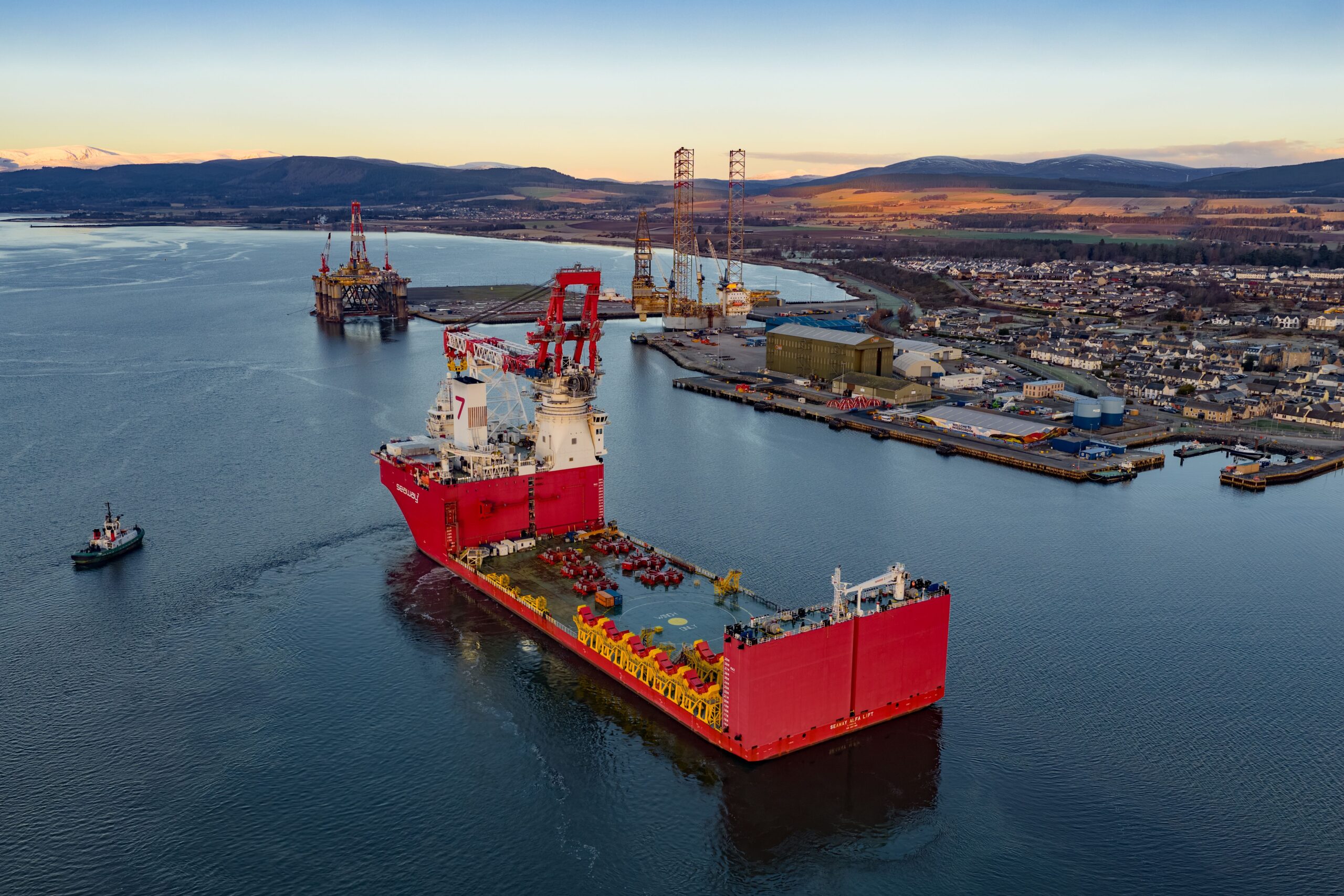
The Port of Cromarty Firth at Invergordon will act as the intermediate port for Seaway Alfa Lift, the heavy lift crane vessel being used on the project. The vessel is scheduled to make multiple calls at Invergordon, marking its first visits to a UK port.
The contract will support around 100 local jobs and create work for the regional supply chain. GPSS will work with other Global group companies, including Global Port Services Projects, Global Crane Services, and S B Services, as well as local subcontractors, to provide labour, plant, and resource support across four port calls totalling around 90 days.
The first port call began in March 2026, when Seaway Alfa Lift spent four weeks at Invergordon before transition pieces for the wind farm were loaded at the Port of Leith. More than 100 skilled personnel per day supported the vessel during the first call, including painters, welders, electricians, and scaffolders. A second port call is scheduled for later in summer 2026.
Support crews will operate around the clock on 12-hour shift patterns during each port call. More than 100 truck-loads of equipment have already been delivered to the Port of Cromarty Firth, alongside multiple equipment shipments arriving by sea. The port will serve as a project operations base for the duration of the contract.
Inch Cape is sited around 15km off the Angus coast and is planned to feature 72 turbines. Once complete, it will be one of Scotland’s largest offshore wind farms, with generation output expected to supply the equivalent of more than half of Scotland’s homes.
The GPSS contract shows the scale of port and logistics capability required behind offshore wind construction. Large projects depend on intermediate ports able to handle specialist vessels, heavy components, plant, tooling, personnel, and rapid mobilisation. Deep-water berths, sheltered access, laydown areas, fabrication support, and an experienced local workforce all form part of the delivery chain.
Offshore wind’s marine construction requirements are also expanding as vessels become larger and installation programmes become more complex. Boskalis’ order for a 24,000-tonne cable-lay vessel reflects the same pressure on specialist marine capacity across offshore transmission and generation projects.
Scottish ports are well placed for that work where they combine deep-water access with established offshore energy skills. The Port of Cromarty Firth has supported wind farm construction for more than two decades, giving it a role in the supply chain behind larger North Sea projects. As offshore wind farms move through construction, ports close to project areas can reduce transit times, support vessel turnaround, and keep labour and equipment close to operations.
Local job creation is a visible outcome, but the longer-term value lies in repeatable delivery capability. Offshore wind projects need electricians, welders, scaffolders, crane teams, marine coordinators, logistics planners, fabricators, and support crews working around weather, vessel availability, and tight installation windows. Ports that can coordinate those functions become part of the energy infrastructure system.
The Inch Cape contract gives Invergordon a substantial role in Scottish offshore wind construction. It also reinforces the practical shape of renewable power delivery: turbines only export power after ports, vessels, crews, cables, structures, and grid interfaces have completed their work.