IN Brief:
- European inverter manufacturing capacity has passed 100GW, according to PV Tech Market Research.
- The region is now the largest inverter manufacturing base outside China.
- The milestone comes as inverter origin, cybersecurity, and supply-chain resilience receive greater policy scrutiny.
SMA Solar Technology is among the European manufacturers central to an inverter supply base that has now passed 100GW of production capacity, strengthening the region’s position in a critical part of the solar and storage value chain.
PV Tech Market Research figures show that European inverter manufacturing capacity has moved beyond 100GW. That makes Europe the largest inverter manufacturing region outside China, ahead of other major regional bases including the US, India, and Asia-Pacific excluding China and India.
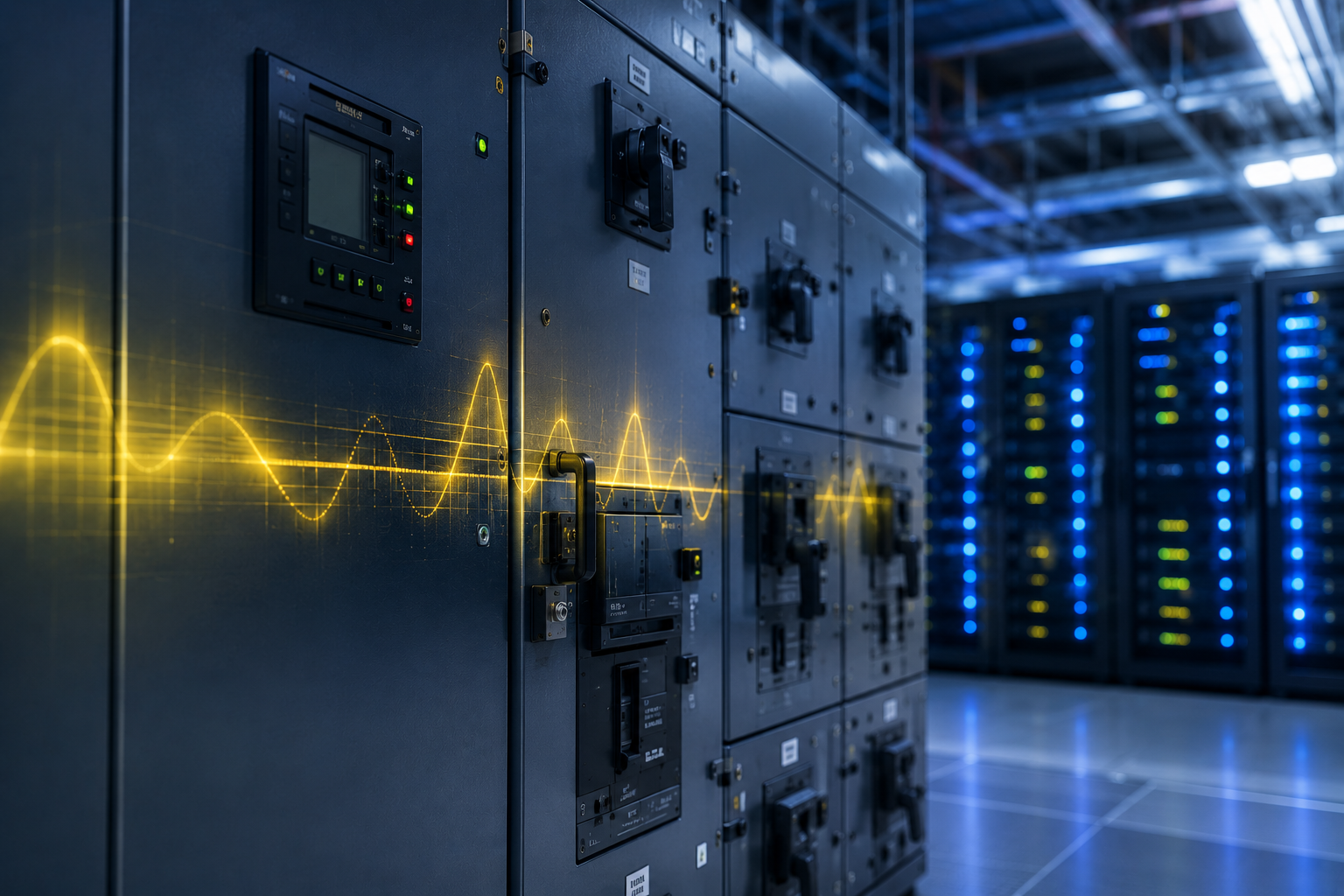
Inverters sit at the operational interface between renewable generation and the grid. Solar modules generate DC electricity; inverters convert it into grid-compatible AC power while managing voltage, frequency, protection functions, monitoring, and increasingly remote software functionality. In utility-scale and distributed systems alike, inverter behaviour affects power quality, grid stability, and system resilience.
Europe’s manufacturing capacity has grown against a changing policy backdrop. The EU’s Net-Zero Industry Act has set ambitions for domestic manufacturing of net-zero technologies, while restrictions on public funding for projects using certain Chinese-made inverters have raised the procurement weight placed on equipment origin, remote access, and cybersecurity.
The issue is no longer confined to industrial competition. Connected inverters can receive firmware updates, transmit operational data, and interact with control platforms. At large installed volumes, that functionality becomes a grid-security question. The risks around connected power electronics were examined in coverage of European inverter restrictions and cybersecurity, where device-level control was treated as a system issue rather than only a component issue.
Security scrutiny has increased interest in European and other non-Chinese suppliers, although manufacturing capacity does not equal full independence. European inverter manufacturers still rely on global supply chains for semiconductors, electronic components, materials, power modules, and subassemblies. The wider solar value chain remains heavily exposed to China, particularly across polysilicon, wafers, cells, modules, and some electronics categories.
Production capacity also has to translate into competitive deployment. Developers select inverters based on cost, bankability, efficiency, service support, warranty, grid-code compliance, lead time, software capability, and compatibility with project design. Chinese suppliers have built strong positions in many markets through competitive pricing, scale, and extensive service networks. European manufacturers can benefit from policy support, but they still need to compete on delivery, technical performance, and lifecycle support.
The growth of inverter manufacturing reflects the shift from basic solar export to more complex grid services. Modern inverters increasingly support reactive power control, voltage ride-through, grid-support modes, plant-level coordination, and hybrid operation with storage. In weak or constrained grids, inverter performance can influence whether projects receive approval and how reliably they operate.
Higher shares of inverter-based generation also change system behaviour. As synchronous machines form a smaller share of the generation mix, inertia, fault current, voltage stability, and protection coordination require new approaches. Grid-forming inverters, advanced plant controllers, and tighter technical standards are moving from specialist discussions into mainstream power-system planning.
The 100GW manufacturing milestone sits alongside new product activity from large electrical equipment suppliers. ABB’s Proteus PV and BESS portfolio, for example, reflects a market where inverter efficiency, harmonic performance, cooling, and grid integration are being treated as project-level concerns. The competitive field is shifting from commodity conversion equipment toward digitally controlled grid-interface technology.
European manufacturing growth could support strategic resilience, but it will not remove cost pressure. EU-made inverters can be more expensive than Chinese alternatives, and solar project margins remain sensitive to equipment cost, grid-connection charges, financing, curtailment assumptions, and wholesale-price forecasts. Policy that favours secure supply will need to avoid slowing deployment or making projects uneconomic.
The inverter debate captures a broader tension within European energy policy. Speed, cost, resilience, cybersecurity, and industrial capacity all have to be managed together, even when they pull in different directions. Passing 100GW of manufacturing capacity gives Europe a stronger base. Turning that base into a resilient, competitive, and deployable supply chain will depend on stable demand, clear technical rules, credible cybersecurity requirements, and grid standards that recognise how central inverters have become to modern power systems.