
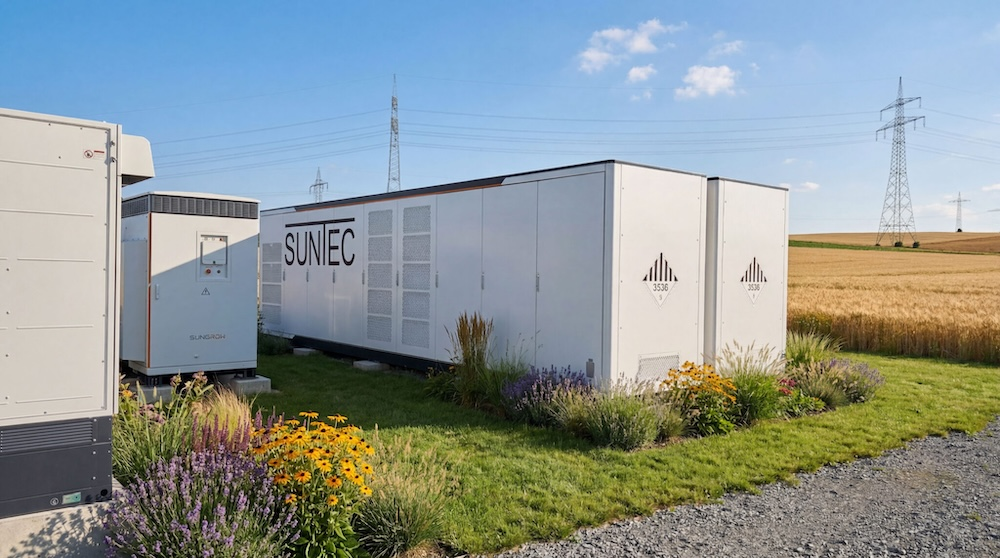
IN Brief:
- Entrix will optimise a German solar-plus-storage project developed by Suntec.
- The asset combines 5.8MW of solar with a 6.35MW battery on a shared grid connection.
- The grey-storage model allows the battery to charge from both solar generation and the electricity grid.
Entrix has agreed to provide market optimisation and AI-based trading services for a German solar-plus-storage project developed by Suntec.
The project combines a 5.8MW solar plant with a 6.35MW battery energy storage system connected through a shared grid connection point. It is being described as Germany’s first grey co-location solar-and-storage project because the battery can charge from both the co-located solar plant and the electricity grid.
Under the operating model, the solar installation retains priority access to the grid connection. The battery uses remaining connection capacity and can charge during periods of high solar generation or lower electricity prices, then discharge when renewable output falls or market prices rise.
That structure improves utilisation of the grid connection while creating a more flexible revenue model. Rather than operating as a passive addition to solar generation, the battery can participate in market optimisation and provide dispatchable flexibility when price signals, state of charge, and network conditions align.
The project also includes a 10-year power storage agreement with DB Energie, the energy subsidiary of Deutsche Bahn. The agreement is based on Entrix’s FloorPlus model, giving DB Energie day-ahead access to a defined portion of the battery’s flexibility in exchange for fixed capacity payments.
That arrangement is designed to provide Suntec with more predictable revenue while allowing unused flexibility to be optimised and marketed by Entrix across relevant electricity markets. The combination of fixed income and merchant optimisation reflects the direction of European battery financing, where investors increasingly seek contracted revenue while retaining upside from active dispatch.
Grey storage sits between two simpler categories. A green co-located battery charges only from renewable generation and may preserve a clearer renewable attribution. A standalone grid battery charges from the network and trades flexibility without being tied to a single generating asset. Grey storage combines both, creating additional operational value while adding complexity around metering, accounting, and regulatory treatment.
The model is especially relevant where grid connections are scarce. A solar plant may not use its full export capacity at all times, while a battery can use spare capacity to import or export when the solar asset is not at its limit. That can raise the economic value of a connection that would otherwise sit partly underused for long periods.
Software optimisation is becoming inseparable from the physical value of energy assets. In the Netherlands, Pure Energie has selected Kraken to optimise wind, solar, batteries, and customer load, reflecting the same movement toward software-led flexibility across mixed portfolios. The Entrix project applies that principle to a co-located German asset with a shared grid connection and a defined storage offtake structure.
Operational performance will depend on more than trading algorithms. Battery dispatch has to account for state of charge, degradation, forecast solar production, price volatility, network limits, contracted obligations, and imbalance exposure. The control system must also handle accurate metering, data exchange, cybersecurity, and settlement.
For developers, grey co-location offers a route to stronger bankability where subsidy frameworks and merchant revenues alone may not provide enough certainty. A structured offtake can support financing, while market optimisation can capture upside from volatility and flexibility demand.
The model is likely to attract further attention as Germany’s renewable build-out meets tighter grid availability and rising curtailment risk. More co-located assets are expected to use shared connections, hybrid metering, active optimisation, and contracted flexibility as the market matures.
Further information on the optimisation platform is available through Entrix.

