IN Brief:
- Balfour Beatty has secured a £325m two-year SSEN Transmission contract for main construction works at Netherton Hub.
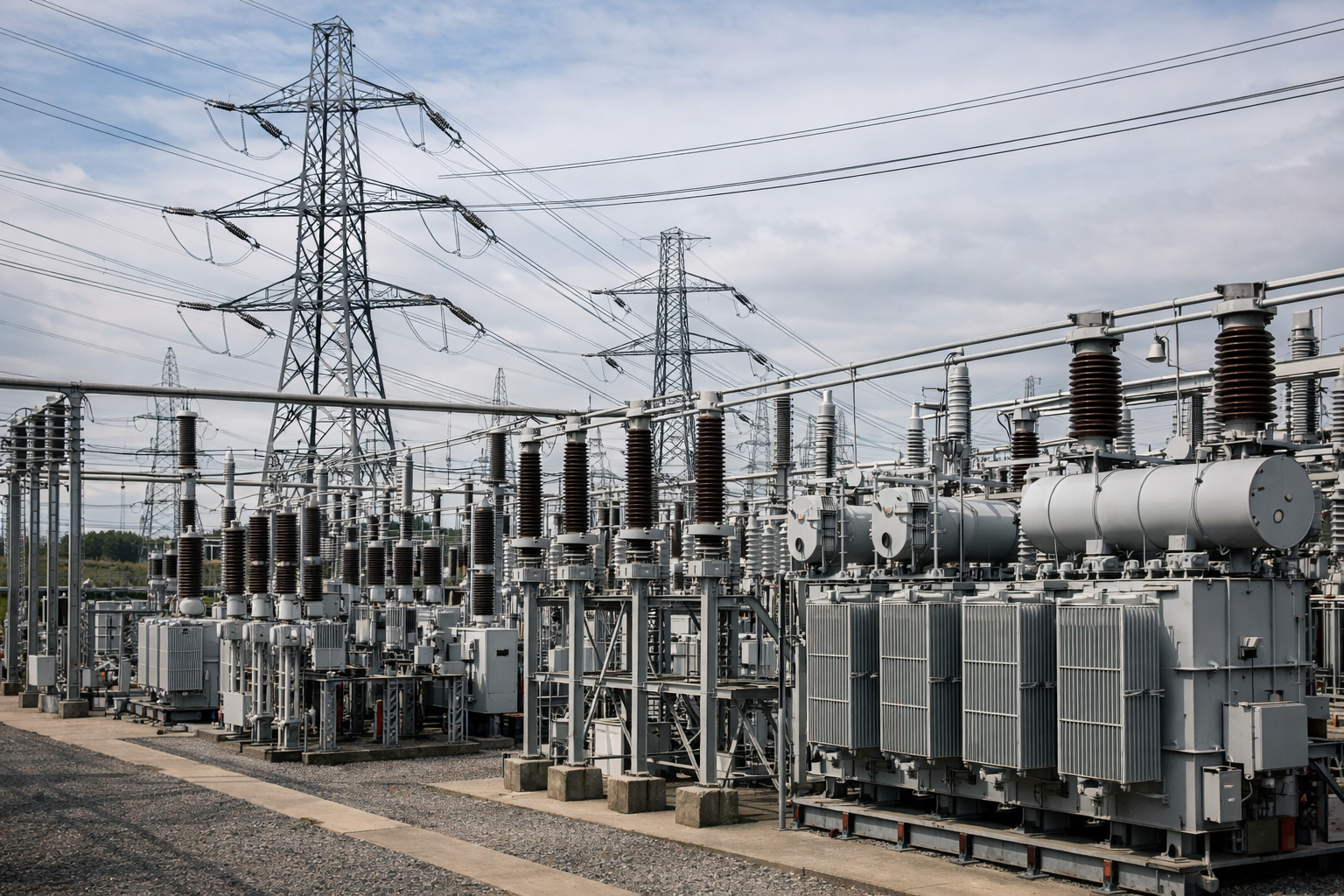
- The Aberdeenshire project will include a 400kV substation, a 132kV substation, and HVDC converter stations.
- The hub supports SSEN Transmission’s north of Scotland network upgrade programme and future offshore transmission links.
Balfour Beatty has secured a £325m contract from SSEN Transmission to deliver the main construction works for Netherton Hub near Peterhead in Aberdeenshire.
Awarded through SSEN Transmission’s Accelerated Strategic Transmission Investment Offshore Framework, the two-year contract follows earlier enabling works at the site. Balfour Beatty will deliver earthworks and civil infrastructure, including five platforms to support two substations and three converter stations, as well as an operations base and associated facilities.
Netherton Hub will include a 400kV substation, a 132kV substation, and HVDC converter stations supporting the Spittal to Peterhead, Eastern Green Link 3, and Eastern Green Link 5 subsea projects. The site forms part of SSEN Transmission’s £29bn programme to upgrade the electricity transmission network across the north of Scotland.
The main construction phase is expected to support about 800 jobs at peak. SSEN Transmission has already spent £6.6m with Aberdeenshire-based suppliers on initial works, supporting around 120 local jobs, and local contractors are expected to play a central role alongside businesses across the wider region. Balfour Beatty has committed to at least 5% of the workforce being apprentices and graduates, in line with its participation in The 5% Club.
Although the contract is a major civil engineering package, its value sits within the electricity system. Netherton Hub will become a strategic interface between onshore and offshore transmission infrastructure, allowing renewable power from northern Scotland to be converted and moved more efficiently to demand centres. The combination of substations and HVDC converter stations reflects the way Scottish grid infrastructure is being redesigned around bulk power transfer, offshore links, and future generation connections.
HVDC converter stations require large civil platforms, specialist buildings, transformers, valves, cooling systems, controls, protection, auxiliary systems, and integration with AC substations. The civil works package is therefore central to later electrical delivery. Platform quality, sequencing, tolerances, drainage, access, and logistics will shape the installation and commissioning of the electrical systems that follow.
Netherton Hub also illustrates the scale of Scotland’s grid-delivery challenge. Renewable generation in the north of Scotland is growing faster than historic transmission routes were designed to accommodate. New subsea HVDC links are being developed to move power south and reduce constraints, and those links require large converter stations and substations at either end.
The project sits within a wider north of Scotland transmission programme. SSEN Transmission has set out the economic case for a £29bn upgrade programme, placing network capacity, renewable connection, and supply-chain development at the centre of future investment. Netherton Hub is one of the physical assets through which that programme moves from strategy into construction.
For Balfour Beatty, the award adds to a growing transmission and distribution workload. The company is also delivering a National Grid substation extension at Bramford, covering circuits, shunt reactors, grid supply points, gantry structures, and protection and control systems. The two projects show how major contractors are building broader portfolios across substations, civil platforms, overhead infrastructure, and grid-system assets.
Supply-chain capacity will remain a defining constraint for projects of this type. Transmission work is competing for engineering design, civil contractors, specialist electrical equipment, cable systems, commissioning teams, and site management capability. Regional labour markets also need to absorb the construction demand while maintaining safety, competence, and delivery certainty.
Netherton Hub’s role will become clearer as the connected subsea projects progress. Its 400kV and 132kV substations will support transmission and future generation or storage connections, while the HVDC converter stations will form part of the infrastructure needed to move renewable power at scale. The main works award turns the project into a live construction programme and places another significant part of Scotland’s transmission upgrade into delivery.