IN Brief:
- APsystems will showcase a wider APstorage portfolio at Intersolar Europe 2026 in Munich.
- The range covers balcony solar, residential hybrid and AC-coupled systems, and C&I storage.
- The launch reflects growing convergence between inverters, storage, software, and grid-service capability.
APsystems will present an expanded energy storage portfolio at Intersolar Europe 2026, covering micro-site, residential, and commercial and industrial applications.
The company’s APstorage showcase will take place at Messe München, Hall B3, Booth 370, during the wider Intersolar Europe exhibition. APsystems is also hosting a product launch event on 23 June, focused on its latest storage systems and technical architecture.
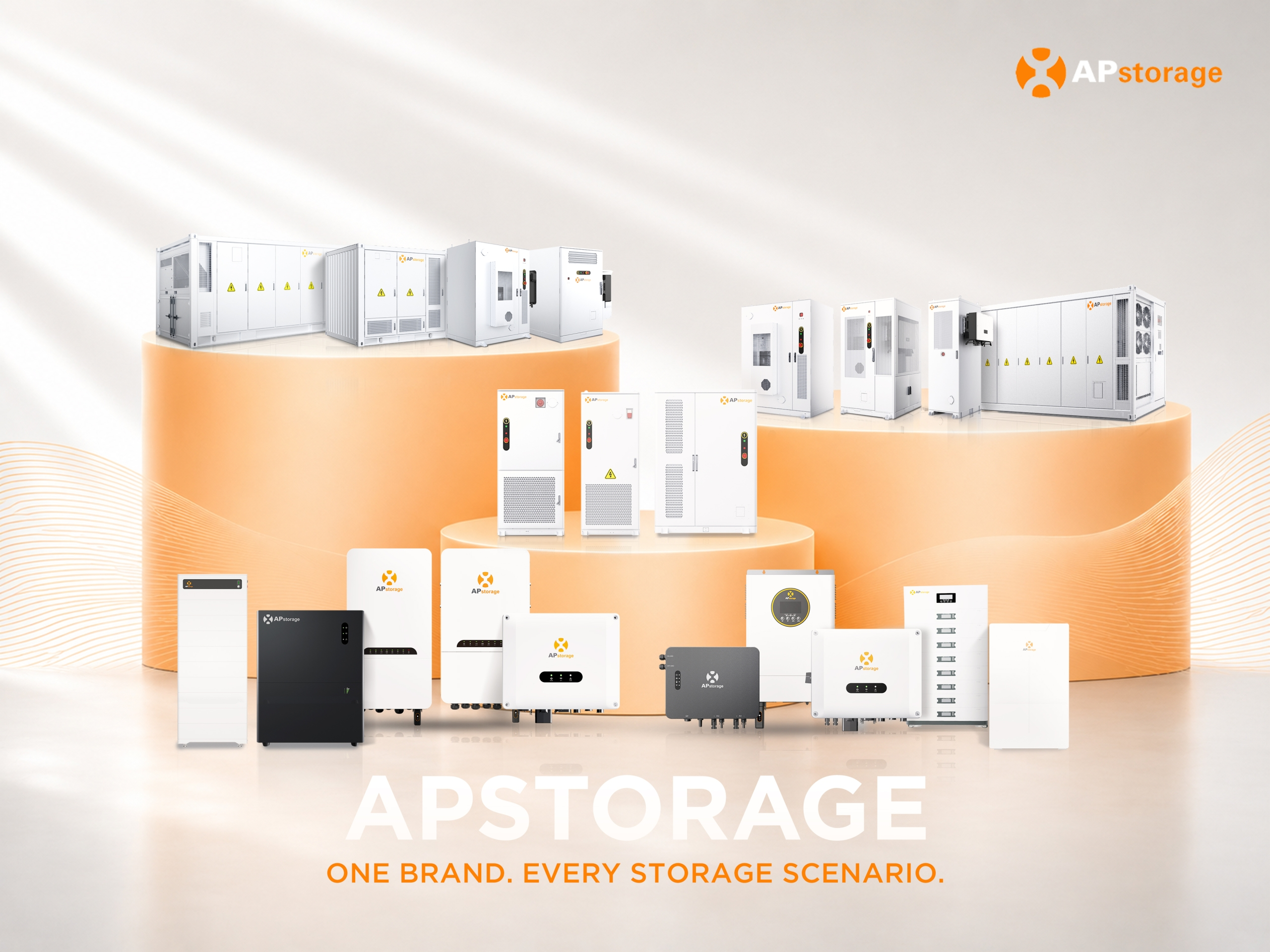
The portfolio extends across plug-and-play micro-site systems, residential inverters, AC-coupled retrofit options, and larger C&I storage cabinets. The Lake 6 AC-coupled storage system is designed around compact balcony solar and small urban installations, with 6kWh storage capacity and 2,500W output. Residential products include the LSH-6 hybrid inverter and LSA-6 AC-coupled inverter, both intended to support PV generation, battery storage, backup switching, and smart energy management.
For larger commercial and industrial applications, APsystems is expanding its APstorage line with systems including the 241L liquid-cooled cabinet, APstorage 261, and APstorage 2000L. The company positions these systems across tens of kWh to multi-MWh applications, with safety architecture, grid-forming functions, and intelligent control systems included across the range.
Solar equipment markets are moving steadily toward integrated energy systems. Manufacturers that built positions in microinverters and module-level power electronics are now moving deeper into storage, monitoring, plant control, and energy management. The equipment boundary between inverter, battery system, software platform, and grid-interface device is becoming less distinct as distributed energy resources are expected to do more than export generation.
European solar and storage deployment is being shaped by connection limits, tariff structures, self-consumption economics, and grid-service opportunities. Behind-the-meter storage can increase local use of solar output, reduce export peaks, provide backup capability, and support time-of-use optimisation. Larger C&I systems can also support demand management and market participation where regulatory structures allow.
The grid-forming element of the C&I portfolio reflects a wider change in power-system design. As solar, storage, and wind displace synchronous generation in parts of the system, inverter performance increasingly affects voltage stability, frequency response, fault ride-through, and protection coordination. European inverter manufacturing capacity has been expanding in parallel, with regional supply, cybersecurity, and control capability becoming more prominent in procurement decisions.
Storage is also changing installer and system design requirements. A simple PV installation and a solar-plus-storage installation have different protection, communications, metering, commissioning, and maintenance requirements. Retrofit AC-coupled systems can avoid some disruption where PV is already installed, while hybrid inverter systems can simplify new-build integration. In both cases, software configuration and energy management are now central to installed performance.
The C&I segment adds further technical layers. Liquid-cooled cabinets, battery management, fire safety design, grid-code compliance, communications protocols, and dispatch control all become important once systems move beyond residential scale. Energy storage is being procured not only for capacity but also for operational availability and controllability.
Utility-scale power conversion is following the same direction at larger ratings, with new PV and BESS conversion portfolios placing greater emphasis on efficiency, harmonics, cooling, grid compliance, and modular deployment. Across both distributed and utility-scale markets, power electronics are becoming a decisive layer in the energy system.
APsystems’ expanded portfolio points to a more integrated installer market. Equipment suppliers are competing on storage capacity, backup performance, software control, grid-support capability, safety design, retrofit flexibility, and long-term service support. Conversion efficiency remains important, but it now sits within a broader system package.
As European buildings, commercial sites, and industrial facilities add generation and storage behind the meter, technical integration will become more demanding. Local self-consumption must be balanced with distribution network constraints, protection coordination, export management, and data visibility. Products that combine hardware, control, and grid-aware operation are likely to become a larger part of everyday electrical infrastructure.