IN Brief:
- Revera and Macquarie Capital announced a new joint venture on 16 November, initially covering Windyhill and Hunterston.
- The two batteries total 600 MW of rated power and 1,200 MWh of nominal energy capacity, with earlier project financing already completed.
- Revera will retain majority ownership, construction leadership and asset management; any Kincardine investment remains a future option.
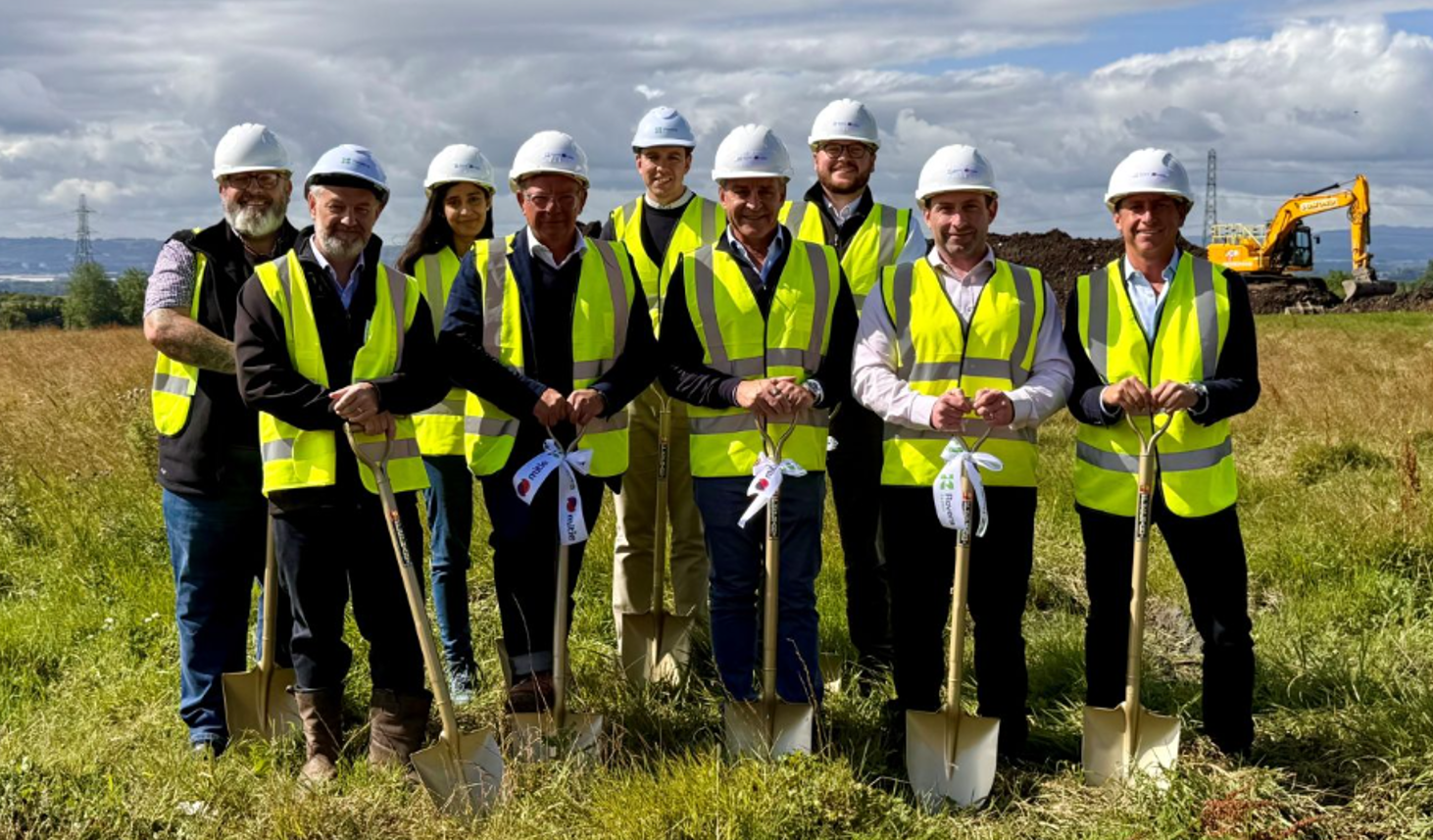
Revera Energy and Macquarie Capital have formed a joint venture covering two transmission-connected battery storage projects under construction in Scotland. Macquarie will invest alongside the Carlyle-backed developer in Windyhill and Hunterston, which together have rated power capacity of 600 MW and nominal energy capacity of 1,200 MWh. The companies announced the agreement on 16 November without disclosing Macquarie’s investment value or precise minority shareholding.
Windyhill, near Bearsden, is designed for 200 MW and 400 MWh, while the Hunterston project in North Ayrshire is rated at 400 MW and 800 MWh. Both reached financial close and received notices to proceed earlier in the year: Windyhill in February and Hunterston in September. Construction was therefore already authorised under separate project financing arrangements. The November transaction changes the ownership and investment structure of those operating companies rather than marking a second financial close.
Revera will retain majority ownership and responsibility for construction, commercial arrangements and long-term asset management. Macquarie Capital will contribute investment and participate in governance and strategic guidance. The partners may also consider Kincardine, a further 400 MW storage development within Revera’s Scottish portfolio, but the initial investment is confined to Windyhill and Hunterston. The companies have not committed Macquarie funding to Kincardine or announced a price for any future interest.
Each of the two committed batteries has a nominal energy-to-power ratio of two hours. That is the result of dividing the stated megawatt-hour capacity by maximum rated megawatts; it is not a promise of two hours of uninterrupted commercial delivery under every condition. The achievable export period depends on the battery’s usable state of charge, conversion losses, auxiliary consumption, system limits and the operating instructions applied by its trading or balancing arrangements.
Grid location is central to both projects. Windyhill sits near the B6 transmission constraint that limits the movement of electricity from generation in Scotland towards demand further south. Hunterston is being developed close to the former nuclear station on Scotland’s west coast, connecting to SP Energy Networks’ 400 kV system. Batteries can charge or discharge at different times to provide flexibility, although the effect on a particular constraint depends on dispatch instructions, network topology and the operating situation; their presence does not remove the requirement for physical reinforcement.
Hunterston’s existing delivery arrangements include Sungrow as battery supplier and long-term service provider, with OCU Group responsible for balance-of-plant construction and operation and maintenance services. Project finance announced in September involved Santander, Barclays, Commonwealth Bank of Australia and NatWest. Revera has also named bp and Danske Commodities for trading and optimisation arrangements. These are established project-level contracts and should be kept distinct from the new Macquarie equity participation.
Construction of a transmission-scale battery extends beyond installing electrochemical storage units. Foundations and enclosures must accommodate power conversion equipment, transformers, switchgear, protection relays, communications, fire safety systems and cable infrastructure. Battery management systems supervise cell operating conditions, while plant controls coordinate active and reactive power at the grid connection. Energisation and grid-code tests will have to demonstrate safe responses to faults and stable operation before either project can provide its intended commercial services.
The 16 November joint-venture announcement targets commercial operation at Windyhill in the fourth quarter of 2027 and at Hunterston in the third quarter of 2028. Revera’s separate Windyhill project webpage still lists the first quarter of 2028, so the more recent announcement provides a different schedule from the existing site information. Neither date is an achieved commissioning milestone. Both projects remain dependent on completing construction, electrical testing and connection requirements.
Storage revenue can arise from electricity price differences, balancing services and other contracted arrangements, with the available mix depending on market qualification and the plant’s technical characteristics. A short-duration frequency response call places different demands on a battery from a sustained period of export at high power. Dispatch software must manage those competing requirements against remaining energy, equipment limits and network availability. A nominal two-hour rating alone therefore does not determine either revenue or the services that will actually be contracted.
Revera’s previously expanded corporate credit facility is separate from the new joint venture and the non-recourse financing arranged for individual projects. Its November announcement describes capital being released from projects that have advanced into construction, while leaving Revera in charge of delivery. The partners have not specified whether the incoming investment will reimburse earlier equity, be applied to particular construction invoices or finance other developments. The ownership change should not be described as a new construction loan or as confirmed expenditure on Kincardine.
Windyhill and Hunterston will now proceed through their existing delivery programmes with Macquarie participating at the ownership level. Their next physical milestones include electrical installation, testing of the high-voltage interfaces and controlled commissioning of battery and grid systems. Expansion of the venture to Kincardine remains conditional on a separate investment decision; no such agreement was disclosed on 16 November.