IN Brief:
- DESNZ reports an N−1 infrastructure score of 103.6%, above the statutory 100% standard for winter 2026/27.
- The calculation uses 592mcm/d of technical supply capacity, 493mcm/d peak demand and an assumed 81mcm/d infrastructure loss.
- The stress test does not guarantee commercially available gas during wider disruptions or simultaneous infrastructure failures.
The Department for Energy Security and Net Zero (DESNZ) has assessed the UK’s winter 2026/27 gas infrastructure against the statutory N−1 security test and reported a score of 103.6%, above the required 100%. Published on 23 October 2026, the risk assessment examines whether available supply infrastructure can meet a severe peak demand assumption following the loss of the largest single component. The result is a modelled infrastructure adequacy measure, not a guarantee that gas will be available commercially in every disruption.
The calculation uses 592 million cubic metres per day (mcm/d) of maximum technical supply capability and a 493mcm/d demand assumption for a once-in-20-years peak day. Removing 81mcm/d for the assumed failure gives approximately 511mcm/d of remaining technical capability, or about 18mcm/d above the specified demand. Rounding of the official input figures does not change the reported 103.6% N−1 outcome. The margin applies to that defined combination of extreme demand and infrastructure failure, rather than simultaneous loss of several facilities.
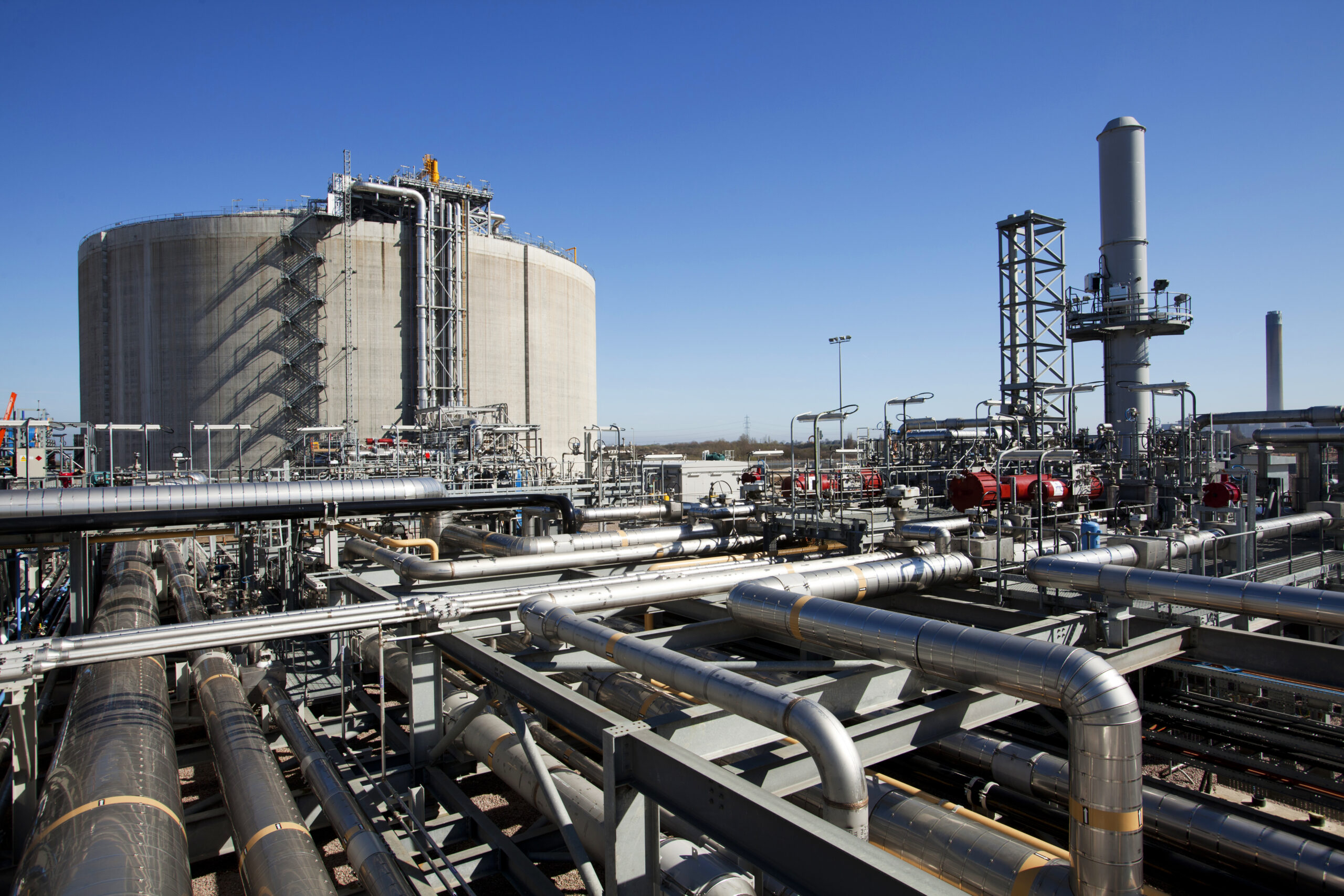
The affected infrastructure in the model is the pipeline connection serving the South Hook and Dragon liquefied natural gas (LNG) terminals at Milford Haven. The test combines a demand level associated with a very cold day expected around once in 20 years with the hypothetical loss of that component. The calculation is designed to establish whether the country has enough technical supply capacity under this particular combination of extreme conditions.
The model’s principal supply inputs are 88mcm/d of maximum domestic production, 217mcm/d of pipeline imports, 113mcm/d of storage withdrawals and 174mcm/d of LNG import capability. These quantities represent technical maximums and are not a prediction that all sources will deliver their full rated flow together. The availability of contracted cargoes, gas in storage, upstream production, nominations and operating conditions can limit what arrives on an individual day. Using these maxima in the infrastructure standard also means the 18mcm/d residual should not be mistaken for spare physical gas guaranteed to the market.
The security standard also contains provisions relating to protected customers, including households and designated essential services. The assessment tests demand across severe cold weather and infrastructure interruption cases rather than applying the single N−1 figure to every customer group. Its calculations indicate that estimated non-storage supply is sufficient to meet protected customer demand in the cases assessed, although that outcome relies on the scenarios and capacity assumptions used.
The national supply portfolio remains dependent on production and cross-border trade. DESNZ reports that UK production accounted for approximately 42% of gross gas supply during 2025, pipeline imports from Norway about 40%, and LNG imports around 17%. Flows through the Belgian and Dutch interconnectors were a much smaller share of annual volumes, but infrastructure used infrequently can still be important during a short period of exceptional demand or disruption elsewhere.
Gas-fired power stations connect the gas security assessment with electricity system resilience. Their fuel requirements may rise when low wind output coincides with high electricity demand, but the relationship varies with power plant dispatch and the availability of other generating capacity and imports. Gas and electricity systems must therefore be considered together when assessing emergency demand reductions. DESNZ does not claim that its N−1 calculation alone establishes whether any individual power station would continue operating during a prolonged market shortage.
The relationship between annual consumption and peak capacity creates a commercial challenge. Lower total gas demand does not necessarily cause the highest winter day to decline at the same rate. Storage facilities, LNG terminals and interconnectors may consequently be needed for only a limited number of days while still requiring maintenance, staffing and capital expenditure throughout the year. Their viability cannot be measured solely by annual throughput.
Storage capacity also has two separate measures: how much gas can be held and how quickly it can be delivered into the network. A seasonal store with substantial working volume may have a lower maximum withdrawal rate than a smaller, faster cycling facility. For a sudden cold day or an unexpected infrastructure outage, deliverability is especially important. The 113 million cubic metres per day input in the infrastructure calculation concerns maximum daily withdrawal capability, not the total inventory in storage.
Import flexibility faces its own constraints. LNG cargoes are bought and scheduled in an international market, so the UK must compete with other destinations for available shipments. Pipeline imports likewise depend on upstream production, interconnector capacity and the ability of neighbouring systems to make gas available. DESNZ identifies geopolitical instability, LNG competition and changing storage and interconnector economics among the risks that merit continuing monitoring.
Natural hazards and hostile interference are also considered. Severe weather can create demand spikes while complicating maintenance or other infrastructure operations, and cyber incidents may affect the digital systems on which energy businesses depend. The assessment does not establish that such incidents have occurred at a named facility, and their inclusion should be read as risk identification rather than a forecast that interruption is imminent.
National Gas also published its Winter Outlook on 23 October, projecting 493mcm/d of peak gas demand and a headline technical capability of 592mcm/d, with sufficient aggregate supply infrastructure under its assessed winter conditions. The difference between those headline figures and the much smaller N−1 margin arises because the stress test removes the largest single supply connection. The two assessments address related questions, but neither should be presented as proof of uninterrupted supply under every combination of commercial and operational risks.
DESNZ concludes that the UK continues to meet its statutory infrastructure requirement while remaining exposed to import market competition, severe weather, infrastructure interruptions and cyber risks. Maintaining technical capacity, fuel access and emergency coordination remains relevant even as annual gas demand changes. The next assessment will depend on updated peak demand, storage deliverability, import availability and the technical capability of the largest infrastructure components.