IN Brief:
- Nordex received orders for 427 turbines across ten countries during the third quarter of 2026.
- Project order intake reached 2,810 MW for the quarter and 7,733 MW across the first nine months.
- Türkiye, Germany and the United States were the leading markets, with pricing influenced by project scope and regional mix.
Nordex Group recorded 2,810 MW of wind turbine project orders in the third quarter of 2026, an increase of 29.5% from the 2,170 MW booked a year earlier. Customers ordered 427 turbines for projects in ten countries during the July-to-September period, with Türkiye, Germany and the United States accounting for the strongest demand.
The latest order intake brought Nordex’s total for the first nine months of 2026 to 7,733 MW, compared with 6,661 MW over the equivalent period in 2025. The nine-month increase of 16.1% reflects orders taken over three quarters rather than equipment already installed or electricity generation capacity commissioned during the period.
Nordex reports these figures for its Projects segment, excluding the service business. The capacity booked under a turbine supply agreement represents equipment ordered for future delivery, with installation and commissioning governed by each customer’s project schedule and contractual arrangements.
Average selling prices remained broadly stable, although the third-quarter metric edged down. Nordex reported €0.90 million per megawatt of ordered capacity in the third quarter of 2026, compared with €0.93 million/MW a year earlier. Its nine-month average was €0.93 million/MW, against €0.92 million/MW in the first nine months of 2025.
The company attributes variation in the average selling price partly to the geographical and contractual mix of the orders. The figure aggregates project orders with different equipment and delivery scopes, so it cannot be read as the selling price of any individual turbine model or the final capital cost of a completed wind farm.
Türkiye accounted for more than 900 MW of the company’s third-quarter order intake. Nordex also highlighted a United States order total exceeding 1.3 GW for the year to date. The US figure spans the first nine months of 2026 and should not be attributed to the third quarter alone.
Project order volumes reflect decisions taken by developers after they have assessed wind resource, planning, equipment requirements and the status of electricity connections. An order for turbines is a significant procurement commitment, although construction schedules can still be affected by grid works, site readiness and delivery constraints.
Nordex supplies onshore wind turbines in power classes including 4 MW to more than 7 MW. The selection of a turbine configuration depends on the expected wind conditions, available site area, design loads and the electricity export limits applicable to the project. The mix of models ordered during the quarter has not been disclosed in the aggregate results.
Onshore turbine output is governed by wind velocity, rotor characteristics and the equipment’s control strategy. At lower wind speeds, the rotor extracts energy from the available flow; as conditions strengthen, blade pitch and generator controls regulate the output within the turbine’s rated electrical and mechanical limits.
Electrical systems must also comply with the requirements of the grid to which the wind farm connects. Turbine converters and plant-level controls participate in voltage and reactive power management within the limits of the installed equipment and the relevant connection agreement. Those design requirements affect project engineering alongside the choice of turbine size.
The timing of production and delivery matters to the manufacturer’s operations because customers place orders in advance of physical installation. Manufacturing capacity, component supply, transport arrangements and scheduled site access all influence the point at which ordered turbines are delivered and accepted.
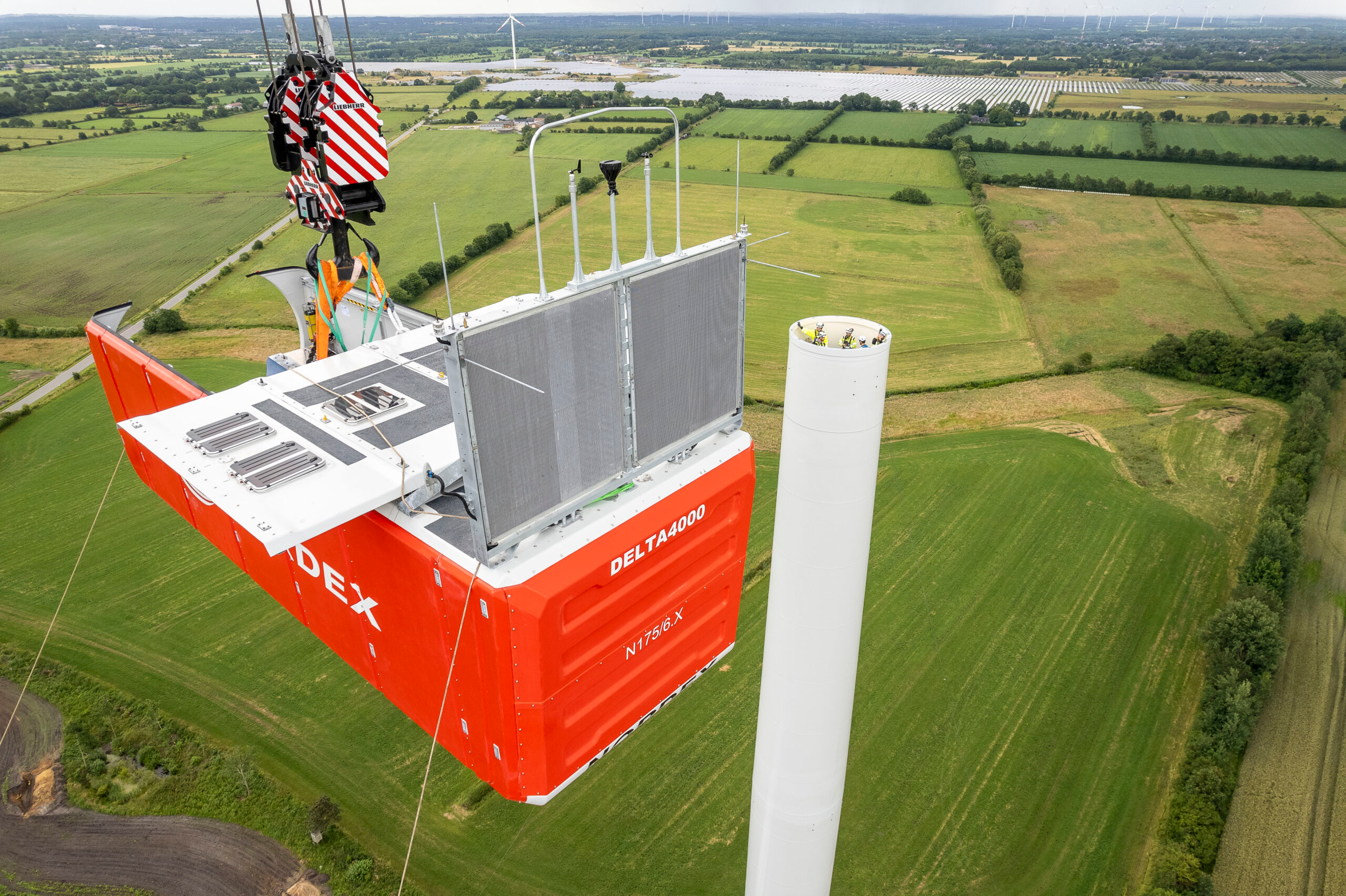
Large turbine components impose transport and lifting demands. Towers, blades, nacelles and other major components require appropriate routes and lifting equipment, while turbine foundations and internal roads must be ready before erection can begin. These requirements vary significantly between countries and individual projects.
Nordex operates a manufacturing network across several international markets, including Germany, Spain, Brazil, India, the United States and Türkiye. The company’s order mix provides a basis for planning future production, but its October figures do not provide a quarter-by-quarter schedule for factory utilisation or deliveries.
Orders for turbines are distinct from service contracts that can support equipment after commissioning. Long-term turbine performance depends on maintenance, component condition, the operator’s control strategy and the availability of repair resources. The latest Nordex figures exclude those service agreements from the reported project capacity.
A geographically diversified order book can distribute exposure across different project markets. National permitting systems, electricity market arrangements and network connection processes affect the timing of construction in each country, which means that contracted megawatts may progress through delivery on different schedules.
Nordex commissioned more than 64 GW of wind capacity across over forty markets between its foundation in 1985 and the latest reporting period. That cumulative company figure measures past deployments over several decades rather than the capacity represented by the orders announced for this quarter.
The company’s October statement establishes an increase in commercial project commitments, with average pricing influenced by the regional and contractual composition of demand. Future financial reporting will show how those orders translate into delivery and recognised revenue as the corresponding wind farms progress towards installation.