IN Brief:
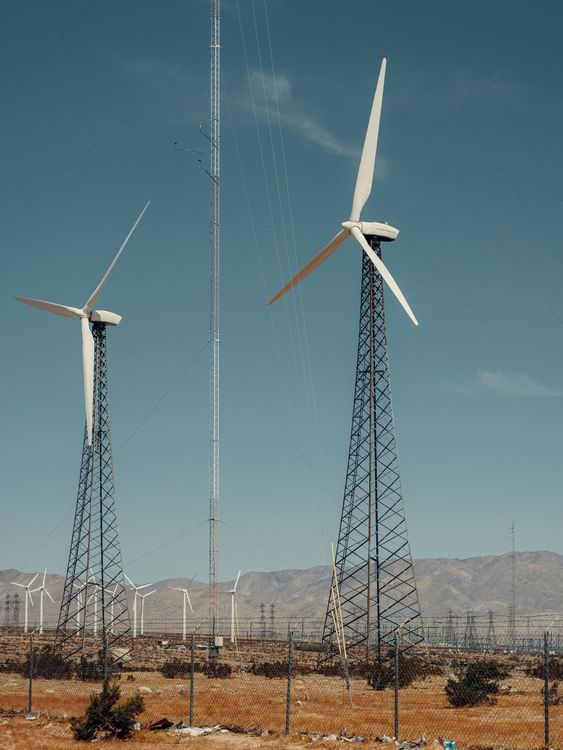
- Entek has selected nine Goldwind GWH182 turbines for the 54.9MW Maya wind project.
- Maya will include a 50.4MWh battery system alongside the wind generation capacity.
- The order is Entek’s fourth consecutive Goldwind wind contract, taking cumulative ordered capacity to 230.1MW.
Entek Elektrik has selected Goldwind turbines for the 54.9MW Maya wind project in Turkey, extending a supplier relationship that now covers four consecutive Entek wind orders and 230.1MW of Goldwind turbine capacity.
The Maya project will use nine GWH182 turbine generators and will be co-located with a 50.4MWh battery energy storage system. Goldwind’s disclosed scope covers turbine supply, lifecycle support, and long term operation and maintenance services, while the available announcement does not identify the battery supplier.
Annual wind generation is expected to reach around 154.5 million kWh once the project is operating. Against 54.9MW of installed wind capacity, that figure implies an annual load factor of about 32%, although the published information does not state whether the forecast is gross or net of electrical losses, curtailment, and plant availability.
Maya follows Goldwind orders for Entek’s Büyükkışla, Eren, and Süloğlu Extension wind projects. Repeated use of one turbine supplier can simplify fleet management by creating common maintenance procedures, technician training, spare parts planning, digital monitoring, and service interfaces, while each site still requires its own foundations, roads, electrical balance of plant, protection settings, and grid studies.
The battery gives Maya a more complex operating architecture than a conventional wind farm. A 50.4MWh storage system could be used for renewable energy shifting, ramp-rate control, grid services, or improved use of an export connection, but its actual role will depend on the undisclosed MW rating, connection agreement, market rules, and plant control strategy.
Without the battery power rating, its discharge duration cannot be calculated from the published material. The 50.4MWh figure describes stored energy, not instantaneous output, and the same energy capacity could support very different operating strategies depending on whether the project uses a relatively high-power, short-duration battery or a lower-power system intended to shift generation over several hours.
Plant-level controls will determine how closely the two technologies work together. If wind generation and storage share the same connection capacity, the controller can potentially charge the battery when turbine output approaches the export limit and release that energy later. If the battery is contracted for ancillary services, part of its state of charge may instead need to be reserved so it can respond when instructed by the system operator.
Protection, metering, forecasting, and communications also become more involved when the wind farm and battery are operated as one hybrid asset. The turbines, battery management system, power conversion equipment, substation controls, and grid interface need coordinated operating logic so that a response from one part of the plant does not create an unintended condition elsewhere.
Entek already operates a mixed generation portfolio, including hydroelectric, wind, solar, and gas-fired assets. Maya therefore adds another renewable project to an established power business rather than creating a new operating capability from scratch. The repeated Goldwind procurement also means Entek can apply experience from earlier projects to the latest turbine fleet.
Turkey continues to expand wind and solar capacity while increasing the need for flexibility around variable generation. Higher renewable penetration raises the value of accurate forecasting, reactive power control, grid reinforcement, storage, and dispatchable resources, particularly where new projects are connecting to parts of the network that were not originally designed for large bidirectional or variable power flows.
Hybrid projects can reduce some of those pressures when storage is integrated around a clearly defined network requirement, but a battery does not automatically solve connection constraints. Its value depends on how much power it can absorb and release, how efficiently it cycles, the number of cycles required by the commercial model, and whether network rules allow the plant controller to use the storage capacity in the intended way.
Goldwind’s long term service scope keeps the manufacturer involved after turbine delivery and commissioning. That becomes more useful across a multi-project fleet because operating data and maintenance experience can be compared across common equipment, while Entek retains responsibility for coordinating the turbine package with the battery, grid connection, and wider balance of plant.
The next delivery milestones will determine how the hybrid concept is translated into a working power station. Turbine manufacture, civil and electrical construction, battery procurement, system integration, grid connection, and commissioning all remain ahead. The equipment order fixes the principal wind technology for Maya, but the project’s eventual operating value will depend heavily on the storage specification and control strategy that have not yet been disclosed.