IN Brief:
- R&S Group will supply NeXtWind projects with power transformers through its ZREW business.
- The agreement is linked to NeXtWind’s multi-site wind repowering programme and future transformer procurement.
- R&S Group is expanding its Łódź production capability as transformer demand rises across grid and renewable projects.
R&S Group has signed a framework agreement with NeXtWind for the project based supply of power transformers to support the renewable developer’s wind farm and repowering portfolio.
The transformers will be supplied through R&S Group’s ZREW business, which manufactures power transformers for transmission grids and renewable energy projects. The agreement extends an existing relationship between the companies and is intended to support procurement for NeXtWind projects planned over the coming years.
NeXtWind acquires and redevelops existing wind farms, with a focus on repowering older sites using newer turbines and associated electrical infrastructure. Its portfolio covers 37 wind farms and around 500MW of installed capacity, while more than 1.9GW of repowering development is in permitting and construction. The company is targeting generation capacity above 3GW by 2028.
That programme creates recurring demand for grid equipment as individual sites move through development, procurement and construction. Repowering may centre on replacing older turbines with fewer or larger machines, but higher generating capacity can also require substantial changes to transformers, substations, protection systems, cabling and connection arrangements.
A framework covering power transformers gives NeXtWind a route to secure one of the heavier and longer lead items in that electrical package across several developments. Individual units will still have to match the ratings, voltages and network requirements of the projects against which they are ordered.
R&S Group is simultaneously expanding its manufacturing operation in Łódź, Poland, where ZREW produces power transformers. The group has committed more than CHF25 million to double manufacturing capacity at the site, with the expanded operation designed to produce transformers up to 160MVA and 220kV.
The new factory is scheduled to begin operation by the end of 2026, while the wider capacity programme is intended to double power transformer output by 2028. Up to 200 jobs are associated with the investment across technical, engineering, commercial and management functions.
Transformer availability has become a significant project scheduling issue as grid reinforcement, renewable generation and electrification programmes compete for manufacturing capacity. Each unit has to be specified around generating plant characteristics, grid voltage, loading regime, protection philosophy and network requirements before manufacturing and factory testing can begin.
Delivery is only part of the sequence. Large power transformers require specialist transport, prepared foundations, high-voltage connections, protection integration and site testing before energisation. Delays in any of those steps can hold up a wind farm even when turbines and civil works are otherwise complete.
Framework agreements can reduce some of the commercial work around repeated procurement by establishing common contractual and technical principles across a portfolio. Project engineering remains specific, however, because transformer ratings, voltage ratios, impedance, cooling arrangements, tap changing requirements and protection interfaces must match the relevant wind farm and network.
NeXtWind’s portfolio is suited to repeat procurement because multiple existing sites are progressing through similar redevelopment stages. Older wind farms may already have grid connections, access roads and electrical compounds, but an increase in generating capacity can require replacement or reinforcement before the network can accept the additional output.
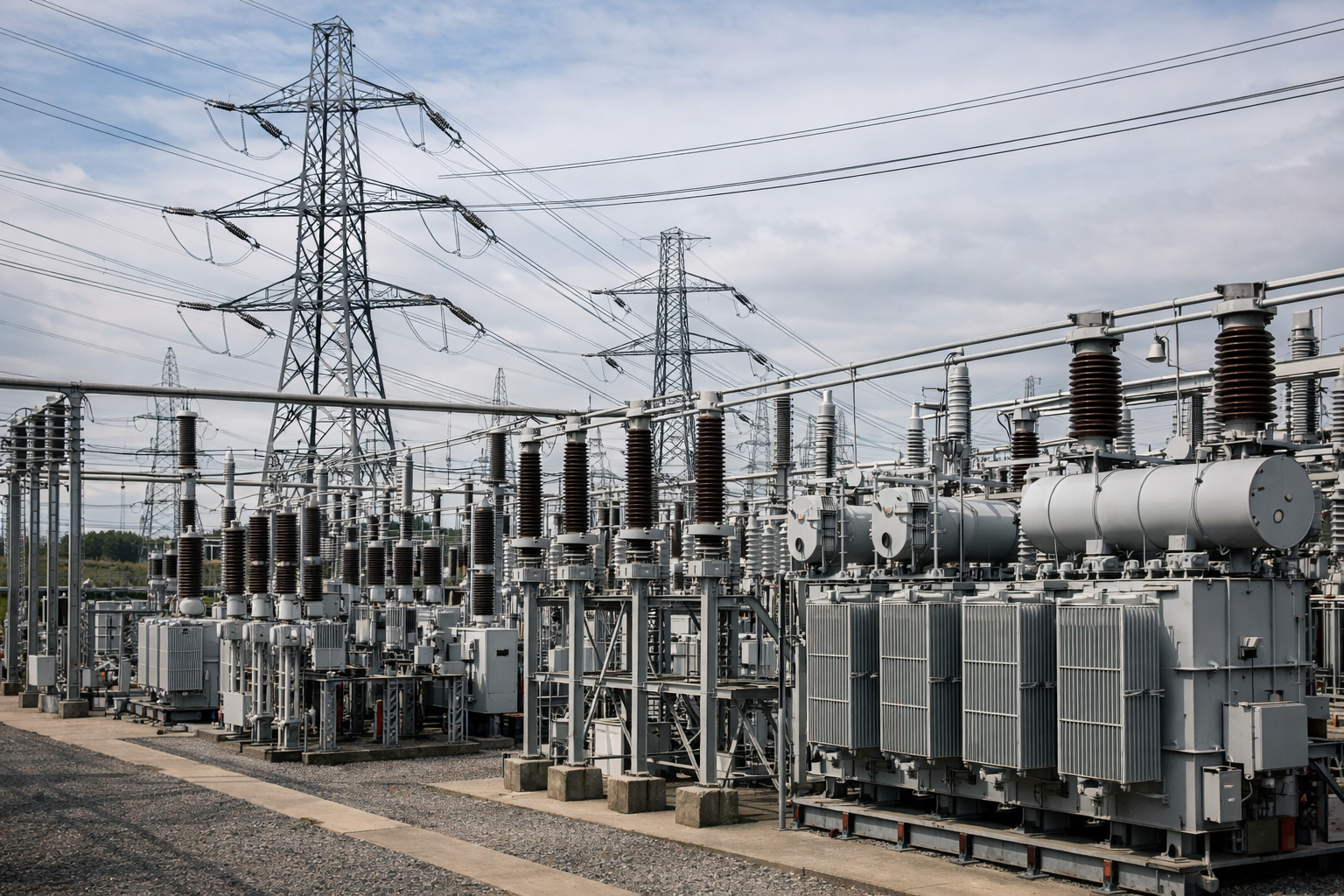
The transformer sits directly at that boundary between generating equipment and the wider power system. Its specification influences losses, voltage control, fault behaviour and the amount of power that can move from the wind farm into the network within the agreed operating envelope.
NeXtWind also plans integrated clean energy hubs combining wind, solar and storage. Hybrid sites introduce additional power flows and operating modes, increasing the importance of transformer loading studies, protection coordination and plant control where several generation and storage technologies share a network connection.
For R&S Group, the agreement links its Łódź expansion to an identified renewable project pipeline. The group operates eight manufacturing facilities across Switzerland, Italy, Poland, Ireland and the Middle East and supplies distribution and power transformers under the Rauscher & Stoecklin, Kyte, Tesar and ZREW brands.
The company reported 2025 net sales of CHF414.8 million and has been adding transformer capacity as utilities, developers and infrastructure operators increase investment in grids and generation. Higher-capacity power transformers require specialised manufacturing, testing and transport capability, leaving factory availability as an important constraint even where the equipment design itself is mature.
No aggregate transformer quantity or contract value has been disclosed under the NeXtWind framework. The commercial scale will emerge through individual project call-offs as repowering sites reach construction, while R&S Group brings the additional Łódź capacity into operation and works towards its 2028 production target.