IN Brief:
- Vertiv has agreed a $1.45 billion acquisition of UtilityInnovation Group, with up to $1.15 billion of additional performance-linked consideration.
- UIG adds microgrid controls, customised switchgear, energy-storage integration, onsite generation orchestration, and behind-the-meter system design.
- The combined capability targets grid-connected, bridge-to-grid, and islanded data-centre architectures where access to utility capacity constrains development.
Vertiv has agreed to acquire UtilityInnovation Group in a transaction intended to extend its data-centre power portfolio upstream into utility interconnection, onsite generation orchestration, microgrid controls, and behind-the-meter electrical architecture.
The acquisition values UtilityInnovation Group, or UIG, at approximately $1.45 billion in cash at closing, with up to a further $1.15 billion payable if specified EBITDA targets are achieved over 12- and 24-month periods. The deal remains subject to regulatory approvals and customary closing conditions and is expected to complete in the fourth quarter of 2026.
At the initial purchase price, Vertiv says the transaction represents about 13 times UIG’s expected 2027 EBITDA. The company expects the acquisition to be accretive to adjusted earnings per share in the first year after completion, although those financial expectations depend on the transaction closing and the combined business performing as planned.
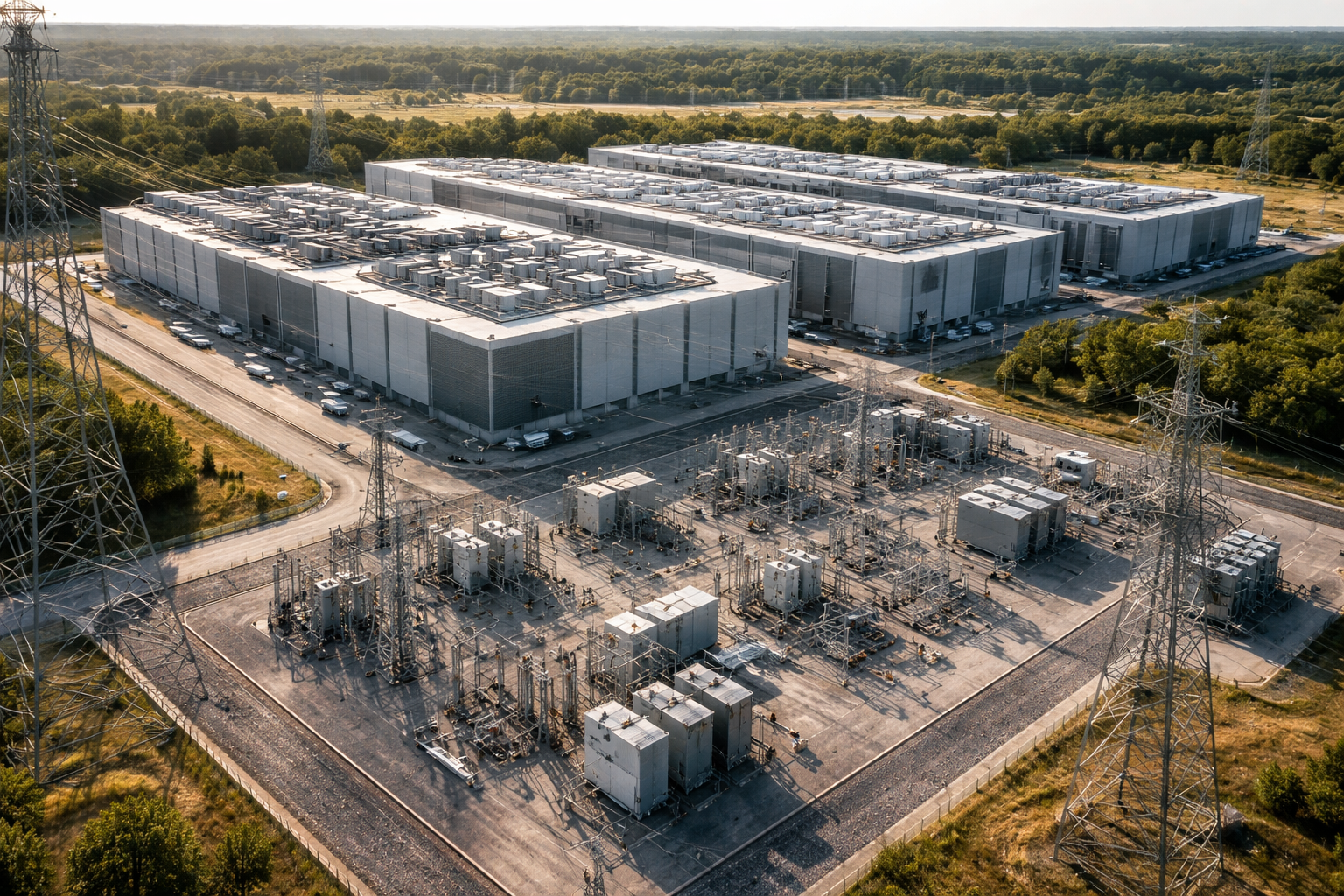
The engineering significance lies in the capabilities being added rather than the valuation. UIG designs microgrid systems, behind-the-meter power architectures, advanced controls, and pre-engineered switchgear for data centres. Its systems are intended to coordinate multiple power sources in real time and integrate them with the critical electrical infrastructure feeding computing loads.
That moves Vertiv closer to the utility boundary. The company already supplies uninterruptible power systems, power distribution, thermal management, monitoring, and other infrastructure inside data centres. UIG adds expertise further upstream, where developers have to decide how utility supply, onsite generation, energy storage, switching, and control will be combined before the downstream critical-power train is finalised.
The acquisition is aimed at a constraint that has become increasingly important for large AI infrastructure projects: obtaining sufficient electrical capacity on the same timetable as the computing facility. A site can progress through land, planning, and building design only to find that the local grid cannot provide the required megawatts when the data hall is ready.
Vertiv says UIG has experience designing and delivering microgrid systems for AI data-centre operators in the United States and Europe. Its generation-agnostic approach is intended to allow the electrical architecture to be built around whichever technologies a site can permit, fuel, finance, and operate rather than tying the customer to one generation vendor.
Generation-agnostic does not mean electrically interchangeable. Gas engines, turbines, fuel cells, batteries, renewable generation, and utility connections have different fault behaviour, ramp rates, efficiency characteristics, starting requirements, emissions constraints, and maintenance needs. The control system has to coordinate those differences while maintaining acceptable voltage and frequency for critical loads.
That becomes more difficult when a site operates partly or wholly independently of the grid. In a normal utility-connected arrangement, the wider power system provides a large source of balancing capability. An islanded microgrid has to manage rapid changes in load and generation within a much smaller electrical system, making real-time controls, reserve, and protection coordination central to reliability.
UIG brings pre-validated reference designs for grid-connected, bridge-to-grid, and islanded sites. A grid-connected architecture keeps the utility as the principal source while onsite assets supplement it. A bridge-to-grid design can allow a facility to begin operating on local generation before its full utility connection is available, while an islanded site is intended to operate without depending on the external grid.
Each configuration moves risk to a different part of the system. Bridge-to-grid can reduce dependence on utility energisation dates but requires investment in local generating capacity that may later operate under a different duty cycle. Islanded operation reduces reliance on the network but makes fuel supply, generation redundancy, maintenance, emissions compliance, and long-term operating cost the direct responsibility of the site.
Behind-the-meter switchgear is central to all three models because it controls how power sources are connected, isolated, synchronised, and transferred. Protection schemes have to distinguish faults within the microgrid from disturbances on the utility system, while interlocking and control logic must prevent unsafe operating states during transitions between sources.
Energy storage can provide another layer of flexibility. Batteries can respond rapidly to frequency changes, support short-duration load steps, provide ride-through, and bridge the interval while slower generators start or increase output. They can also limit peaks in grid demand, but their state of charge has to be managed so sufficient energy remains available when the operating strategy requires it.
Vertiv’s existing position is closer to the computing load through UPS, distribution, cooling, and service infrastructure. UIG adds capabilities between that critical power train and the incoming source of electricity. The strategic argument is that designing those layers together can reduce interfaces between separate suppliers and bring power architecture into site planning earlier.
The combination does not remove the need for utilities, engineering consultants, generation suppliers, EPC contractors, or network approvals. Large data-centre power systems remain multi-party projects involving interconnection studies, fuel infrastructure, permits, protection coordination, environmental requirements, commissioning, and long-term maintenance.
UIG was founded in 2020 and is headquartered in Raleigh, North Carolina, with European headquarters in Dublin and manufacturing operations in North Carolina and New Jersey. Vertiv says its portfolio includes proprietary controls software, customised microgrid switchgear, energy storage integration, and systems supporting real-time load and frequency balancing.
If the acquisition closes as planned, the test will be whether that capability shortens the route from site selection to reliable electrical operation. A broader product portfolio is commercially useful, but the engineering measure is more demanding: faster energisation, stable transitions between utility and onsite sources, and microgrids that can scale without introducing another layer of operational complexity.