IN Brief:
- The second Jalpura-Khurja element comprises two approximately 81km 400kV circuits, totalling 162 circuit kilometres.
- A new 400/220kV GIS substation at Jalpura provides 1,000MVA of transformation capacity.
- The infrastructure strengthens high-voltage transfers towards NCR and western Uttar Pradesh as regional electricity demand increases.
Tata Power has commissioned the second element of its Jalpura-Khurja transmission project in Uttar Pradesh, bringing a 400kV double-circuit line and a 400/220kV gas-insulated substation into service to strengthen power transfers towards the National Capital Region and western Uttar Pradesh.
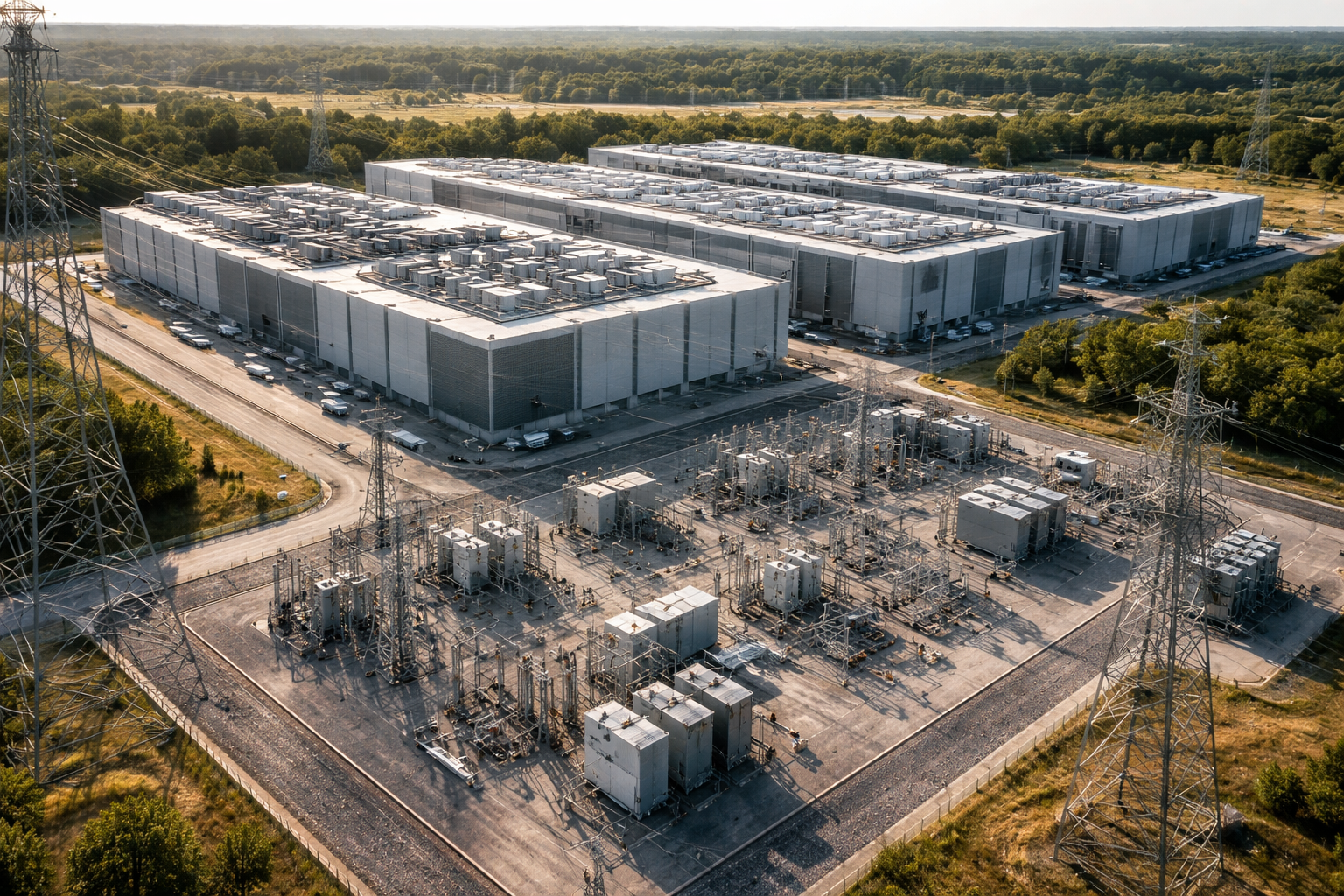
The newly commissioned element was delivered through TP Jalpura Khurja Power Transmission Limited, a wholly owned Tata Power subsidiary. It comprises 162 circuit kilometres of 400kV transmission line between Khurja and Jalpura, formed by two circuits of approximately 81km each, together with a GIS substation at Jalpura providing 1,000MVA of transformation capacity.
The substation creates a high-capacity interface between the 400kV transmission system and the 220kV network. That allows bulk power carried at the higher voltage to be transformed for onward transfer through regional infrastructure serving growing electricity demand across NCR, Noida, and western Uttar Pradesh.
Khurja is already an important power node in the region, so the new corridor adds another high-voltage path into an area where demand growth is placing greater requirements on transmission capacity. Tata Power says the project is intended to improve reliability, resilience, and efficiency while supporting the next phase of regional development.
The September commissioning follows the first milestone under the same Jalpura-Khurja project. In January, Tata Power brought a separate 400/220kV Metro Depot substation and associated lines at Greater Noida into operation, adding another 1,000MVA of transformation capacity. That first element was designed to support local load growth while allowing surplus power to flow towards the Northern Grid.
Delivering the scheme in separate energisable elements allows useful network capacity to enter service before every part of a wider transmission programme is complete. It also gives the project team defined commissioning boundaries, with each line, substation, and associated protection and control package able to pass testing before being incorporated into the operating network.
The 400kV double-circuit configuration provides more operational flexibility than a single circuit along the same route. One circuit can, subject to wider system conditions, remain available when the other is removed for maintenance or isolated following a fault. The arrangement does not eliminate common-mode risks, but it gives the network operator additional options when planning outages and responding to equipment unavailability.
At Jalpura, the 1,000MVA transformation capacity is as important as the transmission line itself. High-voltage power has limited value to regional consumers unless it can be transformed and distributed through lower-voltage networks. The 400/220kV interface therefore converts transmission investment into capacity that can be used by the downstream system.
Gas-insulated switchgear is well suited to sites where land use, layout, or equipment density make a compact arrangement desirable. Conductors and switching components are enclosed within metal-clad modules, allowing a high-voltage substation to occupy less space than an equivalent air-insulated installation. That compactness comes with demanding installation, quality-control, monitoring, and maintenance requirements.
A 400kV GIS substation also depends on a substantial secondary-system layer. Protection, control, metering, interlocking, telecommunications, alarms, and automation have to operate with the primary equipment so faults can be detected and isolated rapidly without disconnecting healthy sections of the network unnecessarily.
Protection coordination becomes particularly important on a corridor connecting major grid nodes. Distance protection, differential schemes, busbar protection, breaker-failure functions, and communications-assisted tripping can all form part of a modern high-voltage protection architecture, although Tata Power has not published the detailed scheme used at Jalpura.
The commissioning process therefore extends beyond energising conductors. Primary equipment has to pass insulation and functional tests, control and protection logic must be checked end to end, communication links have to operate correctly, and the new assets must be integrated into system control arrangements before they can carry commercial power.
Tata Power says its transmission portfolio has now reached 7,900 circuit kilometres of lines either operational or under execution across India. The Jalpura-Khurja milestone therefore sits within a broader expansion of the company’s transmission business, including projects intended to reinforce regional networks and move power between generation and demand centres.
India’s transmission build-out is being driven by several pressures at once. Electricity demand continues to increase, renewable generation is being added in areas often distant from major loads, and industrial and commercial development can create concentrated demand that existing substations were not designed to absorb. Those changes require new circuits and substations before downstream investment can use the additional electricity.
Transmission capacity also has to be planned for contingency conditions rather than normal loading alone. A corridor that performs adequately with every component available may still need reinforcement if the loss of one line, transformer, or substation element would overload the remaining system or leave insufficient voltage support.
The Jalpura-Khurja project adds both another 400kV route and another 1,000MVA grid interface to address those requirements. Its operational value will emerge through the amount of additional load it can support, the flexibility it gives system operators during outages, and the way it integrates with subsequent transmission and distribution reinforcement.
For Tata Power, the second element marks another completed construction and commissioning stage. For the regional network, the more important outcome is that new high-voltage infrastructure is available before demand growth turns connection capacity into a constraint that takes years to correct.