IN Brief:
- Linxon’s initial Middleton scope covers engineering and early procurement for a new 400kV SF6-free GIS installation.
- The extension will support new customer connections, including two battery storage projects, through additional transmission capacity near Heysham.
- Middleton forms part of wider north-west transmission investment as battery, renewable generation, and electricity demand connections increase.
Linxon has been selected by National Grid to begin engineering and early procurement for the extension of Middleton 400kV substation in Lancashire, moving the reinforcement into its first equipment-delivery phase.
The initial scope includes engineering work and procurement of long-lead items for a new 400kV gas-insulated switchgear installation using SF6-free EconiQ technology and associated systems. Subject to a further notice to proceed, later phases are expected to include construction, installation, testing, and commissioning.
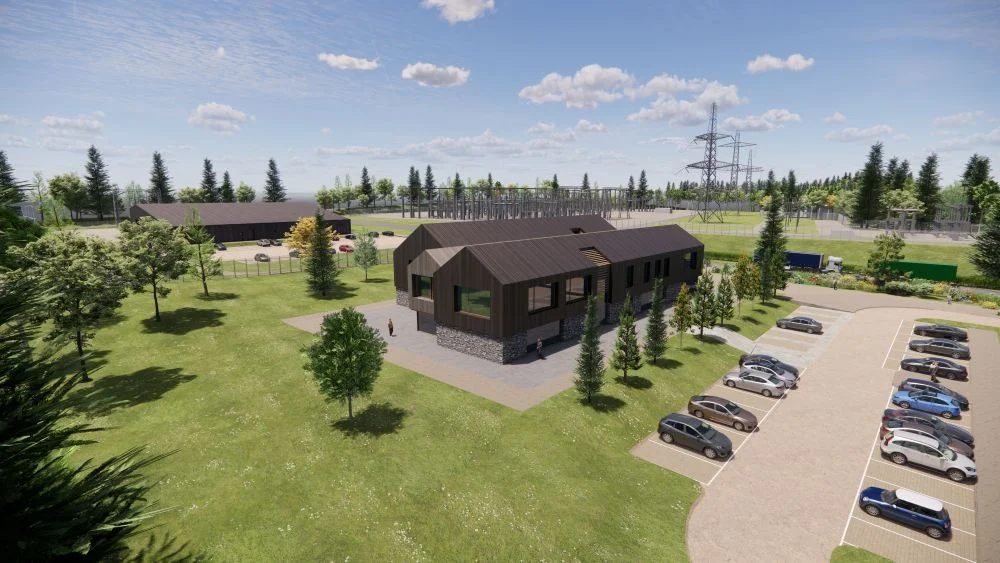
National Grid plans a new GIS hall alongside the existing substation near Heysham. The extension is intended to create additional capacity for new customer connections, including two battery energy storage projects, while strengthening the site for further generation and demand growth.
The scheme received unanimous planning approval from Lancaster City Council’s Planning Regulatory Committee on 11 May. National Grid has yet to set out the final construction programme, making Linxon’s present award an engineering and procurement step rather than authorisation for the complete delivery package.
That early procurement is significant for equipment with long manufacturing and testing cycles. High-voltage switchgear and associated substation systems can become programme-critical if factory capacity, component availability, type testing, or delivery slots fall behind civil works, so committing selected long-lead items ahead of full site construction can reduce later schedule exposure.
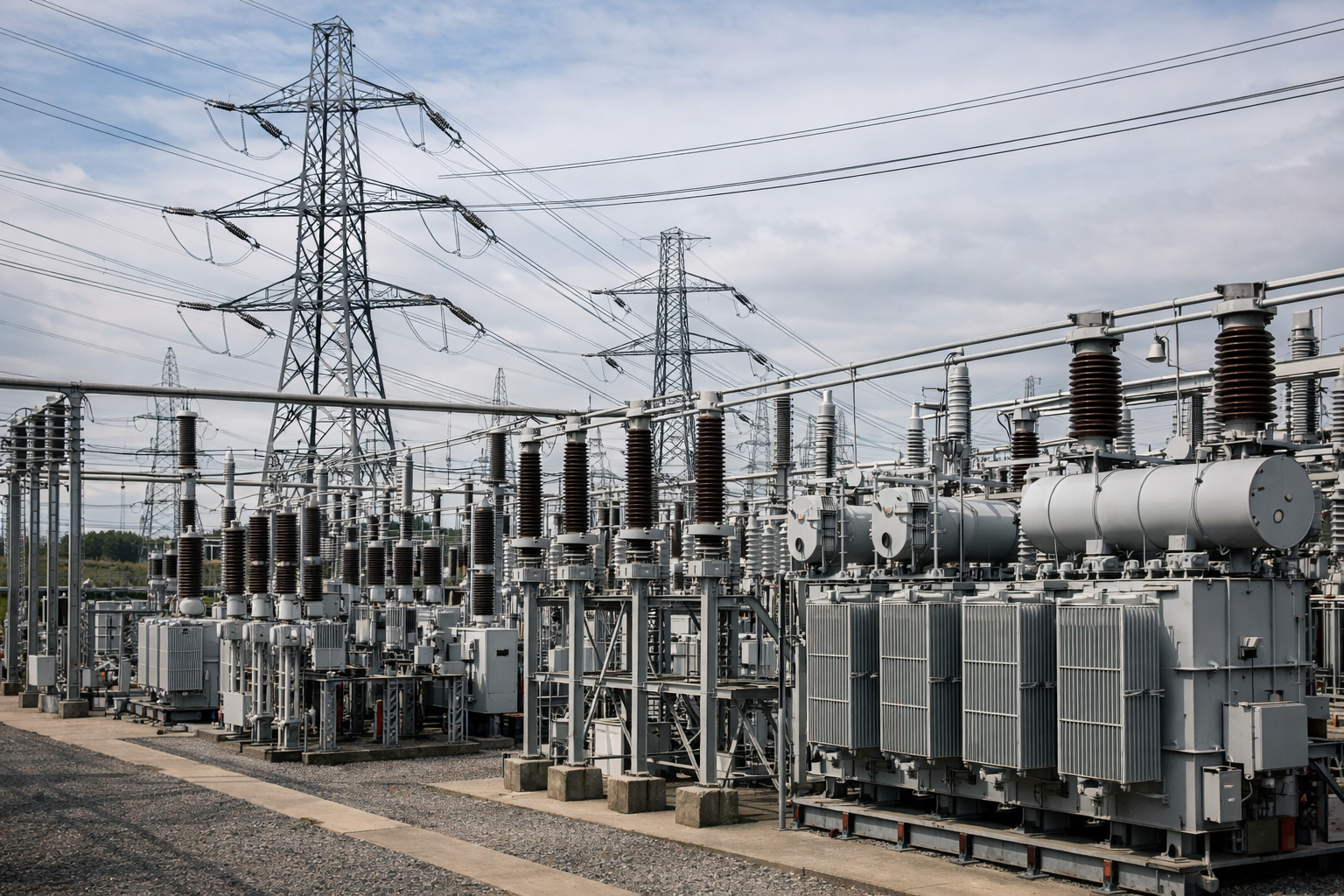
The choice of GIS also reflects the practical constraints associated with expanding an existing transmission site. Gas-insulated equipment places conductors, breakers, disconnectors, and other primary components within enclosed modules, allowing a 400kV installation to occupy less land than an equivalent air-insulated arrangement.
Middleton will use SF6-free equipment rather than conventional sulphur-hexafluoride GIS. That places the extension within a wider transition in European high-voltage engineering as utilities procure alternatives to a gas whose strong dielectric performance has historically made it useful in compact switchgear but whose environmental impact has driven tighter regulation.
The project must still deliver the electrical performance required from a live 400kV installation. Busbars, circuit breakers, disconnectors, earthing equipment, protection systems, control interfaces, gas handling, interlocking, and commissioning procedures all have to operate within National Grid’s standards regardless of the insulating medium chosen.
Battery connections add another layer because storage can behave as both demand and generation. A BESS imports substantial power while charging and later reverses the same electrical interface to export, requiring network studies and operating arrangements to consider flows in both directions.
Protection coordination, fault levels, harmonic performance, voltage behaviour, metering, communications, and control all have to account for power-electronic equipment whose response differs from that of a conventional synchronous generator. Connection capacity therefore involves considerably more than reserving a headline number of megawatts on the network.
National Grid’s wider RIIO-T3 plan for the north-west gives the Middleton reinforcement additional context. The transmission operator has identified £1.3 billion of investment to maintain, upgrade, and develop its regional network, together with 2.6GW of expected new low-carbon generation connections.
Of that generation total, around 2.1GW is battery storage and 450MW is offshore wind. National Grid also expects to connect 1.6GVA of additional demand for rail services and distribution-network customers, meaning substations such as Middleton increasingly have to accommodate a less predictable mixture of imports, exports, and changing demand patterns.
The company’s regional plan specifically identifies the Middleton extension as a means of connecting new clean-power sources and supporting growth on Electricity North West’s distribution network. It is intended to provide capacity that can be used by additional customers more quickly once the reinforcement is in place.
Construction next to live transmission equipment will impose another set of constraints when the later phases begin. Outages have to be coordinated around existing circuits, temporary works must respect high-voltage clearances, and new protection and control functions have to be integrated without compromising the operation of equipment already in service.
The final commissioning sequence will need to demonstrate the performance of every new bay and associated secondary system before energisation. Protection logic, communications, alarms, interlocks, primary plant, and control interfaces are tested as an integrated installation because a fault in any one layer can prevent otherwise complete equipment from entering operational service.
Linxon’s present contract deliberately stops short of those later activities. Engineering and long-lead procurement can proceed while National Grid retains a further decision point before construction, installation, testing, and commissioning are released.
Middleton has nevertheless progressed beyond a connection concept. Planning permission is in place, initial engineering is under way, and procurement is beginning for equipment needed to create additional 400kV capacity.
For the north-west network, the relevant milestone will come when that equipment is commissioned and customer projects can use the capacity. Britain has no shortage of proposed storage and renewable schemes; the harder part is building the transmission infrastructure that allows them to connect on useful timescales.