IN Brief:
- Studsvik’s initial ReFirm development would deploy four BWRX-300 units with approximately 1.2GW of combined generating capacity.
- GE Vernova Hitachi will lead reactor engineering and licensing support, with Samsung C&T forming part of the project execution team.
- Site selection, licensing, financing, and a final investment decision remain ahead before the targeted mid-2030s first operation.
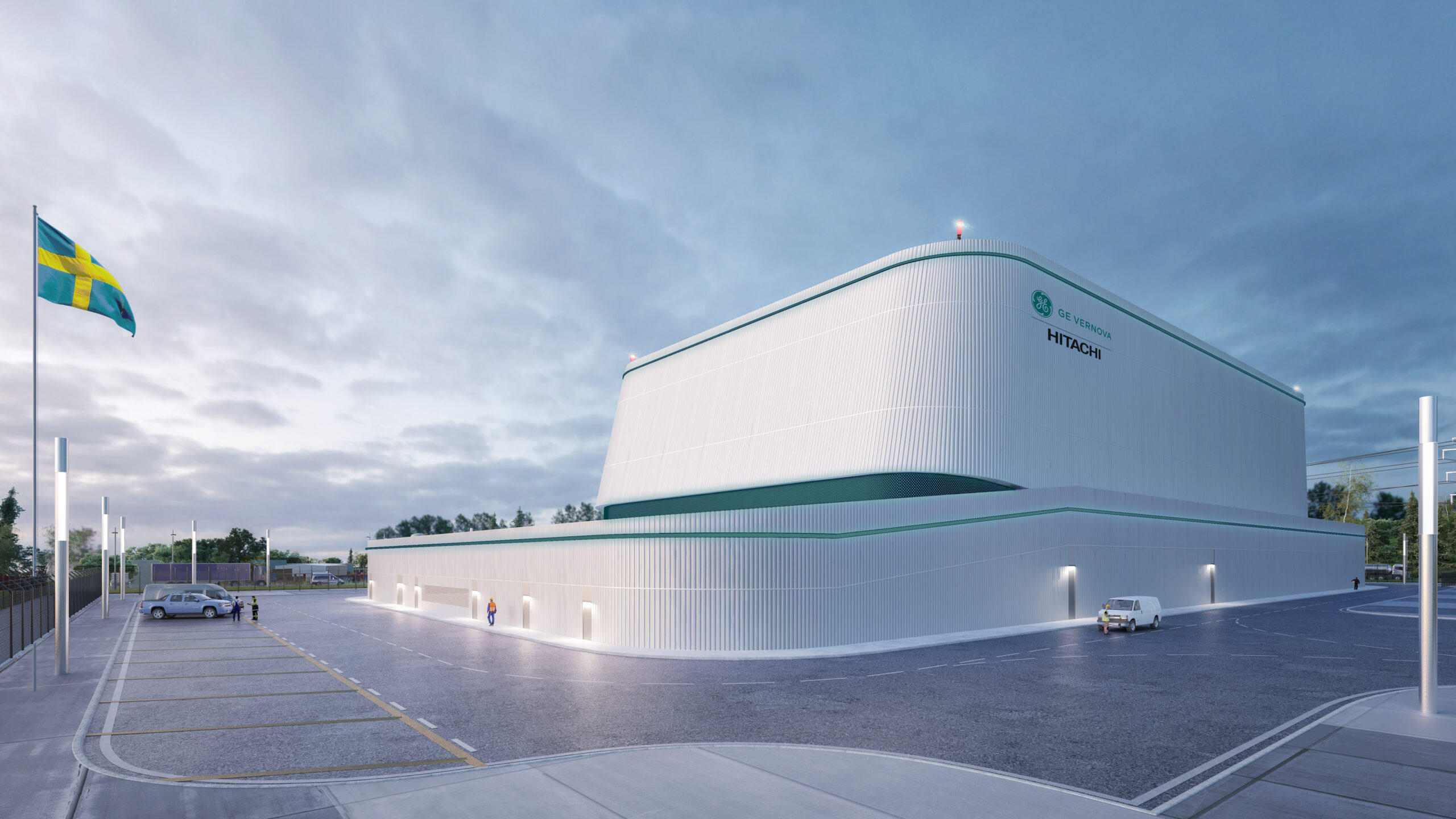
Studsvik has selected GE Vernova Hitachi Nuclear Energy and Samsung C&T as strategic collaborators for an initial four-reactor small modular nuclear project in Sweden, advancing the ReFirm programme towards a proposed 1.2GW first deployment.
The development would use four BWRX-300 reactors and is being assessed for either Studsvik’s existing licensed nuclear site at Nyköping or the Målma site in Valdemarsvik. The first location has not yet been chosen, and the agreement does not amount to a final investment decision or an authorisation to construct. The partners are targeting first operation in the mid-2030s if development, licensing, financing, and construction progress as planned.
The agreement brings reactor technology, engineering and construction capability, and financial expertise into one development structure. GE Vernova Hitachi will lead reactor engineering, licensing support, and cost estimation and will act as engineering authority. Samsung C&T will work with it as part of the execution team, while GE Vernova Financial Services and DS Investment Partners will support financing activity during the exclusivity period.
Studsvik will retain responsibility for permitting, environmental assessment, site rights, community engagement, and dialogue with the Swedish state. The parties also plan a dedicated project company to support development, financing, construction, ownership, and operation, subject to definitive agreements.
ReFirm joined Studsvik through its acquisition of Kärnfull Next earlier in 2026. Kärnfull Next had worked with GE Vernova Hitachi on BWRX-300 deployment in Sweden since 2022 and entered a strategic teaming agreement with Samsung C&T in 2024, so the latest arrangement consolidates an existing development chain rather than assembling a team around a new concept.
The two candidate locations present different delivery conditions. Nyköping is an existing licensed nuclear site operated by Studsvik, while Valdemarsvik would be a greenfield development. Studsvik submitted applications earlier this year covering both locations and has also applied for Swedish state aid for projects in Nyköping and Valdemarsvik.
The proposed four-unit configuration is central to the programme. A sequence of nominally identical reactors creates scope to reuse engineering, repeat manufacturing processes, retain trained labour, and apply commissioning lessons from early units to later ones. Those gains depend on design stability, regulatory acceptance, supply continuity, and tight control of project-specific changes.
The same logic extends into the supply chain. A multi-unit programme offers Swedish engineering, fabrication, construction, electrical, civil, and service companies a longer demand horizon than a single reactor project. Nuclear qualification requirements will still restrict how quickly new suppliers can enter safety-related work, but repeat orders can make investment in people, processes, and manufacturing capability easier to justify.
Sweden’s financing framework is intended to address part of the risk attached to new nuclear construction. Since August 2025, qualifying projects have been able to apply for government loans covering construction, testing, planning, and preparatory work, alongside two-way contracts for difference during operation. The programme is planned to support investments totalling about 5GW of new nuclear capacity.
Studsvik’s June application was one of several submitted under that framework. Blykalla has separately sought support for a modular reactor project at Norrsundet, while other developers are also testing whether Sweden’s policy can support projects through licensing and into financeable construction.
The BWRX-300 route also places the Swedish proposal within a wider attempt to establish repeatable small-reactor deployment. GE Vernova Hitachi is using work on the Darlington New Nuclear Project in Canada as part of the experience base for subsequent projects, while the Swedish programme aims to combine a standard reactor design with local licensing, site, grid, and industrial requirements.
Standardisation does not remove the site-specific work. Ground conditions, cooling arrangements, grid connection, security, emergency planning, construction logistics, environmental constraints, and local infrastructure still have to be engineered for whichever location is selected. The commercial structure must also support four units rather than a single demonstration plant.
The agreement therefore marks a development step rather than the start of construction. The consortium still has to choose the first site, progress environmental and regulatory work, establish cost and schedule baselines, qualify suppliers, define the project company, and reach financing arrangements capable of carrying a multi-unit programme.
Nuclear projects accumulate commitments long before first concrete. Design adaptation, licensing evidence, supply chain qualification, grid studies, financing, and construction planning determine whether a reactor technology can become an executable power project. Studsvik now has a defined technology and delivery team around its first 1.2GW proposal; the next milestones will show whether that structure can be converted into licensed, financed, and buildable capacity.