IN Brief:
- GigaBattery Boxberg 400 combines 400MW of connection capacity with 1,600MWh of four-hour storage.
- HyperStrong will supply the LFP battery system and integrate the project's electrical equipment.
- Siemens Energy is building a 380kV GIS connection linking the battery and surrounding renewable generation to the 50Hertz network.
LEAG Clean Power has started construction of the 400MW/1,600MWh GigaBattery Boxberg 400 at the Boxberg power station site in Saxony, bringing a four-hour storage project onto land previously occupied by part of the former generating complex.
The battery is being developed on a six-hectare remediated area at the former Werk II site. HyperStrong International (Germany) is responsible for supplying the battery systems, integrating the electrical equipment, and delivering the storage installation on a turnkey basis, while Siemens Energy is constructing a new 380kV gas-insulated switchgear installation.
At full rated output, the project will be capable of delivering 400MW for four hours. Its 1,600MWh storage capacity is equivalent, on LEAG’s consumption comparison, to four hours of electricity demand from around 640,000 households.
HyperStrong will use its HyperBlock III platform with lithium iron phosphate battery cells. The manufacturer’s scope extends beyond the battery containers themselves to electrical system integration, placing responsibility for interfaces between the storage equipment, balance of plant, and high-voltage connection within the same main delivery package.
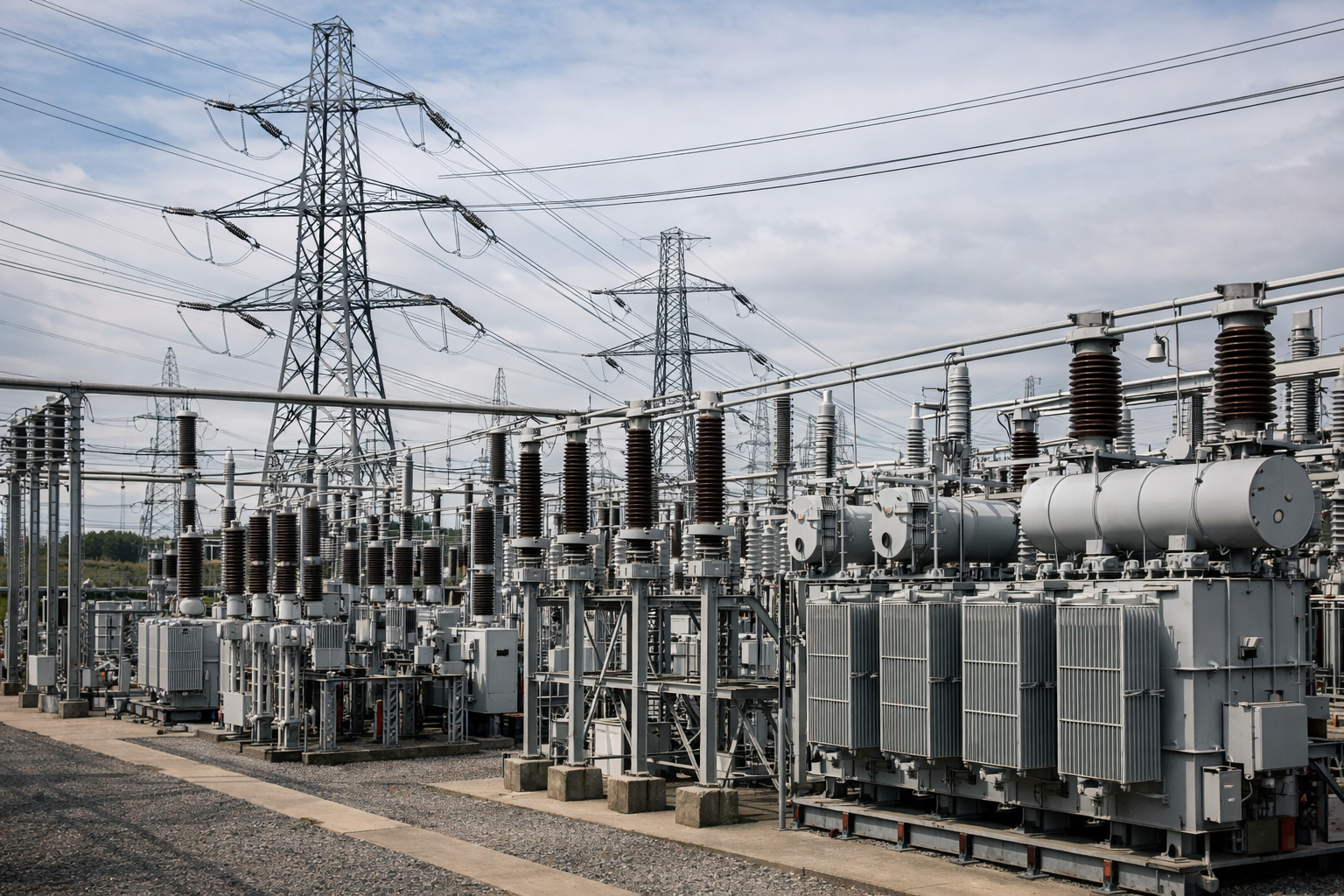
Siemens Energy’s parallel work centres on the new 380kV GIS. The equipment will provide the connection to the 50Hertz transmission network and is intended to accommodate both charging and discharging of the battery and renewable generation around the Boxberg energy site.
Existing power infrastructure shapes the project
Boxberg’s location gives the development characteristics that differ from a greenfield battery site. The former power station area already has an industrial land use, access to high-voltage infrastructure, and an established role within the regional electricity system, although the old plant footprint first had to be cleared and remediated before the storage project could begin.
That relationship between storage and existing generation sites is becoming increasingly important as conventional power assets are retired or reconfigured. Grid access is often one of the longest and most uncertain parts of a battery development, particularly for projects capable of charging and exporting hundreds of megawatts. Reusing established energy locations does not remove the requirement for new connection equipment, but it can place storage closer to transmission infrastructure already designed around large power flows.
The 380kV interface also sets Boxberg apart from smaller distribution-connected batteries. A 400MW asset can behave as either a substantial generator or a substantial load depending on whether it is discharging or charging, so protection, control, metering, reactive power management, and communication with the transmission system operator become central to the design.
Four-hour duration broadens the operating range beyond the shortest balancing products. The battery will still be technically capable of rapid response, but 1,600MWh of stored energy provides greater scope for sustained charging during periods of excess generation and longer discharge when system conditions require controllable output.
The commercial value of that flexibility will depend on how often the plant is able to cycle, the spread between charging and discharging periods, network constraints, efficiency losses, and the availability of balancing or ancillary-service revenues. Those operating decisions will sit on top of the physical limits established by the battery cells, inverters, transformers, switchgear, cooling systems, and grid connection.
LEAG is developing Boxberg as part of its broader GigawattFactory programme in Lusatia, which combines renewable generation with storage and other flexible power technologies. The company is also planning the substantially larger GigaBattery Jänschwalde 1000, rated at 1,000MW and 4,000MWh.
Taken together, the two schemes show the scale at which the former conventional-generation portfolio is being repurposed. The engineering challenge is no longer simply to place batteries alongside old power stations: each site requires new high-voltage interfaces, controls, protection, civil works, and operating systems capable of handling assets that can switch rapidly between import and export.
HyperStrong’s battery package and Siemens Energy’s GIS now have to be combined with those site works into one operable installation. Civil construction, cabling, auxiliary systems, fire protection, commissioning, and grid-compliance testing will determine how quickly the headline 400MW rating becomes usable transmission-connected flexibility.
The ground-breaking therefore marks the point at which Boxberg becomes an equipment and integration project rather than a development proposal. The next meaningful milestones will come from delivery of the battery blocks, completion of the 380kV works, energisation, and system commissioning.