IN Brief:
- ECA and BESA have convened an industry roundtable on data-centre workforce requirements.
- Discussion covered commissioning, cable jointing, apprenticeships, specialist electrical skills, and supply-chain capacity.
- Participants will develop further actions before reconvening within six months.
The Electrical Contractors’ Association and the Building Engineering Services Association have convened contractors, government departments, training bodies, and infrastructure specialists to examine workforce constraints surrounding Britain’s expanding data-centre pipeline.
Representatives from T Clarke, Crown House Technologies, Emcor, Group Metropolitan, Sudlows, and Phoenix ME joined Skills England, the Joint Industry Board, JTL, Oxford SKOPE, Barbour ABI, and government officials for the roundtable.
Discussion covered workforce forecasting, specialist electrical competence, commissioning, cable jointing, apprenticeships, routes into the sector, procurement, and the ability of contracting businesses to expand alongside the volume of planned development.
Participants agreed to develop further actions and reconvene within six months. The work is intended to produce a clearer picture of the occupations, training routes, experience levels, and delivery capacity required as projects move from investment announcements into design and construction.
The associations cited approximately £14 billion of announced government-related investment and an estimated UK data-centre pipeline valued at £88 billion. Pipeline figures do not represent guaranteed construction expenditure, but they indicate the scale of schemes being considered across the market.
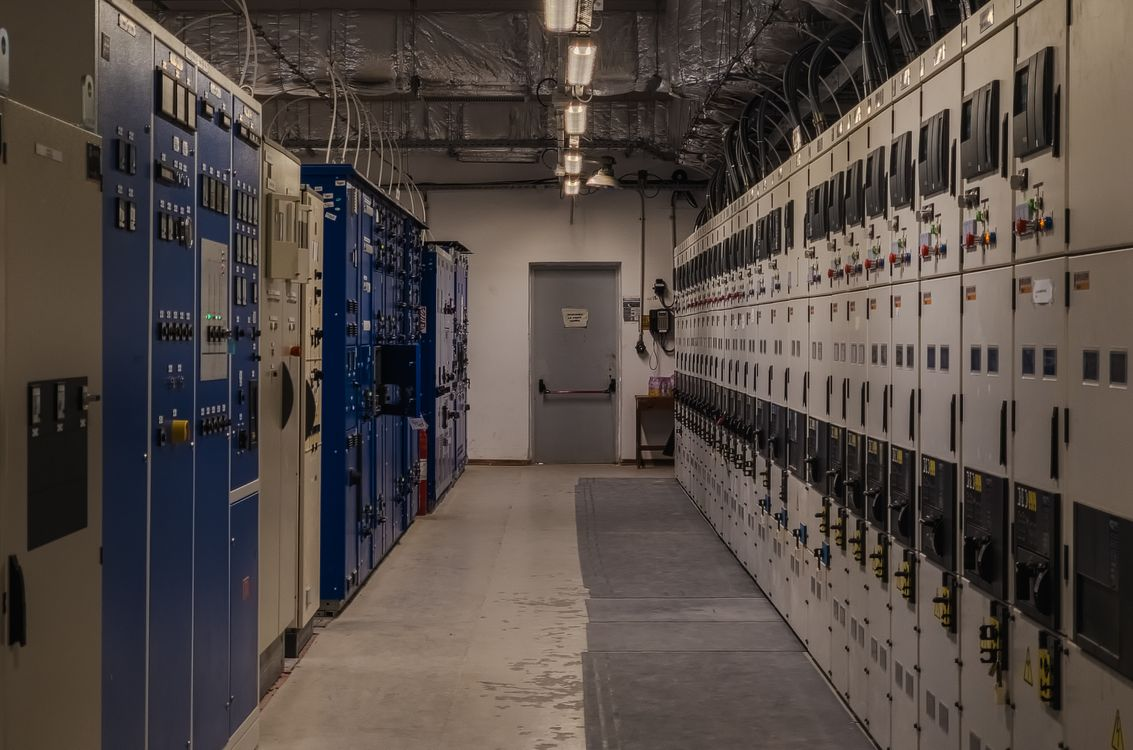
Data centres require extensive electrical infrastructure, including high-voltage connections, substations, transformers, switchgear, busbar systems, uninterruptible power supplies, batteries, standby generation, protection, monitoring, controls, and earthing.
Large campuses can demand grid capacity comparable with major industrial facilities. Electrical work extends from the incoming supply and primary distribution through low-voltage systems, backup architecture, rack-level delivery, cooling equipment, and building-management interfaces.
Redundancy and maintainability are built into each stage because an isolated equipment failure must not interrupt critical loads. Achieving that resilience requires disciplined design, protection coordination, switching procedures, selective fault clearance, and control sequences capable of operating under several failure conditions.
Experience remains harder to scale than headcount
Data-centre projects often overlap, creating competition for the same project managers, authorised persons, high-voltage specialists, commissioning engineers, controls personnel, cable jointers, and supervisors. Increasing workforce numbers cannot immediately resolve shortages where competence depends on years of practical experience.
Apprenticeships and structured training build long-term capacity, although they cannot replace senior commissioning or supervisory roles within a short project cycle. Employers need a combination of new entrants, upskilling, recognised competence, experienced recruitment, and staff retention.
Commissioning is particularly demanding because the installation must be tested as an integrated system rather than as separate items of equipment. Individual transformers, generators, batteries, UPS units, and switchboards may operate correctly while transfer sequences, controls, alarms, or protection coordination remain incomplete.
Connection uncertainty further complicates workforce planning. A delayed grid connection has affected the timetable of an Essex AI campus, showing how electrical infrastructure can alter a project before the principal site systems are ready for energisation.
Where the permanent supply is unavailable, equipment may require testing on temporary generation, staged energisation, extended storage, or revised commissioning sequences. Each option introduces additional risk, cost, and demand for experienced personnel.
The consequences of installation errors are amplified by the operational profile of data centres. Cable terminations, phase identification, protection settings, control wiring, battery systems, transfer arrangements, and earthing must be verified against a low tolerance for interruption.
Continuing demand remains after construction. Planned maintenance, protection testing, switching, thermal imaging, controls updates, battery replacement, capacity changes, and emergency response all require competent electrical personnel throughout the operating life of a facility.
Regional training provision must therefore develop alongside the project pipeline. JTL’s Medway training centre has expanded electrical training capacity, although specialist data-centre competence will still depend on supervised workplace experience and exposure to live projects.
Procurement models can either support or weaken that development. Repeatedly moving workers between short packages reduces continuity and limits structured progression, while earlier contractor involvement gives businesses more confidence to recruit, train, and retain employees against a visible programme.
The roundtable provides a route for aligning construction demand with occupational standards and training capacity. Its value will depend on whether the follow-up work produces credible forecasts and practical measures that employers can translate into apprenticeships, recruitment, supervision, and specialist development.
Britain’s data-centre pipeline has become an electrical infrastructure programme as much as a property market. Delivery will depend on network capacity, equipment supply, and a workforce capable of installing, testing, operating, and maintaining systems whose tolerance for failure remains exceptionally low.