
IN Brief:
- Demand for solar, storage, UPS, and energy management systems is increasing in Ukraine as energy infrastructure remains under attack.
- Municipalities and communities are becoming active buyers of distributed energy systems for schools, hospitals, and public facilities.
- The next phase will depend on installer competence, virtual power plant capability, energy management software, and cybersecurity.
Atmosfera has identified rising Ukrainian demand for solar, battery storage, backup power, and energy management systems as the country’s energy market continues to decentralise under wartime operating conditions.
Across businesses, community facilities, and local services, solar-plus-storage systems, uninterruptible power supplies, and backup power packages are being adopted to maintain operations during outages. Distributed generation is moving beyond a cost-saving or sustainability role and becoming part of the infrastructure that keeps essential activity running when centralised assets are damaged or constrained.
Municipalities and local communities are now a distinct buyer group. Public facilities including schools, hospitals, and community buildings need power systems capable of supporting essential services during grid disruption. Local authorities are combining their own resources with support from international foundations and donor organisations to deliver solar-plus-storage projects, moving distributed energy into civic infrastructure rather than leaving it as a private investment decision.
Ukraine’s active prosumer framework is also changing market structure. Around 1,700 businesses have joined the scheme, allowing them to consume self-generated solar power while exporting surplus electricity to the grid under flexible tariff arrangements. For system designers, that creates a more active relationship between behind-the-meter generation and the wider network, with distributed assets serving local loads while interacting with the grid when conditions allow.
Repeated attacks on centralised infrastructure have exposed the vulnerability of large power assets to physical disruption. Distributed systems cannot replace the national grid, but they can reduce single points of failure and keep critical loads energised during outages. A school, hospital, water facility, or local business with a correctly designed solar-plus-storage system has a different resilience profile from one dependent on a single upstream supply route.
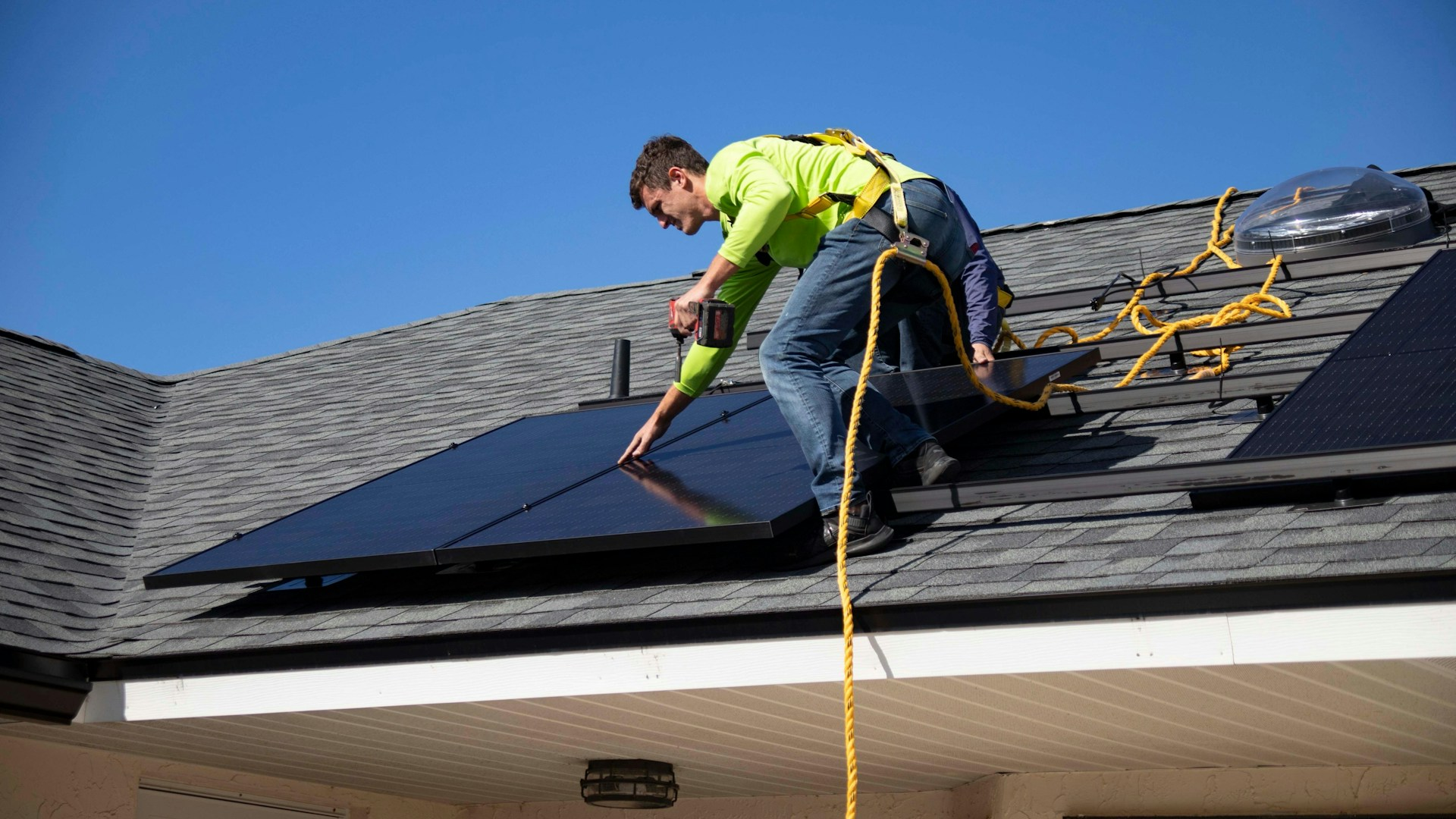
Rapid demand growth also brings technical risk. Companies from adjacent trades, including security systems and air conditioning, have moved into solar installation as demand has risen. Poorly designed or inadequately supported installations can create safety, warranty, performance, and maintenance problems. Solar-plus-storage systems are electrical assets with DC and AC interfaces, battery-management requirements, inverter settings, protection coordination, fire-safety considerations, earthing, metering, and grid-code obligations.
Installer competence is therefore becoming part of the country’s energy resilience strategy. Atmosfera has expanded training activity through Atmosfera Academy and is seeking formal recognition of solar installer as a certified profession in Ukraine. A formal skills pathway would better align installation quality with the critical role now being assigned to distributed energy systems.
As thousands of assets are deployed across businesses, communities, and homes, Ukraine will also need software capable of monitoring, coordinating, and controlling those systems. Energy management systems and virtual power plant platforms can turn dispersed installations into a more useful system resource, supporting demand response, export control, storage dispatch, and visibility for operators. Without that layer, distributed resources remain useful locally but harder to integrate into national system operation.
Cybersecurity sits alongside electrical safety in that transition. Remote control, aggregation, and virtual power plant operation introduce communications, access management, data integrity, and resilience requirements. Ukraine’s operating environment gives those issues sharper relevance than in most European markets. Distributed systems are being deployed to reduce vulnerability, but unmanaged digital integration can introduce new points of risk.
The trend also connects with wider energy reconstruction. Large-scale projects remain central to rebuilding generation capacity, including wind, grid upgrades, and storage. The development of a 650MW wind project in central Ukraine reflects the larger infrastructure side of that transition. Distributed systems add a faster, more localised layer that can be deployed where resilience is most urgent.
Ukraine’s solar and storage expansion is therefore following a different path from more conventional European markets. Growth is being driven by operational need, grid stress, and the requirement to keep local services running. The strength of the market will depend on whether deployment speed is matched by design quality, installer certification, storage integration, software control, and secure digital operation.

