
IN Brief:
- Flower and ENGIE have signed a seven-year virtual flexibility purchase agreement covering 126MW of German BESS-backed capacity.
- The agreement includes Flower’s 100MW/400MWh Hamburg project and a 63MW/257MWh project in Döllnitz, Saxony-Anhalt.
- The structure gives ENGIE long-term access to battery flexibility while Flower retains asset ownership and operational control.
Flower and ENGIE have signed a seven-year virtual flexibility purchase agreement covering 126MW of battery energy storage capacity in Germany, with the contract scheduled to start on 1 January 2029.
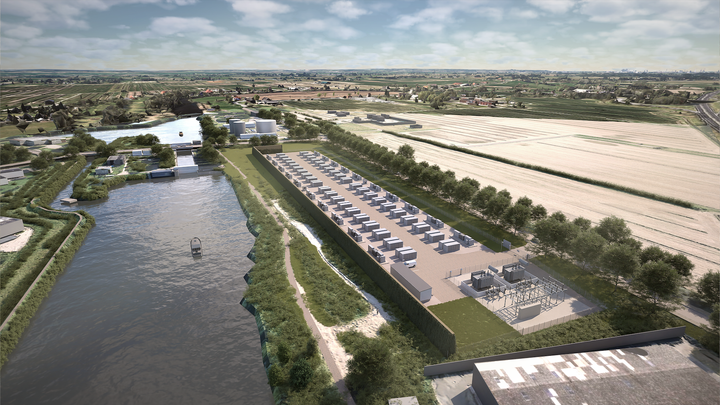
The agreement covers Flower’s 100MW/400MWh project in Hamburg and a 63MW/257MWh system in Döllnitz, Saxony-Anhalt. The arrangement supports the financing, deployment, and commercialisation of the assets while giving ENGIE long-term access to flexibility from the portfolio.
Under the virtual toll structure, ENGIE will integrate the contracted flexibility into its market activities. Flower will retain ownership and operational control of the assets, combining its development and optimisation capability with ENGIE’s trading, structuring, and risk-management functions.
The agreement reflects the maturing structure of European storage finance. Larger BESS projects require a route to bankability before construction, particularly where capital costs, grid connection works, equipment procurement, and long commissioning timelines must be covered before commercial operation. Long-term flexibility purchase agreements can stabilise the investment case by assigning market access and risk management to a counterparty with trading capability.
Germany is a major market for this approach because the power system is exposed to high renewable output, regional congestion, industrial demand, and changing generation patterns. Batteries can help manage intraday price spreads, balancing needs, local constraints, and ancillary service provision, although revenue capture depends on sophisticated dispatch and trading.
The Hamburg project’s four-hour duration takes it beyond the shortest-cycle assets that dominated early battery markets. Longer-duration lithium-ion systems can shift larger volumes of electricity across the day, support evening peaks, and participate more effectively in flexibility arrangements where availability and state-of-charge management are central. A 100MW/400MWh configuration also brings heavier grid-interface requirements, including transformers, switchgear, power conversion systems, protection, fire safety, communications, and grid-code compliance.
Across Europe, BESS financing is increasingly being shaped by different routes to market, from capacity contracts and optimisation agreements to grid-aware merchant exposure. Projects in Poland, Belgium, and Spain have already shown how storage assets can move toward construction when the commercial structure aligns with the technical use case and the local market framework. Flower and ENGIE’s agreement adds a further model by separating asset ownership from market integration.
That separation is becoming more common as storage portfolios grow. Developers may be well placed to secure land, permits, grid positions, and construction routes, but they may not always have the balance sheet, trading desk, or risk appetite to optimise assets across volatile markets. Utilities and trading businesses can manage portfolio risk, hedge positions, and integrate storage with generation, supply, and customer demand.
The Döllnitz project adds regional diversity to the portfolio. Saxony-Anhalt has strong renewable generation activity and grid-integration requirements, while Hamburg brings storage into a major urban and industrial electricity environment. Batteries in different regions can respond to different price signals, congestion conditions, and operational requirements, giving a portfolio more flexibility than a single isolated asset.
Storage contracts are also beginning to resemble infrastructure finance instruments. A BESS project has to be investable before it is operational, and the commercial structure must satisfy lenders, investors, insurers, equipment suppliers, and grid operators. Revenue uncertainty remains one of the main barriers to larger projects, especially where ancillary-service prices decline as more assets enter the market.
As storage penetration rises, revenue models will need to evolve. Frequency-response markets alone cannot support unlimited battery deployment. Assets will need to earn from several services, including wholesale arbitrage, balancing, congestion management, capacity payments, renewable firming, and contractual flexibility products.
The strongest projects will be those with clear grid need, credible dispatch strategies, robust technical design, and long-term commercial counterparties. Flower and ENGIE’s agreement gives the German market another example of that transition. The battery asset remains physical infrastructure, but the value is increasingly created through software, trading, forecasting, and contractual design.

